
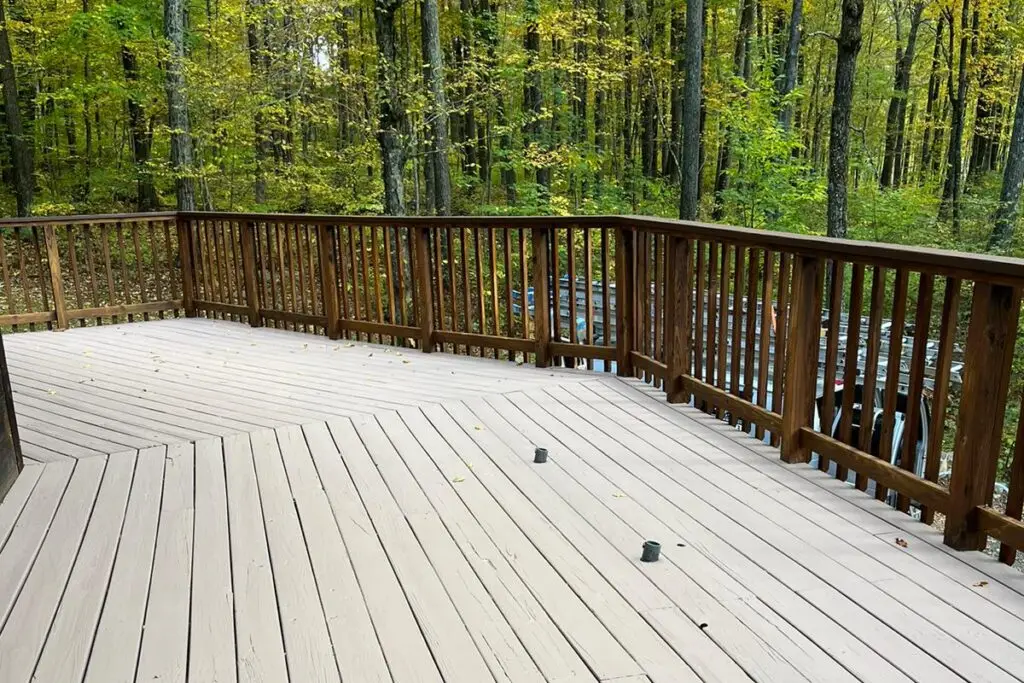
Your deck is an extension of your living space, and its stain color plays a huge role in its overall look and feel. Choosing the right shade can transform your outdoor area, enhance your home’s exterior, and provide vital protection for your wood.
Why stain color matters for decks?
- Aesthetics: The stain color directly impacts your deck’s curb appeal, influencing the perceived age, style, and warmth of your outdoor living space.
- Protection: Stain penetrates the wood, protecting it from UV damage, moisture, and rot, unlike paint which sits on the surface.
- Enhances Wood Grain: Transparent and semi-transparent stains allow the natural beauty of the wood grain to show through, enriching its character.
- Creates Ambiance: Lighter stains can make a deck feel more expansive and airy, while darker stains can create a cozier, more grounded atmosphere.
Popular stain shades
Cedar tones – natural and timeless
- Description: Ranging from light golden to rich reddish-brown, cedar tones enhance the natural warmth of wood without overpowering it. They often have transparent or semi-transparent finishes.
- Appeal: Timeless, versatile, and blend beautifully with natural surroundings. They give the deck a classic, inviting feel.
- Trends: Always in style, they continue to be a top choice for their inherent beauty and ability to complement various home styles, from traditional to rustic.
Brown hues & semi-transparent blends
- Description: Encompassing a wide spectrum from light, earthy browns to deep, rich chocolate tones. Semi-transparent stains allow some wood grain to show while adding significant color.
- Appeal: Provides a more uniform color than cedar tones, while still showcasing some natural texture. Brown is a grounding color that pairs well with many exterior house colors.
- Trends: Continues to be a strong trend, with homeowners gravitating towards warmer, deeper browns that evoke a sense of coziness and sophistication. Blends offering slight gray or red undertones are also popular.
Grays & greens for contemporary style
- Description: Modern grays (from light silver to charcoal) and muted greens. Often leaning towards solid or semi-solid stains to achieve a more uniform, contemporary look.
- Appeal: Creates a sleek, modern, and often coastal or urban aesthetic. Gray can mimic weathered wood, while greens can blend seamlessly with lush landscaping.
- Trends: Growing in popularity for 2025, especially in homes with modern architecture, industrial elements, or those seeking a minimalist outdoor design. Pairing these with black or white accents is very on-trend.
Check it out: What is the most popular color to stain a deck?
Solid vs semi-transparent vs clear stains
The level of opacity dictates how much of the wood grain shows through and the level of UV protection.
- Clear: Offers UV protection but no color. Allows 100% of the wood grain to show.
- Transparent: Adds a hint of color (e.g., cedar, redwood) while allowing almost all of the wood grain to be visible. Good UV protection.
- Semi-Transparent: Adds more significant color and hides some imperfections, but still allows a good amount of wood grain to show through. Excellent UV protection.
- Semi-Solid/Semi-Opaque: Offers more color coverage, hiding most imperfections, but may allow a hint of wood grain to peek through. Very good UV protection.
- Solid: Provides a completely opaque, paint-like finish that hides the wood grain entirely. Offers the most UV protection and can cover significant imperfections.
Factors: wood type, surroundings, UV protection
- Wood Type: Different woods absorb stain differently. Pine will look different than cedar or redwood with the same stain. Test a sample.
- Surroundings: Consider your home’s exterior color, landscaping, and hardscaping. The deck stain should complement these elements.
- UV Protection: Darker, more opaque stains offer better UV protection, helping to prevent wood from graying. Lighter, more transparent stains allow the wood’s natural color to be seen but offer less UV defense.
Tips for sampling & maintenance
- Test Samples: Always buy sample sizes and apply them to a clean, dry, inconspicuous area of your actual deck. Observe how the color looks in different lighting conditions (morning, noon, evening). Let it dry completely before making a decision.
- Maintenance: Regular cleaning and re-staining every 2-5 years (depending on climate, traffic, and stain type) are crucial to maintain the deck’s appearance and protection.
Fresh stain vs recoat advice
- Fresh Stain (New Deck or Stripped Deck): For a new, untreated deck or one that has been completely stripped of old stain, you have a blank canvas. This is the best time to choose a new color. Ensure the wood is clean and dry.
- Recoat (Existing Stain): If you’re recoating an existing stained deck, you’ll need to clean it thoroughly. For the best results and to ensure color consistency, it’s often recommended to stick with a similar color or go slightly darker than the previous stain. If you want a drastic color change, you might need to strip the old stain first.
Check it out: Deck painting near me: Professional deck painters in Danbury, CT
Ready to transform your outdoor oasis? Anderson’s Painting specializes in deck staining and restoration, helping you choose the perfect color for lasting beauty and protection. Get a free estimate today!