
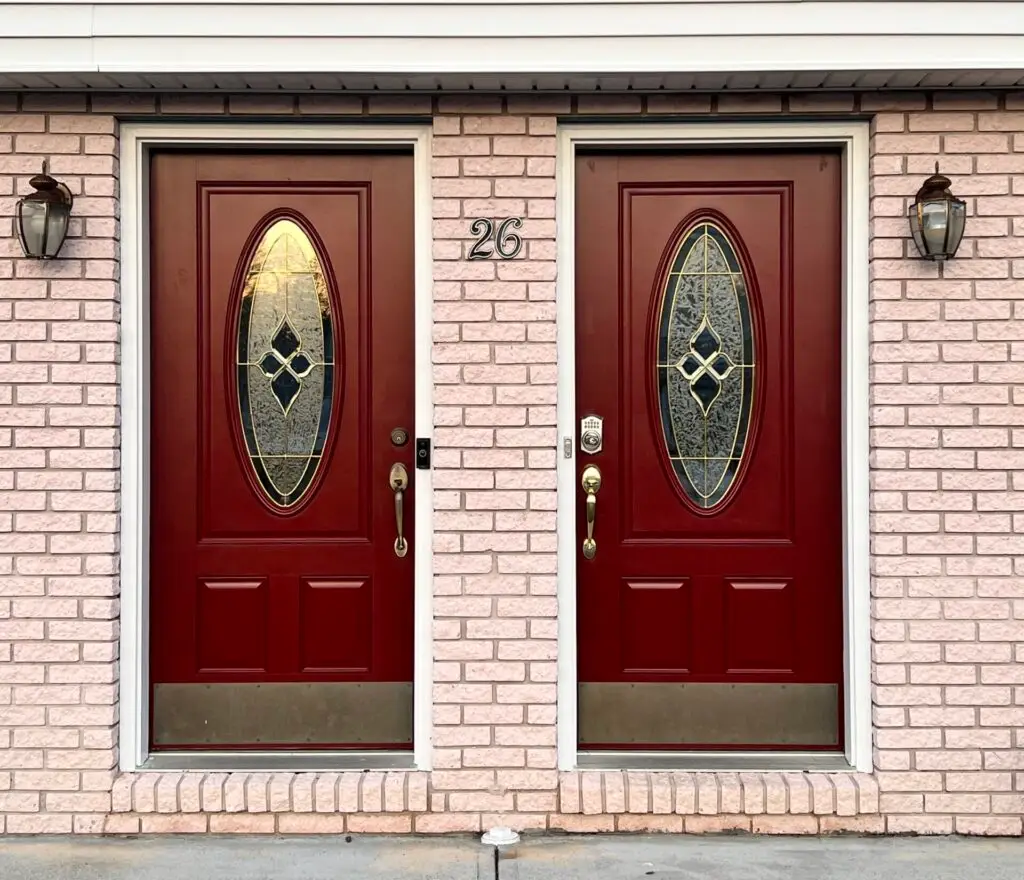
The front door is the focal point of your home’s exterior, offering a crucial first impression. Choosing the right color for it can dramatically boost curb appeal, reflect your personality, and even subtly convey a welcoming message.
Why does the door color matter?
- First Impression: It’s the first thing visitors (and potential buyers) see, setting the tone for your home.
- Curb Appeal: A well-chosen door color can make your house stand out, enhance its architectural style, and significantly increase its perceived value.
- Personality & Welcome: It’s an opportunity to express your style and create a warm, inviting entrance.
- Visual Anchor: A bold or contrasting door color can act as a visual anchor, drawing the eye and tying together different elements of your home’s exterior.
Trending shades: black & white, pale green, bold yellow, red, blue
While classics endure, here are some trending front door colors:
Black & White:
- Black: A timeless, sophisticated, and strong choice. It offers elegance and can provide a striking contrast to lighter exteriors.
- White: Crisp, clean, and classic. It creates a fresh, inviting look, especially against darker or colorful exteriors.
Pale Green (Sage, Mint):
- Description: Soft, muted greens with gray or blue undertones.
- Appeal: Nature-inspired, calming, and versatile. They blend beautifully with various home styles and natural surroundings.
Bold Yellow (Mustard, Sunny Yellow):
- Description: Vibrant and cheerful shades of yellow.
- Appeal: Evokes happiness, warmth, and optimism. It’s a welcoming and eye-catching choice that signals a lively home.
Red (Barn Red, Deep Crimson):
- Description: From classic barn reds to deeper, richer crimsons.
- Appeal: Traditionally associated with welcome, warmth, and good luck. It’s a powerful and confident statement color.
Blue (Navy, Slate, Dusty Blue):
- Description: Versatile blues, from deep, traditional navies to softer, gray-tinged slate or dusty blues.
- Appeal: Projects trustworthiness, stability, and calm. Navy is timeless and sophisticated, while lighter blues offer a serene, coastal, or inviting feel.
Designer-approved combinations & color pairings
Consider these pairings for a cohesive look:
- Classic Contrast: White or light gray house with a black, navy, or deep red door.
- Earthy & Subtle: Beige, cream, or sage green house with a pale green, soft blue, or warm wood-toned door.
- Modern & Bold: Dark gray or white house with a vibrant yellow, bright red, or electric blue door.
- Brick Homes: Deep blues, forest greens, or classic black often complement traditional brick.
- Stucco Homes: Warm neutrals (taupe, tan) with a rich brown, olive green, or terracotta door.
Colors to avoid & why
- Colors that clash: Avoid a front door color that competes or clashes with your home’s primary exterior color, trim, or roof.
- Colors that disappear: Don’t choose a door color that’s too similar to your siding, causing the door to blend in and lose its focal point potential.
- Fad-driven brights (without context): While bold colors can be great, choose ones that suit your home’s architectural style and don’t feel out of place or dated too quickly.
Paint types & finishes for durability
The front door takes a lot of abuse from weather and frequent touching, so durability is key.
- Paint Type: Use a high-quality exterior paint specifically designed for doors and trim. Look for 100% acrylic latex paints with good adhesion and resistance to fading, cracking, and peeling. Some paints are also labeled as “door and trim” paints.
- Finish:
- Satin/Eggshell: Offers a subtle sheen, is easy to clean, and hides imperfections well. A popular choice.
- Semi-Gloss: Provides a more noticeable sheen, is highly durable, and very easy to clean. It highlights the door’s features but can show more imperfections.
- High-Gloss: A very reflective, dramatic finish. While extremely durable and easy to clean, it requires a perfectly smooth surface as it shows every imperfection.
Check it out: How to paint an exterior door? A Step-by-step guide
Sample, test & maintain your door color
- Sample: Buy sample pots of your top 2-3 choices.
- Test: Paint a large swatch directly on the front door (or on a large piece of cardboard taped to the door) and observe it throughout the day in different lighting conditions.
- Maintain:
- Clean Regularly: Wipe down your front door with a damp cloth and mild soap every few weeks to remove dust, dirt, and grime.
- Touch-Ups: Keep a small amount of your door paint for quick touch-ups of nicks or scratches.
- Repaint: Most exterior door paints will last 5-10 years, but inspect regularly for fading or chipping.
Your front door is an invitation! Anderson’s Painting helps you choose and flawlessly apply the perfect color to make a stunning first impression. Contact us for a free estimate and boost your home’s curb appeal!