
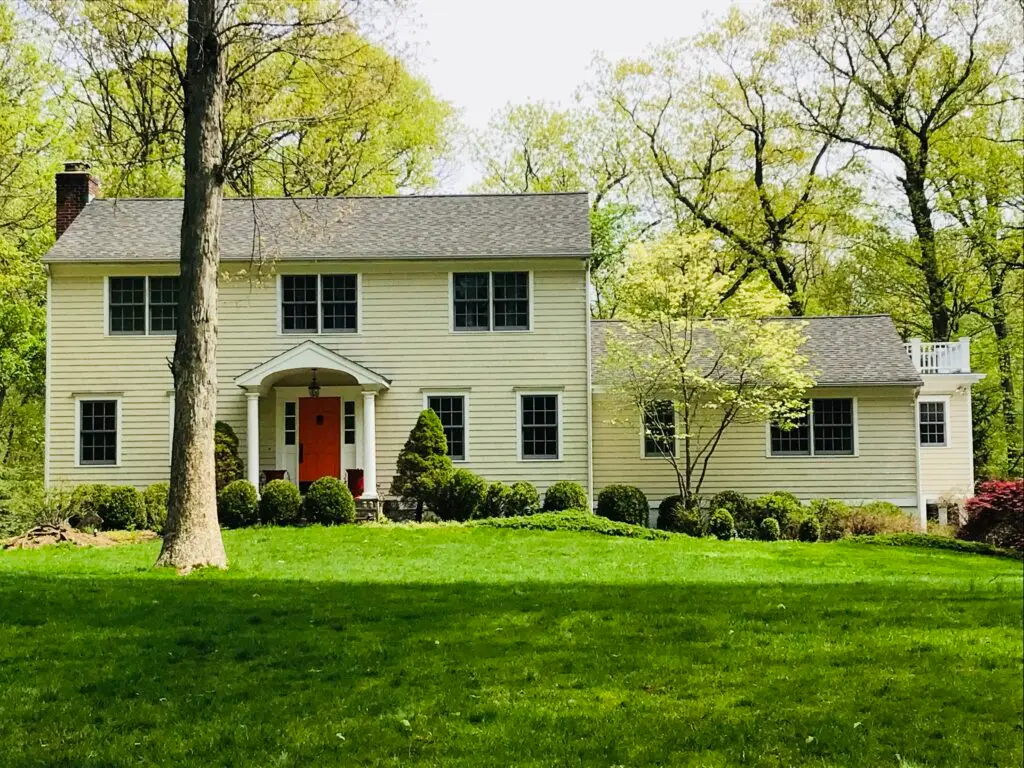
When considering exterior finishes for your home, two common options that homeowners often weigh are traditional paint and stucco. While both serve to protect and beautify your home’s exterior, they are fundamentally different in their composition, application, and long-term performance. Understanding these distinctions is crucial for making an informed decision that suits your home’s style, your budget, and the local climate. Anderson’s Painting breaks down the key differences between painting and stucco, helping you determine which one is the right choice for your property.
What is stucco and when is it used?
Stucco is a durable, cement-based plaster that has been used as a building material for centuries. It’s applied in layers over a wall substrate, typically masonry, concrete, or a lath (wire mesh) over wood framing.
- Composition: Traditional stucco is made from cement, lime, sand, and water. Modern stucco systems may include acrylics and other additives for increased flexibility, adhesion, and water resistance, often referred to as synthetic stucco or Exterior Insulation and Finish Systems (EIFS).
- Application: It’s applied in multiple coats (typically a scratch coat, brown coat, and finish coat), allowing each layer to dry before the next is applied. The finish coat can be textured in various ways (e.g., smooth, sand finish, dash, worm finish).
- When is it Used?
- Durability and Climate Resistance: Stucco is highly valued for its exceptional durability and resistance to harsh weather conditions, including strong winds, heat, and fire. It’s particularly common in hot, dry climates (like the Southwest U.S.) but also used effectively in other regions due to its insulation properties.
- Architectural Styles: Historically, stucco is a defining feature of Mediterranean, Spanish Colonial, Mission, Pueblo Revival, and some modern architectural styles.
- Masonry Homes: It adheres exceptionally well to concrete and masonry substrates, making it an ideal choice for homes built with these materials.
- Insulation: Some modern stucco systems (EIFS) incorporate insulation boards, offering improved energy efficiency.
- Low Maintenance: Once properly installed and cured, stucco requires relatively low maintenance compared to other siding options.
How painting compares to stucco
While both painting and stucco provide exterior protection, their fundamental characteristics create distinct differences.
Durability and weather resistance
- Stucco:
- Superior Durability: Stucco is inherently a very hard, rigid, and durable material. When properly installed and maintained, it can last 50-100 years or more.
- Excellent Weather Resistance: It provides a solid, seamless barrier against wind, rain, and impacts. Its inherent strength makes it resistant to rot, insects, and fire.
- Breathability: Traditional stucco allows moisture to escape from the wall cavity, which is beneficial for managing condensation.
- Painting:
- Dependent on Substrate: The durability of paint heavily relies on the quality and condition of the underlying surface (wood, siding, masonry, existing stucco).
- Protective Layer: Paint acts as a protective layer, guarding the substrate from UV rays, moisture, and general wear. However, its lifespan is much shorter than stucco itself, typically 5-10 years before requiring repainting, depending on paint quality and climate.
- Weather Effects: While good quality exterior paint offers decent weather resistance, it will eventually chip, peel, or fade under continuous exposure to sun, rain, and temperature fluctuations. It does not offer the same structural rigidity or impact resistance as stucco.
Application and texture differences
- Stucco:
- Complex Application: Stucco application is a multi-step, labor-intensive process requiring specialized skills and experience. It involves preparing the substrate, applying multiple base coats, and then a final finish coat. Each coat needs proper drying time.
- Integral Color & Texture: Color can be mixed directly into the final stucco coat, meaning the color goes all the way through the material, reducing the appearance of minor chips. Stucco offers a wide range of inherent textures, from very smooth to rough, heavily textured finishes, providing a distinctive dimensional look.
- Painting:
- Simpler Application: Painting involves surface preparation (cleaning, scraping, priming) followed by applying one or more coats of paint. It is a more straightforward process than stucco application, though still requires skill for a professional finish.
- Surface-Level Color: Paint applies color as a surface coating. If the paint chips or peels, the underlying material will show through.
- Texture is Substrate Dependent: Paint takes on the texture of the surface it’s applied to. While certain painting techniques (e.g., roll-on textures) can add some texture, it’s generally far less pronounced and varied than the inherent textures of stucco.
Cost comparison and maintenance needs
Understanding the financial implications and upkeep requirements is vital for long-term planning.
- Initial Cost:
- Stucco: Generally has a significantly higher initial installation cost per square foot compared to painting. This is due to the specialized materials, the multi-layer application process, and the highly skilled labor required. It’s an investment in a long-lasting material.
- Painting: Has a much lower initial cost per square foot. It’s a more accessible option for immediate aesthetic improvements or protection.
- Long-Term Cost & Maintenance:
- Stucco:
- Lower Long-Term Maintenance: Once installed, stucco is relatively low-maintenance. It primarily requires periodic cleaning (e.g., pressure washing on a low setting) to remove dirt and mildew.
- Repair Complexity: While durable, if stucco does crack or sustain damage (e.g., from severe impact or foundation shifting), repairs can be complex and require a skilled professional to match texture and color seamlessly. Improper repairs can lead to further issues.
- Repainting: Stucco itself doesn’t need repainting as frequently as other siding materials. However, if stucco is painted (which is common for changing color or sealing), then that paint will require maintenance every 5-10 years, similar to painting other surfaces.
- Painting:
- Higher Long-Term Maintenance (Frequency): Requires more frequent maintenance in the form of repainting, typically every 5-10 years, depending on climate, sun exposure, and paint quality.
- Easier Repairs: Minor paint chips or small areas of peeling paint are relatively easy to touch up or repair by a homeowner or painter.
- Preparation Intensive: Each repaint often requires extensive surface preparation, including washing, scraping, sanding, and priming, which adds to the labor cost.
- Stucco:
Which one is right for your home?
The choice between painting and stucco depends on several factors specific to your property and preferences.
- Consider Stucco if:
- You desire exceptional durability and longevity with minimal ongoing maintenance.
- You are building a new home or undertaking a major renovation and have the budget for a higher initial investment.
- Your home’s architectural style (e.g., Mediterranean, Spanish Colonial, modern minimalist) complements stucco’s inherent texture and appearance.
- You live in a harsh climate where robust weather resistance is paramount.
- You want a seamless exterior with unique textural possibilities.
- Your existing home is already stucco and needs repairs or a complete overhaul, as matching the existing material is often the best approach.
- Consider Painting if:
- You are looking for a more affordable initial investment to refresh your home’s exterior.
- You want a wide range of color options that can be easily changed in the future.
- Your home’s current siding material (e.g., wood, fiber cement, brick) is suitable for painting, or you’re simply refreshing an existing painted surface.
- You are comfortable with or plan for more frequent maintenance cycles (repainting every 5-10 years).
- You need a quicker turnaround for your exterior update.
- Your home’s architecture is better suited for a smooth or traditional painted finish.
Ultimately, both painting and stucco are excellent exterior finishing options. Stucco offers a robust, long-lasting, and textured solution with a higher initial cost but lower long-term frequency of major maintenance. Painting provides a more versatile and immediately affordable solution with easier color changes but requires more frequent reapplication. Consulting with experienced exterior professionals like Anderson’s Painting can provide tailored advice based on your home’s structure, climate, and your specific aesthetic and budgetary goals.
Deciding on the perfect exterior finish for your home? Whether you’re considering the classic appeal of paint or the robust durability of stucco, Anderson’s Painting has the expertise to guide you.