
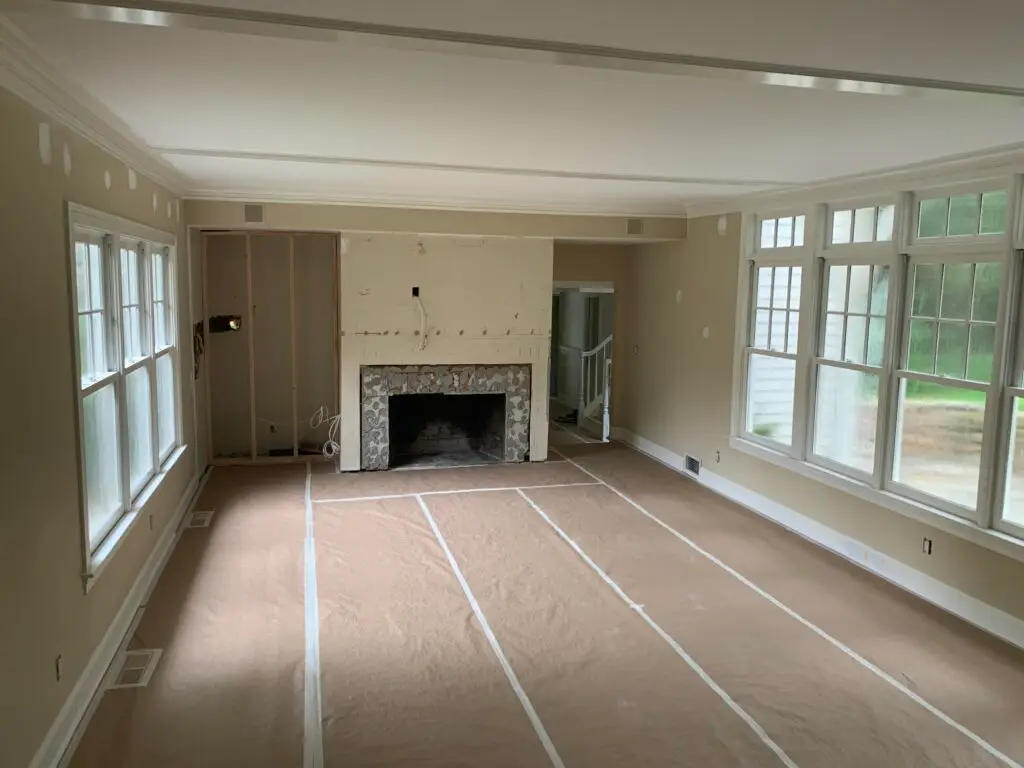
Painting baseboards can significantly freshen up a room, creating a crisp transition between walls and flooring. However, the presence of carpet adds a layer of challenge, as drips and stray brush strokes can easily mar the fabric, leading to a messy finish. The good news is that with the right tools and techniques, you can achieve perfectly clean lines and protect your carpet from any paint damage. Learning how to paint baseboards with carpet is a skill that ensures a professional look for your interior painting projects.
Tools you’ll need (painter’s tape, shield, putty knife)
Having the correct tools on hand is essential for achieving a clean, professional finish and protecting your carpet.
- Cleaning and Prep Tools:
- Vacuum with hose attachment
- Damp rags/sponges
- Mild all-purpose cleaner
- Spackle or wood putty
- Putty knife
- Fine-grit sandpaper (180-220 grit)
- Caulk gun and paintable caulk (acrylic latex)
- Protection Tools:
- Painter’s Tape: High-quality painter’s tape (e.g., FrogTape or ScotchBlue with Edge-Lock) is crucial for crisp lines on walls.
- Paint Shield/Masking Tool: This is arguably the most important tool for protecting carpet. Options include:
- Metal or Plastic Paint Shield: A thin, straight-edged tool (often 18−24 inches long) that you hold firmly against the carpet while painting.
- Wide Cardboard or Card Stock: Can be cut from a box for a DIY shield.
- Plastic Sheeting/Drop Cloths: To cover the main carpet area.
- 5-in-1 Painter’s Tool or Stiff Putty Knife: Useful for tucking tape or plastic under baseboards (see “Protecting the Carpet Edges”).
- Razor Knife/Utility Knife: For scoring tape.
- Painting Tools:
- Angled Sash Brush (1.5 – 2.5 inches): A high-quality angled brush is best for precision work on trim.
- Paint tray or small container
- Paint stir stick
- Paint: High-quality interior trim paint (semi-gloss or satin enamel is typical for baseboards).
Step-by-step baseboard prep and cleaning
Proper preparation is the secret to a long-lasting and smooth finish. Do not skip these steps!
- Vacuum Thoroughly: Use a vacuum cleaner with a hose attachment to thoroughly remove all dust, dirt, and pet hair from the baseboards and especially the very edge of the carpet where it meets the trim.
- Clean the Baseboards: Lightly wipe down the baseboards with a damp rag and a mild all-purpose cleaner to remove any remaining grime, grease, or sticky residue. For stubborn spots, a slightly stronger cleaner may be used, followed by a clean water rinse. Allow the baseboards to dry completely.
- Inspect and Repair:
- Fill Holes/Dents: Use spackle or wood putty to fill any nail holes, minor dents, or imperfections in the baseboards. Apply with a putty knife, allowing it to dry according to product instructions.
- Sand Smooth: Once dry, lightly sand the repaired areas with fine-grit sandpaper (180-220 grit) until perfectly smooth and flush with the baseboard surface.
- Caulk Gaps: If there are any gaps between the top of the baseboard and the wall, or between sections of baseboard, apply a thin bead of paintable acrylic latex caulk. Smooth the caulk bead with a wet finger or a damp rag immediately. Allow caulk to cure fully (check product label, typically 30 minutes to a few hours).
- Final Dust Removal: After all sanding and caulking, thoroughly wipe down the baseboards again with a clean, slightly damp rag (or use a tack cloth) to remove any remaining dust or sanding residue. The surface must be perfectly clean for paint to adhere properly.
Protecting the carpet edges
This is the most crucial step when painting baseboards with carpet. There are a few effective methods:
- The Tape and Tuck Method (Most Common for Cleanest Lines):
- Materials: High-quality painter’s tape, a stiff putty knife or 5-in-1 painter’s tool.
- Process:
- Carefully run a continuous strip of painter’s tape along the very bottom edge of the baseboard, ensuring it adheres firmly to the baseboard itself, not the carpet.
- Take your stiff putty knife or 5-in-1 tool and, starting at one end, gently push the edge of the carpet down and slightly away from the baseboard.
- As you push the carpet down, use the tool to tuck the bottom edge of the painter’s tape under the baseboard and slightly into the gap between the baseboard and the floor. This effectively creates a small, clean, protected trench.
- Press firmly along the top edge of the baseboard tape to ensure a tight seal against the wall to prevent paint bleed.
- Pros: Creates the crispest, cleanest paint line. Excellent for preventing any paint on carpet.
- Cons: Can be tedious and time-consuming, especially in large rooms. May not work on very plush carpets or those with no discernable gap.
- The Paint Shield Method (Faster, but Requires More Skill):
- Materials: Metal or plastic paint shield (e.g., a “trim guard”).
- Process:
- Do not tape the carpet.
- As you paint, hold the paint shield firmly against the base of the baseboard, with its lower edge pressed down into the carpet pile. The shield acts as a barrier, catching any drips or stray brush strokes.
- Paint along the baseboard section covered by the shield.
- Before the paint dries, carefully lift and move the shield to the next section, cleaning any paint off the shield’s edge each time you move it.
- Pros: Much faster than taping. No tape to remove.
- Cons: Requires a steady hand and practice. If the shield slips or isn’t held firmly, paint can get on the carpet. The shield edge needs frequent wiping.
- Cardboard/Plastic Sheet Method:
- Similar to the paint shield, but using a wider piece of cardboard or thin plastic sheeting. You slide it under the baseboard as you go, acting as a temporary protective barrier. This can be good for wider sections.
General Carpet Protection: Regardless of the method you choose for the edges, always lay down drop cloths or plastic sheeting over the main carpeted area to protect it from stray drips or spills.
Paint application tips for neat finishes
With the prep done and carpet protected, it’s time to paint.
- Use a High-Quality Angled Brush: A 1.5-inch or 2-inch angled sash brush is ideal. The angled bristles allow for precise control along the top edge of the baseboard.
- Load the Brush Properly: Dip only about 1 to 1.5 inches of the bristles into the paint. Tap off excess on the side of the paint can or tray. An overloaded brush will lead to drips and messy lines.
- Paint in Sections: Work in manageable sections (e.g., 2-3 feet at a time) along the baseboard.
- First Stroke (Top Edge): Using a light touch and steady hand, run the tip of your angled brush along the top edge of the baseboard where it meets the wall. This is your “cut-in” line.
- Fill In: Once the top edge is painted, use longer, even strokes to fill in the rest of the baseboard surface.
- Avoid Overworking the Paint: Apply paint smoothly and try to avoid going over the same area too many times as the paint starts to set. This can create brush marks or uneven texture.
- Two Thin Coats are Better Than One Thick: Apply paint in thin, even coats. This reduces drips and ensures better adhesion and a smoother finish. Allow the first coat to dry completely according to paint manufacturer instructions (typically 2-4 hours) before applying the second coat.
- Remove Tape When Paint is Wet: If you used the tape and tuck method, carefully pull off the painter’s tape while the paint is still slightly wet (but not tacky). This ensures a crisp, clean line and prevents paint from drying onto the tape and potentially tearing off small flakes of your new paint. Pull the tape at a 45-degree angle away from the painted surface.
When to consider removing the baseboards
While painting in place is usually preferred, there are specific scenarios where removing the baseboards might be the better, albeit more involved, option.
- Significant Damage or Rot: If your baseboards are severely damaged, warped, or rotting, they need to be removed for repair or replacement anyway.
- Installing New Flooring: If you’re planning to replace the carpet with new flooring (especially hard surface flooring like hardwood or tile), removing the baseboards is almost always recommended. It allows for a cleaner flooring installation and you can paint the baseboards off-site.
- Extremely Plush or Thick Carpet with No Gap: If your carpet is exceptionally thick and tight against the baseboard with absolutely no gap to tuck tape into, and a paint shield isn’t providing adequate protection, removing them might be the only way to achieve a clean line.
- Extensive Painting Projects: For a whole-house renovation where speed and efficiency are paramount, and you have the tools and skill to remove and reinstall trim, it can sometimes streamline the painting process (especially for spray painting).
- Aesthetic Preference (for New Construction/Renovation): In some new construction or full gut renovations, installers will leave baseboards off until after walls are painted, and then install and paint them last. This is the ideal scenario for a flawless finish.
Considerations if Removing:
- Requires careful scoring of caulk/paint lines to avoid damaging the wall.
- Pry them off carefully to avoid breaking them or damaging the drywall.
- Mark each piece to ensure it goes back in its original location.
- You’ll need tools for removal and reinstallation (pry bar, hammer, nail gun).
- The final result, if done correctly, can be incredibly clean.
Painting baseboards with carpet requires patience and precision, but by using the right tools and techniques, you can achieve results that look professionally done, instantly enhancing the cleanliness and finish of your room.
Tired of struggling with clean lines when painting baseboards with carpet? Anderson’s Painting specializes in expert interior painting, providing meticulous attention to detail for clean, crisp baseboards and a flawless finish throughout your home. Let our experienced team handle the precision work for you! Contact us today for a free consultation.