
Quick Answer
Stair risers need a durable interior coating and a sheen that balances cleanability with appearance. Favor products rated for high-traffic or trim-like surfaces, prep for adhesion, and allow full cure before heavy use. Sample colors under hallway lighting and follow the manufacturer’s dry and recoat windows.
Why stair risers need special paint consideration
Risers collect shoe marks, vacuum bumps, and cleaning abrasion. “Best paint for stair risers,” “paint for stair risers,” and “type of paint for stair risers” queries are really about durability and washability—not only color. Prioritize:
- Adhesion on the existing substrate after proper prep
- Abrasion and cleaning performance stated on the TDS
- A sheen that still looks intentional under side light
- Cure time that fits how the household uses the stairs
Benjamin Moore’s finish guide helps match sheen to use. Confirm the selected product’s label for stairs, trim, or high-traffic interiors.
Keep tread safety separate from riser aesthetics: do not create a slippery walking surface on treads while finishing risers.
Recommended paint types homeowners compare
| Type | Why people consider it | Check on the TDS |
|---|---|---|
| Acrylic-latex enamel | Harder film than many wall paints | High-traffic / trim rating |
| Semi-gloss interior | Easier cleaning of scuffs | Appearance under side light |
| Trim and door enamel | Built for contact surfaces | Recoat and cure windows |
| Porch-and-floor formulas | Abrasion resistance | Interior stair suitability—do not assume |
Some wall paints work if the manufacturer rates them for the traffic and cleaning you expect. Many households prefer a trim or high-traffic formula; check the TDS rather than assuming wall paint is enough. Porch-and-floor products are not automatically correct for indoor risers—verify interior use and VOC notes.
Top colors and finishes for a polished look
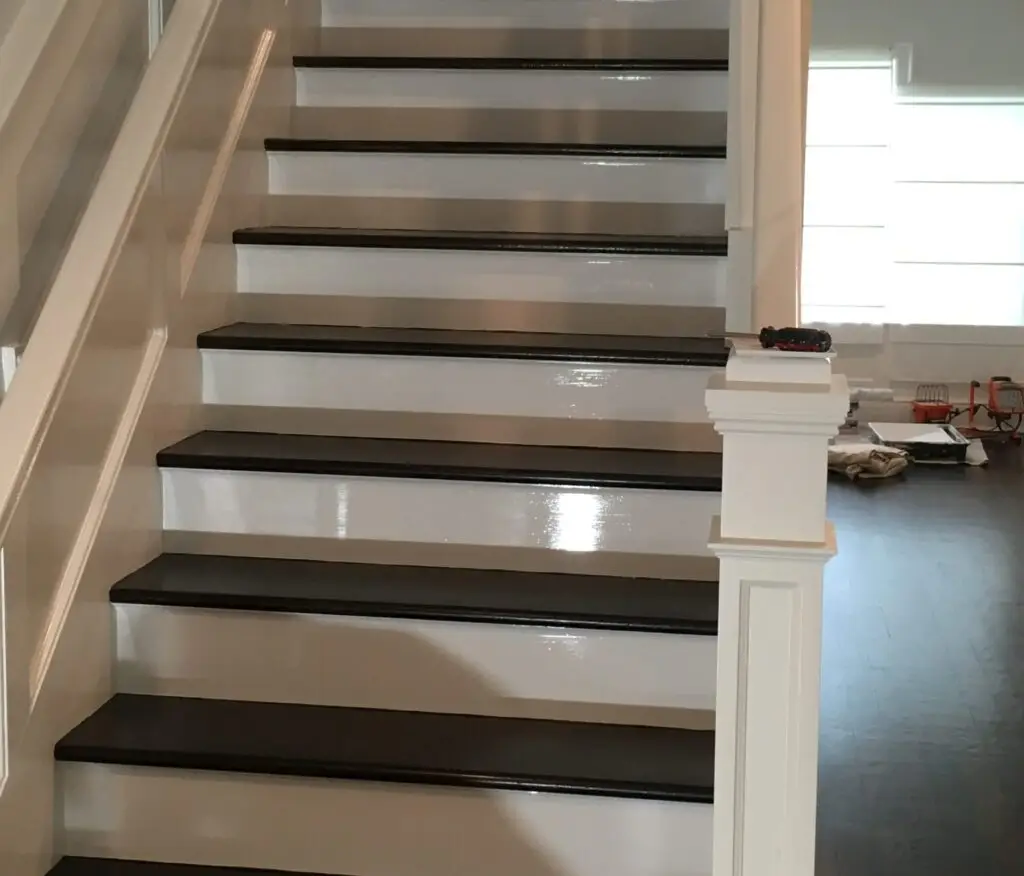
Crisp white remains a frequent search (“best white paint for stair risers”) because it brightens closed stairwells and pairs with wood treads. Whites show scuffs differently by sheen—sample the exact white and finish together.
Charcoal or black creates contrast with light treads but shows dust and polishing from cleaning. Mid sheens often clean better than the flattest option on dark risers.
Semi-gloss is a common durability choice; lower sheens can look softer if cleaning is light and the product allows it. Contrast with treads can improve visibility for some households—test with painter’s tape outlines before committing.
If spindles and handrails share a finish family, sample them together. Mismatched sheens between riser and rail can look unintentional under hallway lighting.
Prep and application tips for long-lasting results
- Clean grease and dust thoroughly; repair damaged edges.
- Sand glossy previous coatings for tooth if the system requires it.
- Use a high-quality primer when the product calls for it over bare wood, repairs, or difficult stains.
- Cut in edges carefully; tape only as needed for crisp lines.
- Apply multiple thin coats rather than one heavy film.
- Observe recoat windows and protect until cured enough for household traffic.
EPA lead-safe DIY guidance applies if older paint may contain lead.
Sequencing a livable staircase
Paint risers in sections when the household cannot close the stair. Protect cured or still-soft film from pets and vacuum impacts. Plan second coats only after the stated recoat window so soft layers do not imprint. Light foot traffic and full cure are different milestones—protect risers until the film can take scuffs.
How-to painting notes without turning this into a full stair remodel guide
“How to paint stair risers” searches still need product context: clean, sand, prime if required, then thin coats. Protect finished treads with tape and paper so drips do not create slippery spots. Work top-down or in alternating steps so a path remains usable while films dry. This page stays focused on choosing durable coatings; complex carpentry or tread refinishing is a separate scope.
Wood species under paint (pine vs hardwood risers) changes how primer and grain telegraph. Bare softwood may need primer more often than previously painted hardwood. Always follow the system for the substrate you actually have, not a generic stair blog tip.
DIY or hire?
A short, accessible staircase may suit DIY. Tall open stairs, elaborate spindles, or finished hardwood treads that must stay unprotected may need a professional. Explore residential painting services and Danbury painting information.
FAQ
Can I use wall paint on stair risers?
Some wall paints work if the manufacturer rates them for the traffic and cleaning you expect. Many households prefer a trim or high-traffic formula; check the TDS rather than assuming wall paint is enough.
How long before people can use the stairs again?
Follow the product’s dry-to-touch and cure guidance. Light foot traffic and full cure are different milestones—protect risers until the film can take scuffs.
What sheen lasts longest on white stair risers?
Higher sheens within an approved interior system often clean more easily, but “longest” depends on the specific product’s scrub ratings and how the stairs are used. Sample cleaning on a dried patch.
Should stair risers and treads use the same paint?
Not always. Treads need walkable, often non-slip systems; risers prioritize scuff resistance and appearance. Keep tread safety products separate from decorative riser coatings.