
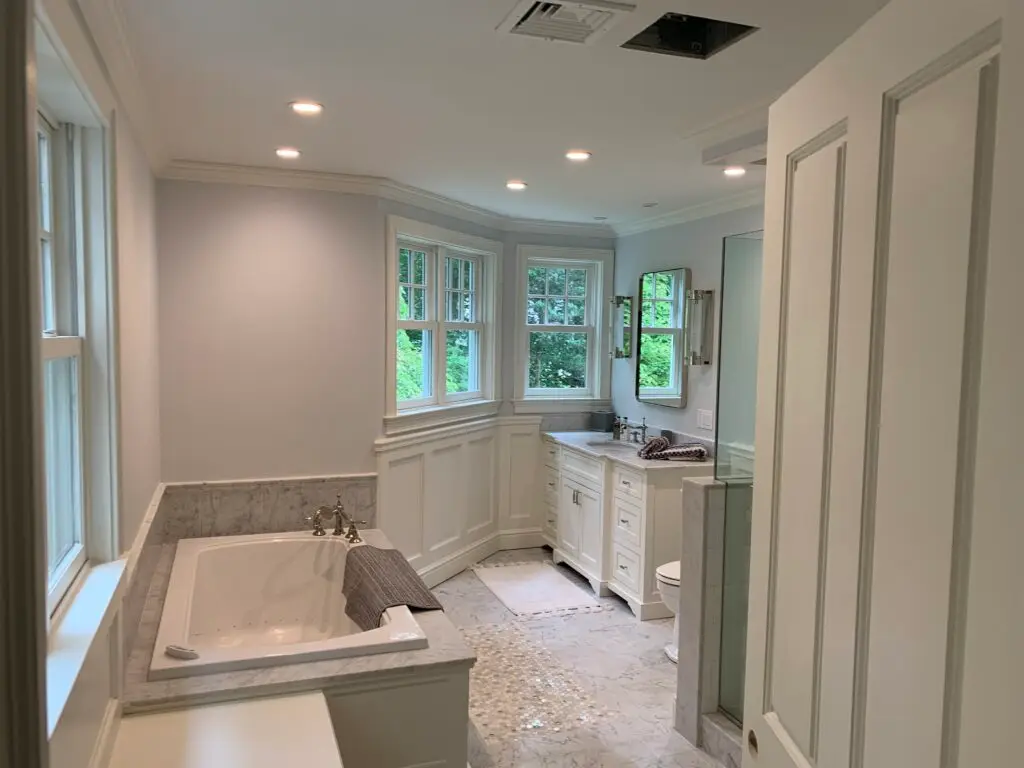
When renovating or repairing a bathroom, standard drywall isn’t the best option. The unique conditions in a bathroom—high humidity, condensation, and the risk of water splashing—require a different kind of material to prevent damage and costly repairs down the line.
Why Standard Drywall Isn’t Enough
Standard drywall, while great for most of the house, is made of a paper-backed gypsum core. This material is highly absorbent and can quickly turn into a breeding ground for problems when exposed to constant moisture.
Humidity, Mold, and Water Damage
When standard drywall gets wet, the paper backing and gypsum core can soak up water, causing it to warp, soften, and eventually crumble. This trapped moisture also creates an ideal environment for mold and mildew to grow, which can cause both structural and health issues.
Best Drywall Options for Bathrooms
To protect your bathroom walls and ceilings, you need to use drywall specifically designed for high-moisture environments.
Green Board (Moisture-Resistant)
Green board is a step up from standard drywall. It has a special paper facing that is more moisture-resistant than regular paper. While it’s great for use in powder rooms or on bathroom ceilings, it’s not waterproof and shouldn’t be used inside a shower or in areas that will get direct, continuous water exposure.
Cement Board for Tile Areas
For walls inside a shower or around a tub, cement board is the best choice. It is made of cement and reinforcing fibers, making it completely waterproof and resistant to mold. It provides a solid, durable base for tile installation and will not break down when it gets wet.
Mold-Resistant Drywall
This drywall, often called “purple board,” offers superior performance against mold and moisture. It has a special core and paper that actively resist mold growth. This is a smart option for basement bathrooms or any area where you want maximum protection.
Where to Use Each Type
Shower Walls
Use cement board behind any tile in the shower or around the tub. This is the only safe option to ensure your wall structure is protected from water.
Bathroom Ceilings
The ceiling is often a spot for condensation to build up. Using green board or mold-resistant drywall is a great way to prevent future ceiling problems from steam and humidity.
General Wall Areas
For walls outside of the shower, green board is a common and effective choice. If you want the best possible protection, using a mold-resistant drywall throughout the bathroom is an even better option.
Cost & Installation Tips
While specialty drywall is more expensive than standard drywall, the cost of repairing water-damaged walls is significantly higher. Using the correct materials from the start is a wise investment.
- Cutting and Sealing Edges: When installing moisture-resistant drywall, all cut edges should be sealed with a waterproofing compound or a waterproof tape before finishing.
- When to Hire a Pro: If you’re dealing with a large-scale renovation, especially involving a shower, a professional can ensure the materials are installed correctly to prevent any future issues.
For a free consultation on your bathroom painting project and to ensure you have the right materials for a long-lasting finish, contact Anderson’s Painting today.