
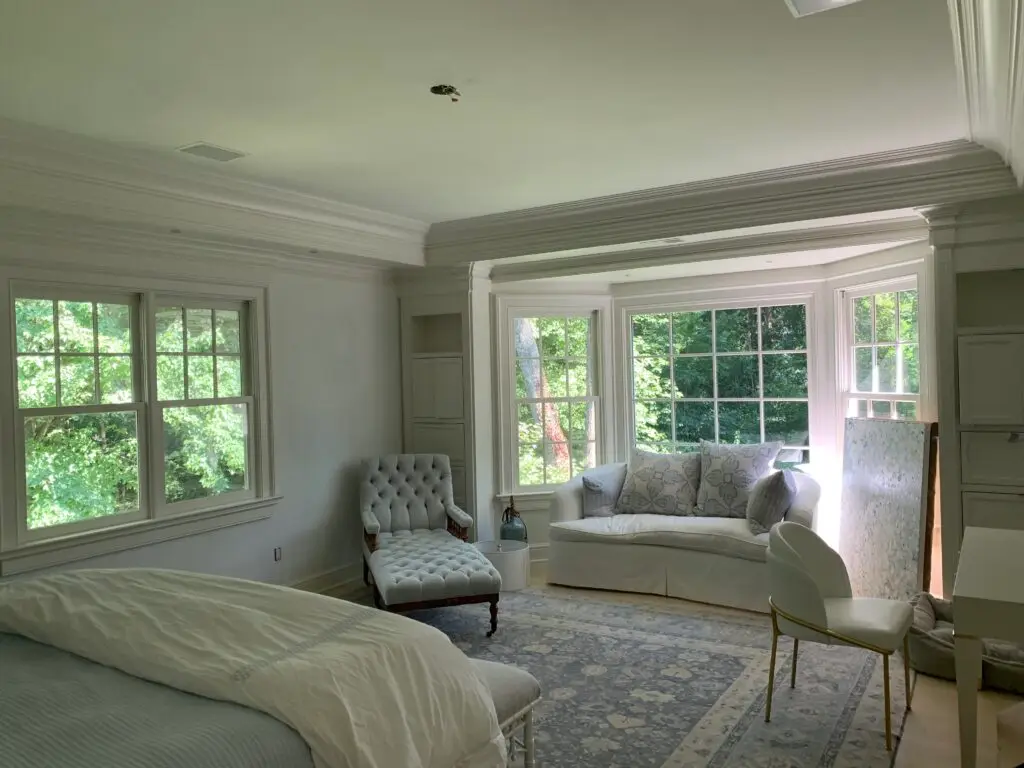
To paint drywall properly, start by cleaning the surface, applying primer, and then painting with two coats of high-quality interior paint. Proper preparation ensures smooth coverage, prevents uneven absorption, and creates a professional finish on drywall surfaces.
What Is Drywall (Sheetrock)?
Drywall is the standard material used for interior walls in modern American homes. It consists of a layer of gypsum plaster pressed between two thick sheets of paper.
Difference between drywall and sheetrock
Technically, there is no difference in the material itself. “Drywall” is the general term for the product, while “Sheetrock” is a well-known brand name owned by the USG Corporation. In the construction industry, the terms are often used interchangeably.
Why drywall requires special preparation before painting
Unfinished drywall is highly porous. The paper facing and the joint compound (mud) used to hide seams absorb liquids at different rates. If you apply paint directly to bare drywall, it will look blotchy and uneven—a phenomenon known as “flashing.”
Tools and Materials Needed to Paint Drywall
To achieve a professional-grade finish, you will need the following essentials:
- Drywall primer: Specifically formulated to seal porous surfaces.
- Interior wall paint: Your choice of color in a flat, eggshell, or satin finish.
- Paint roller: A 3/8-inch nap is standard for smooth drywall.
- Paint tray: To hold and distribute paint onto the roller.
- Paint brushes: A 2.5-inch angled sash brush for “cutting in.”
- Sanding sponge: Fine-grit (120–150) for smoothing imperfections.
- Painter’s tape: To protect trim, ceilings, and baseboards.
- Drop cloths: Canvas or plastic to protect your floors and furniture.
Step-by-Step: How to Paint Drywall
Follow these six steps to ensure a durable and aesthetically pleasing result:
1. Clean the drywall surface
Drywall dust is the enemy of adhesion. Use a vacuum with a brush attachment or a slightly damp microfiber cloth to remove all dust from the walls, especially near the baseboards and corners.
2. Sand rough drywall areas
If you are painting over new patches or repairs, use a fine-grit sanding sponge to feather out the edges of the joint compound. The wall should feel completely smooth to the touch.
3. Apply drywall primer
This is the most critical step for new or repaired walls. Apply one full coat of PVA (Polyvinyl Acetate) primer. This seals the paper and mud, creating a uniform surface for the paint to bond to.
4. Cut in edges with a brush
Before using the roller, use your angled brush to paint a 2-to-3-inch border around the ceiling, baseboards, corners, and window frames. This ensures full coverage where the roller cannot reach.
5. Roll paint evenly on walls
Dip your roller into the paint tray and apply it to the wall in a large “W” or “N” pattern. Then, fill in the gaps without lifting the roller. Work in sections of about 3×3 feet to maintain a “wet edge” and avoid lap marks.
6. Apply a second coat
Once the first coat is completely dry (usually 2 to 4 hours), apply the second coat using the same rolling technique. This ensures a rich, uniform color and hides any tiny spots missed during the first pass.
Do You Need to Prime Drywall Before Painting?
Why primer is essential for new drywall
New drywall is “thirsty.” Without primer, the drywall will soak up the moisture from the paint too quickly, leading to a dull finish and visible seams. Primer provides a consistent “canvas” that allows the paint color to look exactly as it does on the swatch.
When primer may not be necessary
If you are repainting a wall that is already in good condition and has a similar color, you may be able to use a “Paint + Primer” all-in-one product. However, if the wall has repairs, stains, or a glossy finish, a separate primer is always recommended.
Best Paint for Drywall
Flat paint for ceilings
Flat paint has no reflection, which helps hide small bumps or imperfections on large ceiling surfaces.
Eggshell or satin for walls
These are the most popular choices for bedrooms, living rooms, and hallways. They offer a soft glow and can be wiped clean with a damp cloth without damaging the finish.
Semi-gloss for trim and doors
Trim takes the most abuse. Semi-gloss provides a hard, moisture-resistant shell that stands up to kicks, scuffs, and frequent cleaning.
Common Drywall Painting Mistakes
Avoiding these common errors will save you time and money:
- Skipping primer: Results in uneven sheen and poor paint adhesion.
- Using low-quality paint: Leads to poor coverage, requiring 3 or 4 coats instead of 2.
- Applying uneven coats: Causes visible “roller tracks” or thick drips.
- Painting dirty drywall surfaces: Paint will peel off if it is applied over dust or grease.
- Not allowing paint to dry between coats: Can cause the first layer to “pull” or peel, ruining the texture.
How Long Does It Take to Paint Drywall?
Drying time for primer
Standard PVA primer usually feels dry to the touch in 30 to 60 minutes, but you should wait at least 2 hours before applying the first coat of paint.
Drying time between paint coats
Most modern latex interior paints require 2 to 4 hours of drying time before the second coat can be safely applied.
Total time for painting drywall
For a single standard room, expect the process to take one full day (including prep, priming, and two coats of paint).
DIY vs Professional Drywall Painting
When painting drywall yourself works well
If the walls are already smooth, the room is small, and you have the patience for prep work, DIY painting is a great way to save money.
When hiring professional painters is better
Hiring a team like Anderson’s Painting is the best move if:
- You have high ceilings or large open spaces.
- The drywall requires extensive repair or “skim coating.”
- You want a flawless, “Level 5” finish without the stress of cleanup and ladder work.
FAQ: Painting Drywall
Do you need to sand drywall before painting?
Yes, especially if there are new repairs. Lightly sanding ensures a smooth transition between the drywall paper and the joint compound.
What happens if you paint drywall without primer?
The paint will likely absorb unevenly, showing “ghosting” marks where the seams are, and the final color may appear dull or blotchy.
How many coats of paint are needed on drywall?
For a professional look, two coats are almost always necessary to ensure full color saturation and durability.
What paint is best for drywall walls?
High-quality 100% acrylic latex interior paint in an eggshell or satin finish is the standard for most US homes.
Can you paint drywall the same day it is installed?
Only if the joint compound is 100% dry. “Mud” can take 24 hours to cure. Painting over damp compound will cause the paint to bubble and peel.
For a paint job that truly looks professional, contact Anderson’s Painting today for a free estimate.