
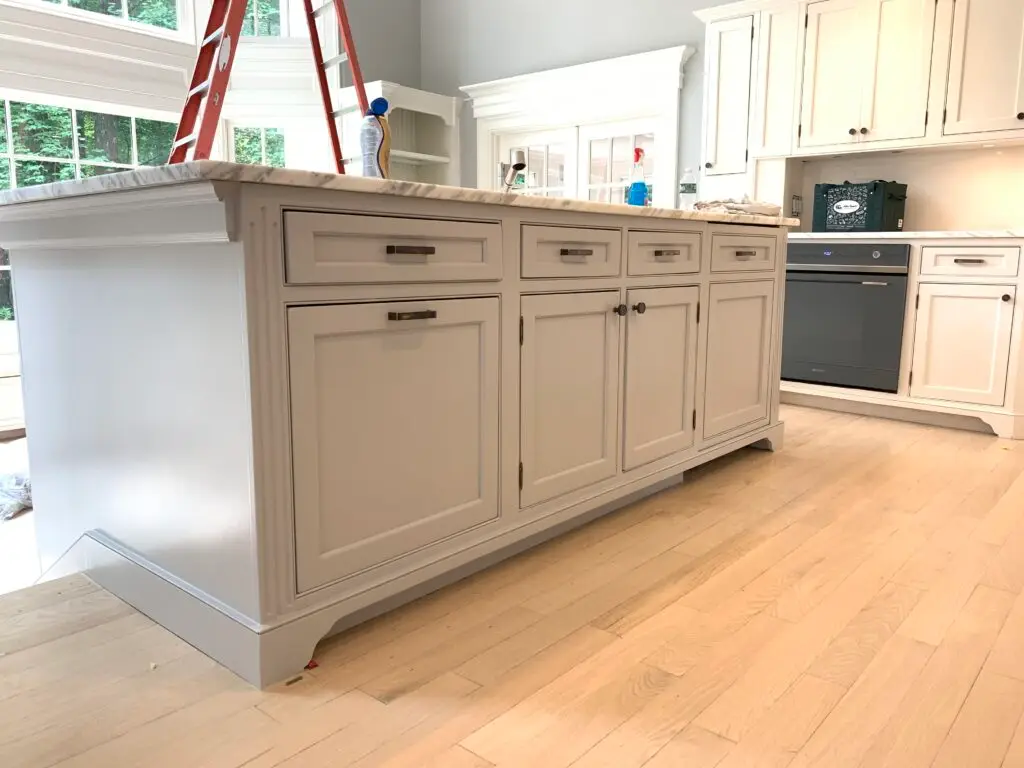
Painting kitchen cabinets is one of the most cost-effective ways to transform a kitchen. However, cabinets require a far more durable finish than walls due to the constant exposure to grease, moisture, and daily handling. Selecting the right paint type is paramount for a professional result that stands the test of time.
What Makes Cabinet Paint Different?
Cabinets demand a specialty paint formulated to withstand the rigors of a kitchen environment.
Durability
Standard wall paint (like flat or eggshell finishes) is soft and porous. It chips easily around edges and handles when scraped or hit. Cabinet paint, by contrast, is engineered to cure into a very hard, resistant shell that prevents chipping, blocking (sticking to itself when closed), and scratching, especially in high-touch areas.
Washability
Kitchen cabinets accumulate cooking grease, grime, and food splatter. A dedicated cabinet paint typically features advanced resin technology that creates a non-porous, smooth surface. This allows for repeated, aggressive cleaning with common household cleaners without degrading the paint film, ensuring the finish maintains its original luster.
Hard-Curing Finishes
While many paints feel “dry to the touch” within hours, true durability is achieved during the curing phase. Cabinet-specific paints are designed to fully cure—meaning they reach maximum hardness and resistance—faster and more reliably than standard house paints, though patience is still required. It’s critical to follow the manufacturer’s instructions on both dry time (before recoating) and cure time (before heavy use).
Best Paint Types for Kitchen Cabinets
Modern paint technology offers several high-performance options that provide excellent leveling and longevity.
Alkyd Enamel
Historically, this refers to oil-based paint, which is known for its superior hardness and leveling properties. However, due to stringent VOC (Volatile Organic Compound) regulations and long cleanup times, traditional oil-based paints are increasingly replaced by Waterborne Alkyd Enamels (or Alkyd Hybrids). These hybrid formulations contain alkyd resins emulsified in a water base, offering the hardness of oil and the easy cleanup of water-based paint. They are considered the gold standard for a self-leveling, smooth finish.
Acrylic Latex
High-quality 100% acrylic latex paints offer good flexibility and can be very durable when fortified. They are the most common type of water-based paint, known for fast drying times and low odor. When choosing acrylic latex for cabinets, ensure it is specifically labeled as a trim and cabinet enamel or a premium-grade exterior/interior acrylic to ensure it has the necessary hardeners.
Urethane-Fortified Paint
This category includes many of the best hybrid paints on the market. The addition of urethane to the base formula (often acrylic or alkyd) significantly boosts the paint’s resistance to impact, abrasion, and chemicals. Urethane-fortified enamels are ideal for achieving a durable, chip-resistant finish, making them particularly valuable for painting laminate or previously difficult surfaces.
Oil-Based (Where Allowed)
If permitted in your location, traditional oil-based paint offers the hardest, most durable finish and exceptional self-leveling. However, they are high in VOCs, have a very strong odor, and require mineral spirits for cleanup. They also yellow over time, especially whites and light colors, and take much longer to dry and cure than modern hybrids.
Recommended Finishes
The sheen you choose impacts both the appearance and the maintenance requirements of your cabinets.
Satin
This finish offers a soft, low-reflective glow that is ideal for modern kitchens. It is easy to clean, hides minor surface imperfections well, and provides a sophisticated look. Satin is currently the most popular choice for kitchen cabinetry.
Semi-Gloss
A semi-gloss finish is brighter and reflects more light, often giving the cabinets a slightly traditional or retro appearance. Because it is smoother and harder than satin, it offers superior moisture resistance and is the easiest finish to wipe clean, making it a highly durable choice for busy kitchens.
High-Gloss
While bold and dramatic, high-gloss is rarely used in typical residential kitchens. It reflects maximum light and is extremely durable and washable, but it unforgivingly highlights every surface imperfection, every dust particle, and every brush stroke. It is best left to professional spray applications on perfectly smooth surfaces.
Should You Use Primer?
Always. Primer is the essential bonding layer between the cabinet material and the color coat. Skipping primer guarantees peeling and premature failure of the topcoat.
Bonding Primer for Slick Surfaces
If painting over laminate, previously glossy paint, or highly-polished wood, a specialized bonding or adhesion primer (like shellac-based or high-adhesion waterborne alkyd) is mandatory. This primer contains specific resins that chemically and physically grip the slick, non-porous surface, providing a stable foundation for the topcoat.
Stain-Blocking Primer for Older Cabinets
For older wood cabinets (especially oak, cherry, or mahogany), a stain-blocking primer is required. Wood contains natural compounds called tannins that can bleed through light-colored paint, resulting in yellow or pink discoloration. Shellac-based or high-quality oil primers are the best defense against tannin bleed and water stains.
FAQs About Cabinet Paint
“Can you use wall paint on cabinets?”
No. While it might save money upfront, standard wall paint lacks the hardeners and resistance required for cabinet use. It will scratch, chip, and degrade quickly when exposed to frequent cleaning, grease, and the friction of opening and closing doors and drawers.
“What’s the most durable finish?”
Generally, urethane-fortified hybrid enamels in a semi-gloss sheen offer the optimal combination of durability, moisture resistance, and washability. The chemical resistance of the urethane and the tight finish of the semi-gloss provide the toughest barrier against kitchen hazards.
“Do darker colors show more wear?”
Yes. Darker colors (like black, navy, or charcoal gray) are excellent for hiding grime and stains, but they are unforgiving when it comes to mechanical wear. Dust, fingerprints, and minor scratches or scuffs show up much more clearly on deep, dark surfaces than on light or mid-tone cabinets.
Selecting the best paint is only half the battle—meticulous preparation and expert application are just as vital.
Ensure your cabinet transformation lasts for years. Contact Anderson’s Painting today for a professional consultation on the highest-grade cabinet finishes.