
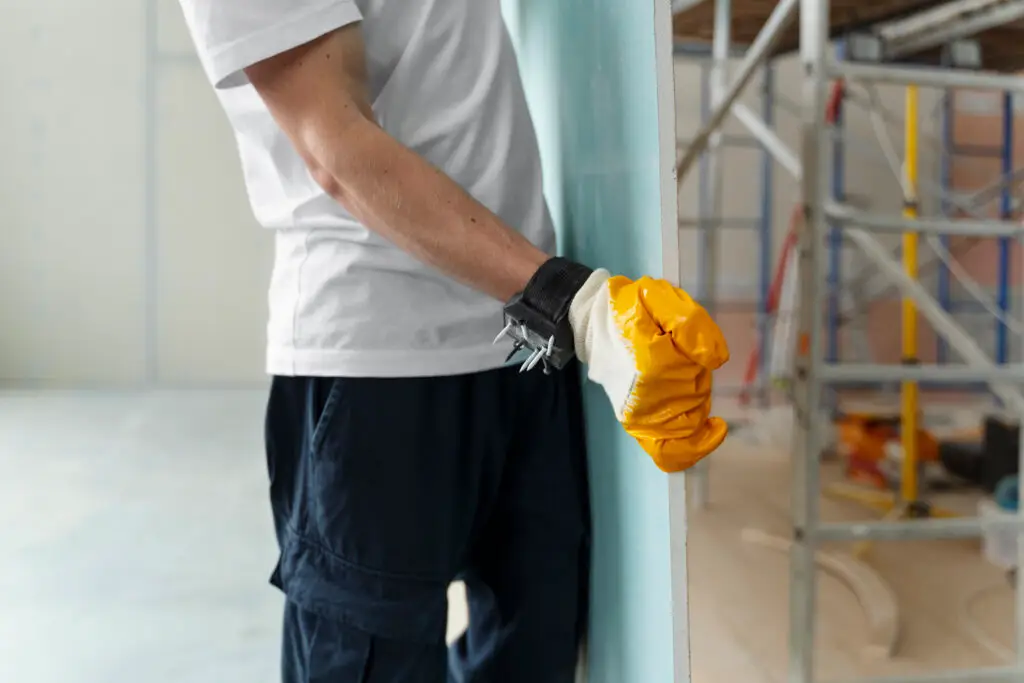
Drywall is the standard construction material for interior walls in the United States, but standard gypsum panels are vulnerable to moisture. In humid areas like bathrooms, laundry rooms, and kitchens, excess water vapor can quickly lead to warping, sagging, and the growth of mold and mildew. This is where moisture-resistant drywall becomes essential.
For homeowners looking to protect their investment and ensure a lasting, beautiful paint finish, understanding the benefits and limitations of specialized drywall is critical.
What Is Moisture-Resistant Drywall?
Moisture-resistant drywall, often used in conjunction with high-quality, moisture-shedding paints, is a specialized gypsum panel designed to slow water absorption and deter fungal growth.
“Green Board” vs. Newer Moisture-Resistant Panels
The original and most common type of moisture-resistant drywall is often called “green board” due to its distinctive green paper facing. This coloring indicates that the paper facing and the gypsum core have been chemically treated with wax emulsions or other compounds to repel water.
While green board is far superior to standard white drywall in humid environments, technology has advanced considerably:
- Standard Green Board: Best for areas with moderate humidity exposure (e.g., half-baths, laundry rooms). Its paper facing is still a potential food source for mold if moisture penetration is severe.
- Fiberglass-Faced or Paperless Drywall: These are the modern gold standard. They replace the traditional paper backing with a fiberglass matting that is completely mold and moisture-resistant. These panels offer superior performance in areas of higher humidity and are often recommended by professional builders and painters for all wet-prone areas.
Water-Resistant ≠ Waterproof (Why That Matters)
It is crucial to understand the fundamental distinction between “water-resistant” and “waterproof.”
- Moisture-Resistant/Water-Resistant: This material is designed to repel moisture and resist the incidental presence of water vapor or brief splash exposure. It dramatically slows down the absorption process, giving the moisture time to dissipate through ventilation.
- Waterproof: A material that can be fully submerged or subjected to constant, direct water saturation without damage (e.g., cement board, waterproofing membranes).
Why this matters: Even the best moisture-resistant drywall, if constantly exposed to direct water (such as inside a shower stall), will fail over time. The material is intended to be a defense against ambient humidity, not a structural barrier against liquid water.
Where Moisture-Resistant Drywall Works Best?
Moisture-resistant panels should be installed in any room where humidity levels spike or where splashes and steam are common. Using this material protects the wall structure and ensures your finished paint job lasts longer without bubbling or peeling.
Half Baths, Powder Rooms, Laundry Rooms
These areas are perfect candidates for traditional green board or paperless drywall.
- Half Baths/Powder Rooms: While there is no shower or tub, toilets and sinks still generate ambient moisture and occasional splashes. The specialized drywall ensures these surfaces remain stable, especially behind the toilet and near the sink basin.
- Laundry Rooms: Washing machines and dryers (especially improperly vented ones) release significant moisture into the air. Using moisture-resistant drywall throughout the entire room is a simple preventative measure against chronic mildew issues.
Bathroom Ceilings and Walls Outside Direct Spray Zones
In full bathrooms, strategic placement is key:
- Ceilings: Steam naturally rises. The ceiling is often the first place mold or paint failure occurs. Upgrading the bathroom ceiling material to moisture-resistant drywall is highly recommended.
- Outer Walls: Walls that are several feet away from the shower or tub, as well as the upper half of walls above tile wainscoting, are exposed to high humidity but not direct water spray. This is the sweet spot for moisture-resistant drywall.
Where You Should NOT Use It
Using the wrong material in an area of high saturation is a costly mistake that will lead to rot and mold, regardless of how well you paint the surface.
Showers/Tub Surrounds and High-Saturation Areas
Never use any type of gypsum drywall (even green board) inside a shower or tub enclosure.
These zones are classified as “high-saturation areas” because they are subjected to direct, sustained water exposure multiple times per day. The correct substrates for tile in these areas include:
- Cement Board: The industry standard for wet areas. It is completely inorganic and cannot be damaged by water.
- Fiber-Cement Boards: Similar to cement board, offering superior strength and moisture resistance.
- Specialized Waterproof Foam Panels: Lighter and easier to install, these are covered with a waterproofing membrane and provide excellent protection for tiled shower walls.
If you are tiling a shower, the substrate must be cement board or equivalent, and it must be covered with a liquid-applied waterproofing membrane before the tile is installed.
Best Practices for Moisture Control
Even the best moisture-resistant drywall is only part of a comprehensive moisture control strategy. The lifespan of your walls and paint depends heavily on managing the environment.
Ventilation and Humidity Targets
Proper ventilation is the single most important factor for protecting walls in wet areas.
- Exhaust Fans: Ensure your bathroom exhaust fan is sized correctly for the square footage of the room and that it vents outside, not into an attic space. The fan should run during the shower and for at least 15–20 minutes afterward to completely clear the room of humid air.
- Humidity Targets: Ideally, relative humidity in your home should remain below 60% year-round. In basements or other chronically damp areas, a dehumidifier may be necessary to protect the walls and foundation.
Primers + Bathroom-Rated Paints (What Actually Helps)
Even with moisture-resistant drywall, professional painting preparation is essential. The paint and primer create the critical barrier layer on the surface.
- Mold-Inhibiting Primers: Use a high-quality primer specifically formulated with mildewcides and mold inhibitors. This creates a defensive layer between the drywall surface and the finish coat.
- Semi-Gloss or Gloss Finishes: Matte or flat paints are porous and absorb moisture easily. In bathrooms and laundry rooms, a semi-gloss or gloss paint finish is recommended because the tighter polymer structure sheds water and is easier to clean and wipe down.
- Specialized Bathroom Paints: Many top paint brands offer products explicitly labeled as “Bathroom” or “Kitchen & Bath” paint. These are engineered with enhanced antimicrobial additives and a durable, water-resistant finish.
Caulking and Sealing at Penetrations
Water only needs the smallest opening to cause damage. Protecting the areas where the wall is penetrated or meets a fixture is vital:
- Caulking: Apply a flexible, waterproof sealant (100% silicone is best for wet areas) around sinks, toilets, vanities, and where the baseboard meets the floor tile.
- Penetrations: Ensure all holes for pipes, wiring, and electrical boxes are sealed before the final paint application to prevent humid air from moving inside the wall cavity.
FAQs
Is moisture-resistant drywall worth it?
Absolutely. The minimal added cost of moisture-resistant drywall, particularly the paperless variety, is an excellent investment. It provides superior stability and significantly reduces the risk of expensive mold remediation and premature paint failure in high-humidity areas, thereby extending the life of your walls and your paint job.
Can I paint it with any latex paint?
Yes, you can use any standard interior latex paint. However, to maximize the material’s benefits, you should use a specialized primer followed by a mold- and mildew-resistant paint with a semi-gloss or high-gloss sheen. The paint is your first line of defense; don’t compromise its quality.
What’s better than green board?
The consensus among professionals is that fiberglass-faced (or paperless) drywall is the superior alternative to traditional green board. By replacing the paper backing with inorganic fiberglass matting, the panel removes the primary food source for mold, making it the most resilient drywall option available for humid environments.
Protect Your Walls, Perfect Your Finish.
Installing the right drywall and preparing it correctly are non-negotiable steps for a professional, long-lasting paint finish. Don’t let moisture destroy your investment.
Contact Anderson’s Painting today for a consultation on your next interior project. We ensure the highest quality preparation, from substrate to the final coat, guaranteeing a finish that lasts.