
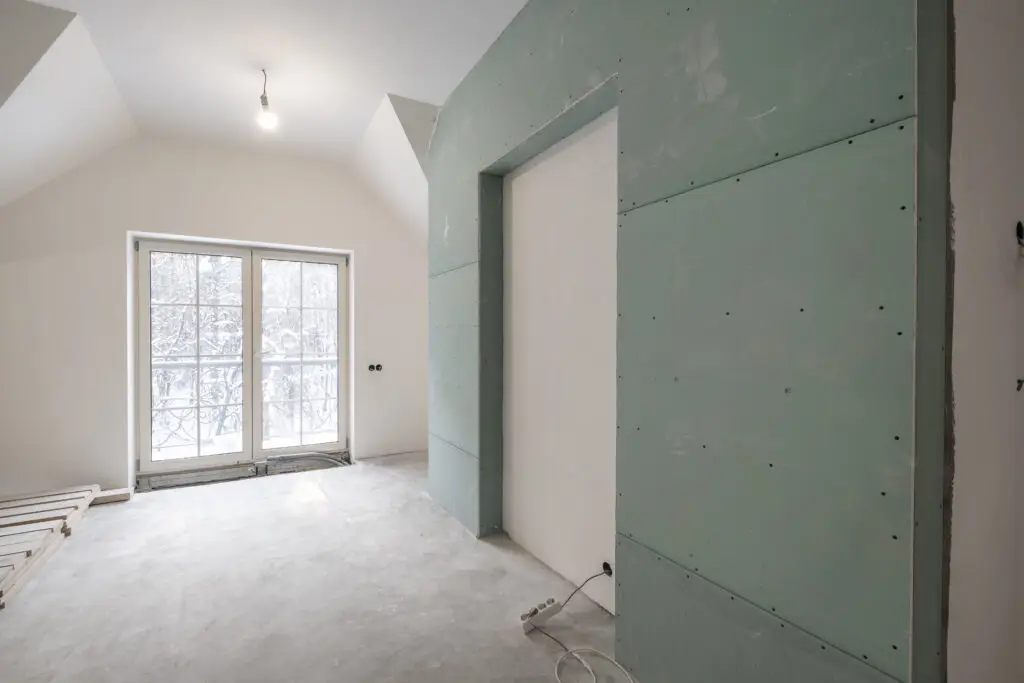
Mold growth is a major concern for homeowners, leading to structural damage, poor indoor air quality, and costly remediation. When planning a renovation or new construction in areas prone to dampness, selecting the right wall material is your first line of defense. Mold-resistant drywall goes beyond standard gypsum to provide a more durable and safer interior environment.
For Anderson’s Painting, starting with the right substrate means we can guarantee a professional, long-lasting finish free from the defects caused by hidden mold or moisture damage.
Mold-Resistant vs. Moisture-Resistant: What’s the Difference?
While the terms are often used interchangeably, there is a technical distinction in how these specialized boards function. Both aim to protect against water, but mold-resistant boards incorporate additional technology to specifically inhibit fungal growth.
How Mold Resistance Is Achieved (Facers, Treatments, Core Tech)
- Moisture-Resistant (e.g., Green Board): Primarily focuses on slowing the absorption of water and humidity through a wax-treated paper facing and core. While this helps prevent moisture damage (like swelling and softening), the paper facing itself is still cellulose, a food source for mold.
- Mold-Resistant (e.g., Fiberglass/Paperless and Specialized Boards): These panels use superior technology:
- Inorganic Facers: They often replace traditional paper with a fiberglass mat or use a tightly woven, treated paper that is less susceptible to moisture and less palatable to mold spores.
- Core Treatments: The gypsum core is chemically treated with fungicidal additives that actively inhibit the germination and growth of mold spores. This dual protection of both the face and the core offers superior performance in highly vulnerable areas.
Why It’s Not a “Mold-Proof” Guarantee
It is important for homeowners to understand that no building material is truly “mold-proof.” The term “mold-resistant” means the product is designed and tested to inhibit the growth of common mold species under typical indoor conditions.
Mold requires only three things to thrive: food (organic material), warmth, and moisture. Since mold spores are always present in the air, if a leak or continuous condensation provides a constant water source for more than 24-48 hours, any material can eventually develop mold growth. Mold resistance is an engineered barrier, not an absolute guarantee against neglect or catastrophic water events.
Common Mold-Resistant Options Homeowners Ask About
The market for specialty drywall has expanded significantly, offering superior alternatives to the older green board standard.
PURPLE / XP-Style Boards (Mold + Moisture + Durability Features)
Major manufacturers offer premium lines of gypsum board (often recognizable by a purple or specialized color face) that combine multiple protective features:
- Enhanced Mold Resistance: These panels feature proprietary non-combustible gypsum cores and highly treated paper facings that are significantly more resistant to mold growth than standard or basic green boards.
- Increased Moisture Resistance: They also boast a high level of moisture resistance, preventing the drywall from softening, sagging, or disintegrating when exposed to high humidity.
- Durability: Many of these premium boards also incorporate features for greater dent and scratch resistance, making them ideal for high-traffic or damp areas where durability is paramount.
When Fiberglass-Faced Panels Make Sense
Fiberglass-faced (or “paperless”) panels are considered the highest tier of mold and moisture resistance and are often recommended for basements or whole-house applications in very humid climates.
- Removing the Food Source: By completely eliminating the paper backing (cellulose), these panels starve the mold spores, making it extremely difficult for growth to begin, even if condensation is present.
- Basement Applications: Basements are inherently damp and prone to condensation. Using fiberglass-faced drywall helps ensure the wall system can withstand the common environmental challenges of subterranean spaces.
Best Rooms to Use Mold-Resistant Drywall
A small upfront investment in mold-resistant drywall can save thousands of dollars in mold remediation down the road. It should be prioritized in rooms where humidity is difficult to control.
Bathrooms, Basements, Laundry Rooms
- Bathrooms: Both mold- and moisture-resistant features are critical in bathrooms. The mold inhibitors protect the wall cavity from steam, and the moisture resistance prevents the gypsum from breaking down.
- Basements: Basements are high-risk zones due to fluctuating temperatures, poor airflow, and proximity to the foundation. Mold-resistant boards are a necessity here, especially on exterior walls.
- Laundry Rooms: The high heat and steam generated by washers and dryers (even vented ones) make laundry rooms chronic humidity zones. Mold-resistant drywall maintains wall integrity in this environment.
Kitchens and Behind Sinks (with Proper Paint System)
In kitchens, mold resistance is particularly important around high-splash areas, even if the general room humidity isn’t extreme.
- Behind Sinks and Dishwashers: These areas are highly susceptible to slow leaks or condensation buildup inside the wall. Using mold-resistant panels minimizes damage from these unseen sources.
- Combined with Paint: In a kitchen, a mold-resistant drywall substrate combined with a scrubbable, mildew-resistant semi-gloss or high-gloss paint system offers comprehensive protection against grease, food splashes, and moisture.
Mold Prevention Still Comes First
Mold-resistant drywall is a tool, not a cure. The most effective way to prevent mold is to address the source of the moisture problem first.
Fix Moisture Sources and Improve Ventilation
- Stop Leaks: Immediately repair any plumbing or roof leaks. Chronic, direct water infiltration will compromise even the most mold-resistant building material.
- Ensure Proper Grading: Make sure the ground slopes away from your foundation to prevent water pooling in the basement or crawlspace.
- Ventilation: Confirm that all bathroom and laundry room fans are properly sized and vented to the outside of the structure. Run fans for 15-20 minutes after use. Consider a dehumidifier in perpetually damp basements.
Paint Systems That Help Reduce Moisture Absorption
A professional paint job acts as the final vapor barrier. To maximize the protection offered by mold-resistant drywall:
- Use High-Quality Primer: Always use a primer that is either specifically designated as mold-inhibiting or that offers strong sealing properties. This provides a consistent, non-porous surface.
- Choose the Right Sheen: Opt for semi-gloss or gloss finishes in high-moisture areas. These finishes have a tight molecular structure that sheds water droplets and can be easily cleaned of mold spores without damage.
FAQs
Does mold-resistant drywall replace waterproofing?
No. Mold-resistant drywall is not a waterproofing solution. It is designed to handle ambient humidity and occasional splashes. In areas of high saturation, such as the inside of a shower, you must still use waterproof materials like cement board paired with a liquid-applied waterproofing membrane.
Is it worth the extra cost?
Yes, especially in high-risk areas like bathrooms, basements, and laundry rooms. The difference in material cost is minimal compared to the cost of tearing out and replacing moldy walls, which often involves professional remediation and structural repair. It is a vital layer of long-term protection.
What paint works best over it?
The best paint is a high-quality, 100% acrylic latex paint labeled as “Kitchen & Bath” or formulated with mold/mildew resistant additives. You should also ensure the paint is applied over a quality primer and use a durable finish (semi-gloss or gloss) to ensure washability and moisture shedding.
Need Expert Installation and a Flawless Finish?
Choosing and installing specialty drywall requires expertise to ensure proper sealing, taping, and priming before painting.
Contact Anderson’s Painting today. We manage every detail of your interior project, from the initial consultation to the final, protective coat of paint, ensuring a beautiful and durable result.