
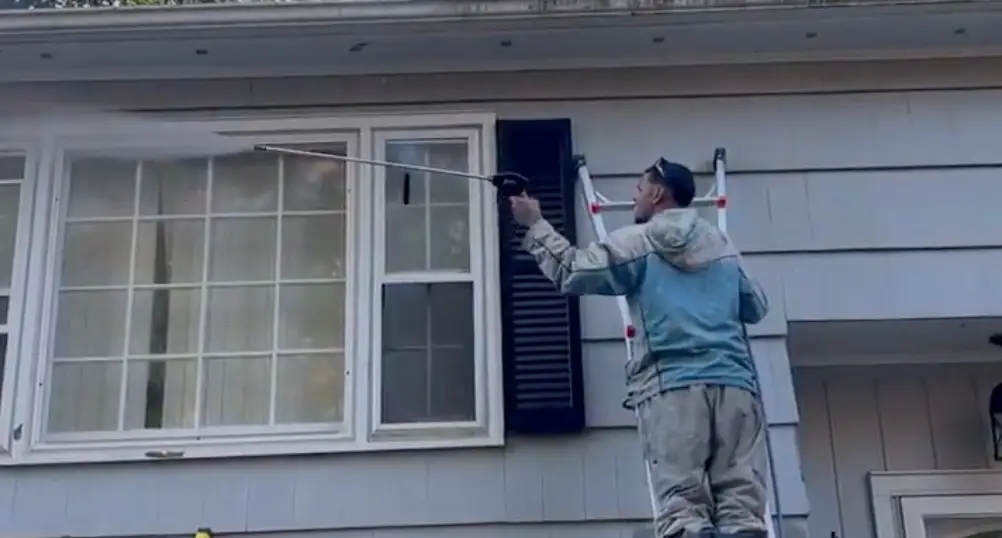
Maintaining the exterior of your home is one of the most important responsibilities of homeownership in the United States. Over time, environmental factors—ranging from suburban pollen and dust to humid mold and mildew—can take a toll on your siding. Power washing is the most effective way to restore your home’s curb appeal, but many homeowners are unsure of what to expect regarding pricing.
Quick Answer: Costs Vary by Size and Surface Type
On average, most U.S. homeowners pay between $300 and $600 for a professional house wash. However, this is a broad range because no two houses are identical. A small, single-story ranch will naturally cost significantly less than a sprawling three-story Victorian with intricate trim and hard-to-reach peaks.
Typical price ranges
- Small Homes (under 1,500 sq. ft.): $200 – $400
- Medium Homes (1,500 – 2,500 sq. ft.): $400 – $600
- Large Homes (2,500+ sq. ft.): $600 – $1,000+
- Per Linear/Square Foot: Some contractors charge roughly $0.15 to $0.40 per square foot of wall space.
Factors That Affect Power Washing Cost
Several variables beyond just the “size” of the house dictate the final quote provided by a professional service like Anderson’s Painting.
Home size
Height is a major cost driver. Homes with two or three stories require specialized equipment, longer hoses, and often more technicians to ensure safety while working on ladders or using high-reach extensions. The more surface area there is to cover, the more cleaning solution and labor time are required.
Siding material
Different materials require different techniques:
- Vinyl Siding: Generally the easiest and cheapest to clean using a “soft wash” method.
- Brick and Stone: These are porous and can trap deep-seated dirt, often requiring more time and specific detergents.
- Stucco: Extremely delicate. Stucco requires a low-pressure approach to avoid gouging the surface, which takes more precision and time.
- Wood Siding: Cedar shakes or wood planks may require a brightening agent after washing to restore the wood’s natural pH, adding to the material cost.
Level of dirt or mold
If a house has not been washed in five to ten years, it likely has a significant buildup of “organic growth” (green algae or black mold). Removing heavy infestations requires professional-grade algaecides and potentially multiple passes with the cleaning equipment, which will increase the labor cost.
Power Washing vs. Pressure Washing
In the industry, these terms are often used interchangeably by homeowners, but they actually refer to different processes.
What’s the difference?
- Pressure Washing: Uses high-pressure cold water to “blast” dirt away. It is excellent for hard surfaces like concrete driveways or brick walkways.
- Power Washing: Uses heated water combined with high pressure. The heat makes it much more effective at breaking down grease, salt, and stubborn mold, much like washing dishes with hot water versus cold.
- Soft Washing: This is the preferred method for most residential siding. It uses very low pressure (similar to a garden hose) but relies on high-quality chemical cleaners to kill mold at the root.
Which one costs more?
Power washing (using heated water) typically costs more than standard cold-water pressure washing because the equipment is more expensive to operate and maintain. However, for certain types of heavy grime, power washing is the only way to get a truly clean finish.
Is Power Washing Worth It Before Painting?
If you are planning to paint your home’s exterior, washing is not optional—it is a requirement.
Paint adhesion benefits
Paint is designed to bond to a clean, solid surface. If you paint over a thin layer of dust, chalking oxidation, or microscopic mold spores, the paint will eventually peel or bubble. Power washing removes these invisible barriers, ensuring the new coat of paint “locks” onto the siding.
Long-term savings
While it adds an upfront cost to your painting project, it saves you thousands in the long run. A paint job on a properly washed house can last 7–10 years, whereas a “dirty” paint job may fail in as little as 2 or 3 years.
FAQs
Does power washing damage siding?
If done incorrectly by an amateur, yes. High pressure can strip the finish off wood, crack vinyl, or force water behind the siding panels, leading to interior rot. This is why hiring professionals who understand “soft washing” is critical.
How often should a house be washed?
For most homes in the U.S., a professional wash once a year or every two years is ideal. This prevents mold from eating into the paint and keeps your home looking fresh.
Is power washing included in painting services?
At Anderson’s Painting, we always include a thorough exterior cleaning as part of our prep process for any exterior painting contract. We believe you can’t have a premium paint job without a clean foundation.
Get a Professional Clean with Anderson’s Painting
Don’t risk damaging your home’s exterior with a DIY pressure washer rental. A professional touch ensures that your siding is treated with the right pressure and the right chemicals to kill mold without harming your landscaping or your paint.
Whether you need a standalone cleaning to boost your curb appeal or you’re preparing for a full exterior color change, Anderson’s Painting is here to help. Our team uses top-tier equipment and eco-friendly solutions to make your home look like new.
Ready to see your home shine? Contact Anderson’s Painting today for a free power washing or exterior painting estimate!