
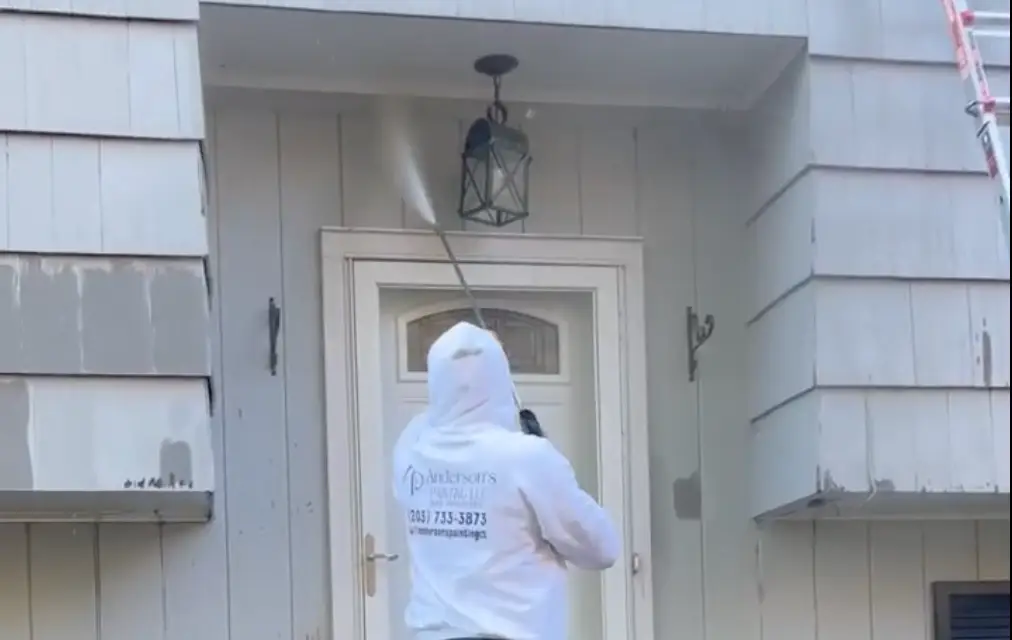
When homeowners look for ways to revitalize their exterior surfaces or prepare their homes for a fresh coat of paint, they often use the terms “pressure washing” and “power washing” interchangeably. However, in the professional world of exterior maintenance and painting, these are two distinct tools with different capabilities.
Understanding the difference is crucial because using the wrong method can lead to subpar cleaning at best, and structural damage to your home at worst.
Quick Answer: Power Washers Use Heat, Pressure Washers Don’t
The fundamental difference between the two is heat.
- Pressure Washing: Uses high-pressure cold water to blast away dirt, loose paint, mold, and debris.
- Power Washing: Uses high-pressure water that is heated by a heating element (similar to a water heater) to break down tough contaminants like grease, oil, and salt.
Why temperature changes cleaning power
Think of washing greasy dishes in your kitchen sink. While cold water and high pressure might eventually move the grease around, hot water melts the molecular bonds of the oils, allowing them to be rinsed away instantly.
In an outdoor setting, heated water significantly increases the efficiency of the cleaning process on specific organic and chemical stains. However, that heat also makes the tool more aggressive, requiring a higher level of expertise to operate safely.
What Is a Pressure Washer?
A pressure washer is the most common tool used for residential maintenance. It relies entirely on the mechanical kinetic energy of the water stream to dislodge surface-level contaminants.
How it works
Water enters the machine from a standard garden hose. A gasoline engine or electric motor powers a pump that accelerates the water through a small nozzle. The “cleaning power” is measured in two ways:
- PSI (Pounds per Square Inch): The amount of force hitting the surface.
- GPM (Gallons per Minute): The volume of water flowing, which determines how fast you can rinse away the debris.
Best surfaces for pressure washing
Because it doesn’t use heat, a pressure washer is generally safer for materials that might warp or react poorly to high temperatures.
- Wood Decks and Fences: Cold water is preferred to prevent “furring” or damaging the wood fibers.
- Brick and Stone: Effective for removing moss and dirt without affecting the mortar’s integrity.
- Standard Vinyl Siding: Great for annual “soft washing” to remove seasonal pollen and dust.
What Is a Power Washer?
A power washer is an industrial-grade machine. It includes a heating coil that can raise water temperatures to near-boiling levels.
Heated water benefits
The inclusion of heat makes this the “heavy-duty” cousin of the pressure washer. Heat acts as a catalyst for chemical cleaners and serves as a solvent for stubborn materials. It is particularly effective at:
- Killing Spores: The heat can kill mold, mildew, and algae at the root, preventing it from growing back as quickly as cold-water washing would.
- Removing Salt: Especially important in coastal regions or areas where road salt is used, as heat dissolves salt crystals more effectively.
- Weed Removal: The hot water can kill weeds growing in the cracks of a driveway.
When power washing is recommended
Power washing is typically reserved for hard, non-porous surfaces. It is the go-to choice for:
- Driveways and Sidewalks: Removing oil leaks, tire marks, and deeply embedded chewing gum.
- Commercial Spaces: High-traffic areas with significant grease buildup.
- Concrete Patios: Getting into the deep pores of the concrete to remove years of staining.
Pressure vs. Power Washing Before Painting
At Anderson’s Painting, the “wash phase” is perhaps the most critical part of our exterior preparation. If you paint over a surface that hasn’t been properly cleaned, the new paint will bond to the dirt rather than the house, leading to premature peeling.
Paint prep considerations
For most residential exteriors, we utilize professional-grade pressure washing (cold water) combined with specialized cleaning solutions. This is often called a “soft wash.”
- It removes “chalking” (the powdery residue left by old, oxidized paint).
- It clears away cobwebs and bird droppings.
- It ensures a clean “canvas” for the new primer and topcoat.
Risks of using too much pressure
The “pressure” part of these tools is a double-edged sword. If an amateur uses a high-PSI nozzle too close to the surface:
- Etching: It can permanentlly “carve” lines into wood or soft stone.
- Water Intrusion: It can force water behind siding or into window seals, leading to rot and mold inside the walls.
- Surface Destruction: It can strip the protective cream coat off of concrete or splinter a wood deck.
FAQs
Can power washing damage siding?
Yes. The combination of high heat and high pressure can warp vinyl siding or cause it to become brittle. For siding, a low-pressure “soft wash” with the right cleaning agents is always the safer, more effective choice.
Which is safer for painted surfaces?
Pressure washing (cold water) is generally safer for surfaces that are already painted. Hot water can actually soften existing paint, making it more prone to damage if you aren’t planning on a full repaint immediately.
Do professionals use both?
Yes. A professional company like Anderson’s Painting selects the tool based on the substrate and the goal. We might use a power washer for a greasy concrete driveway but switch to a pressure washer for the delicate trim and siding of the home.
Protect Your Investment with Anderson’s Painting
Don’t risk damaging your home’s exterior with a rented machine and an afternoon of guesswork. Proper exterior cleaning is a science that requires the right balance of pressure, temperature, and chemistry.
At Anderson’s Painting, we provide expert exterior cleaning services as part of our comprehensive painting process. Whether you need your driveway cleared of oil stains or your siding prepped for a stunning new color, we have the professional-grade equipment and the experience to do it safely.
Ready to give your home a fresh, clean start? Contact Anderson’s Painting today for a professional exterior cleaning or painting estimate!