
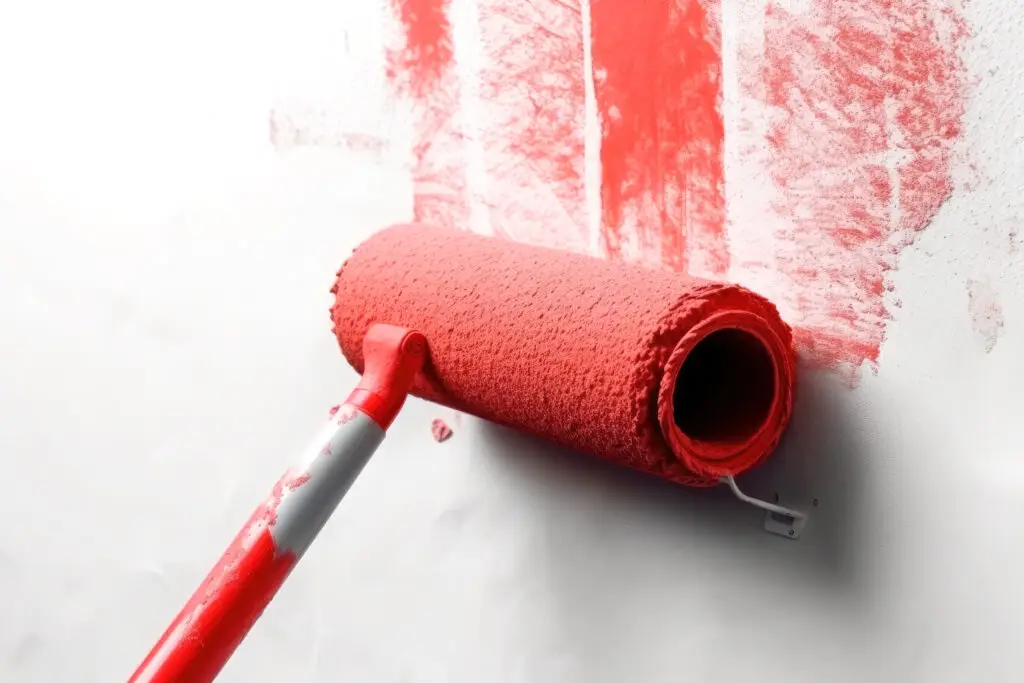
Red is a bold, energetic color choice, but it is notorious among professional painters as the most difficult pigment to neutralize. Because red pigments are often transparent, they have a high “bleed-through” rate, meaning they can continue to tint your new color even after several coats of high-quality paint.
Quick Answer: Red Requires a High-Quality Primer
You cannot simply paint over red with more paint. To successfully hide a red wall, you must use a dedicated, high-hide primer—specifically one tinted to a mid-tone gray. Using a gray primer is more effective than white because it neutralizes the light-reflecting properties of the red pigment, allowing your topcoat to reach full opacity in fewer steps.
Why Red is One of the Hardest Colors to Cover
In the world of color science, red pigments (especially organic reds) have a smaller molecular structure that allows light to pass through the paint film and bounce off the original red surface. This is why a white topcoat over a red wall often looks pink, even after three or four applications. Without a chemical barrier to “kill” the red, the undertone will persist.
Best Primers for Covering Red Paint
Choosing the right primer is the difference between a two-day project and a week-long struggle.
Stain-Blocking Primers
For the most aggressive red tones, professionals often turn to shellac-based or high-solids oil-based primers (like those from Zinsser or KILZ). These primers create a non-porous seal that prevents the red pigment from migrating into the fresh topcoat. While water-based acrylic primers have improved, a solvent-based primer remains the gold standard for blocking “bleeding” pigments.
Tinted Primers vs. White Primers
- White Primer: Often fails because it highlights the red, turning the wall a vibrant pink and requiring more topcoat.
- Gray-Tinted Primer: This is the industry secret. A mid-tone gray (often referred to as “P-Prime” or Gray P3) effectively absorbs the light that would otherwise reflect off the red. It provides a neutral base that helps both light and dark topcoats achieve their true color faster.
Step-by-Step Painting Process
1. Surface Prep and Repairs
Red walls often show more imperfections than lighter colors. Start by cleaning the walls with a mild detergent to remove oils. Fill any nail holes or cracks with spackle, sand them smooth, and wipe away the dust. If the red paint is a high-gloss finish, you must lightly sand the entire surface to ensure the primer can “bite” into the wall.
2. Priming Correctly
Apply one thorough coat of gray-tinted bonding primer. Ensure you are “loading” your roller sufficiently—do not try to stretch the primer too thin. Let the primer dry completely according to the manufacturer’s instructions (usually 1 to 4 hours depending on the base). If you can still see bright flashes of red after the first coat, a second coat of primer may be necessary.
3. Applying Topcoat Evenly
Once the primer has created a flat, gray surface, apply your topcoat. Use a high-quality 100% acrylic latex paint. Apply the first coat, wait for the recommended dry time, and then apply the second. Because of the gray primer, two coats of topcoat should be sufficient for even the lightest of new colors.
Choosing the Right New Color
Neutral vs. Light Colors
If you are moving from red to a neutral like “Greige” or “Off-White,” the gray primer is essential. If you are moving to another dark color (like navy blue or forest green), you can still use a tinted primer, but you may want the tint to be slightly darker to support the deep topcoat.
How Undertones Affect Coverage
Red has a warm undertone. If your new color has a cool undertone (like a blue-leaning gray), any red bleed-through will create a muddy, purple-ish mess. Using the gray-scale primer effectively severs the relationship between the old warm undertone and the new cool one.
FAQs
How many coats does it take to cover red paint?
Without primer, it can take 5 or 6 coats of paint to cover red. With a high-quality gray-tinted primer, you can typically achieve full coverage with one coat of primer and two coats of paint.
Can I skip primer?
No. Even “Self-Priming” paints often struggle with red. Skipping a dedicated primer usually results in higher costs because you will end up buying twice as much expensive topcoat paint to hide the red.
Why does red bleed through paint?
Red pigments are often less opaque than other colors. Additionally, some older red paints used dyes that are soluble in the water found in latex paints, causing the color to literally dissolve and mix into the new layer as it dries.
Transform Your Space Without the Stress
Painting over red can be an exhausting DIY project if you don’t have the right tools and strategy. Save yourself the frustration of multiple trips to the hardware store and the “pink wall” syndrome.
Contact Anderson’s Painting today for a Free Estimate and let our professionals handle the prep, priming, and painting for a perfect finish!