
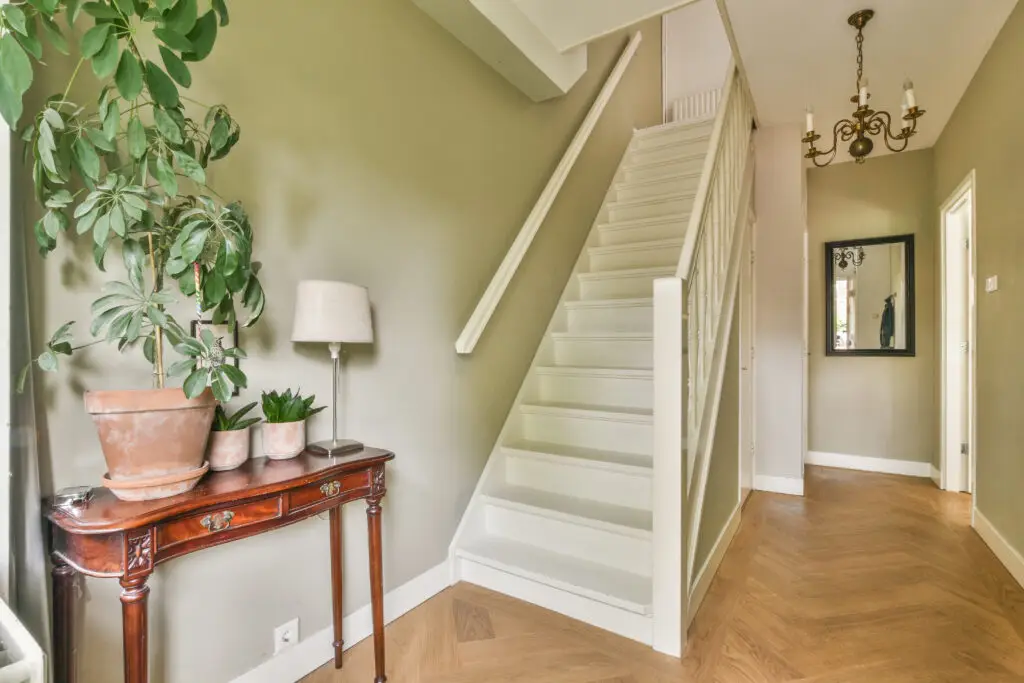
Stairs are often the architectural centerpiece of a home, yet they are also the most abused surface in any interior. Unlike a wall that might only need a refresh for aesthetic reasons, stairs require a strategic approach to color and coating technology to remain functional and beautiful over time.
Quick Answer: Durable Paint and Contrast Matter Most
When designing a staircase, the most successful projects prioritize two things: high-durability coatings (typically floor-grade enamels) and visual contrast. Contrast isn’t just a design choice; it is a safety feature that helps the eye distinguish between the tread (where you step) and the riser (the vertical back), reducing the risk of trips and falls.
Why stairs need tougher coatings
Standard wall paint is designed to look good and be wiped occasionally. Stair paint, however, must withstand “point-load” pressure—the weight of a human concentrated on the ball of a foot—repeated hundreds of times a day. It must resist scuffing from rubber soles, scratching from pet claws, and the abrasive nature of household dust. Using standard latex paint on stairs usually results in peeling and “tracking” within weeks.
Popular Stair Paint Color Ideas
In the U.S., stair trends currently lean toward a mix of classic elegance and bold modern statements.
White risers with dark treads
This is the “Gold Standard” of American staircase design. By painting the risers a crisp, clean white (like Simply White or Alabaster) and the treads a dark, grounding tone (such as Tricorn Black or a deep walnut stain), you create a rhythmic, sophisticated look. The dark treads hide the inevitable dirt from footwear, while the white risers brighten the staircase, especially in narrow hallways.
Neutral tones for high-traffic areas
For a more contemporary or “Scandi” look, monochromatic neutrals are gaining popularity. Using a single shade of “Greige” or a soft mushroom tone across both treads and risers creates a seamless, sculptural effect. This is particularly effective in open-concept homes where you want the stairs to blend into the architecture rather than stand out.
Bold accent stair designs
For those looking to make a statement, the staircase is a perfect “canvas.”
- The Ombré Effect: Painting each riser a slightly different shade of the same color, transitioning from dark at the bottom to light at the top.
- The Painted Runner: Painting a solid color stripe down the center of the stairs while leaving the edges a contrasting color. This mimics the look of a fabric runner without the maintenance of vacuuming carpet.
Paint Finishes That Work Best on Stairs
The sheen you choose is just as important as the color for both maintenance and safety.
Satin and semi-gloss
- Satin: Offers a modern, low-luster look that hides imperfections in the wood. It is easier to clean than flat paint but doesn’t have the “plastic” look of high gloss.
- Semi-Gloss: The professional’s choice for risers. It is incredibly durable and allows you to easily wipe away the inevitable “toe scuffs” left by shoes hitting the back of the step.
Slip-resistant additives
Safety is paramount. Glossy paint can be incredibly slippery, especially when wearing socks. In the U.S., many homeowners mix a “slip-resistant additive”—a fine, clear grit—into the final topcoat of the treads. This provides much-needed traction without significantly altering the color of the paint.
Matching Stairs With Railings and Floors
A staircase doesn’t exist in a vacuum; it must bridge the gap between two different levels of a home.
Creating visual flow
To create a cohesive “flow,” try to match the stair treads to the flooring of the lower level. If you have light oak floors, carrying that tone onto the treads makes the transition feel natural. If the floors are a different material (like tile), use the handrail as the “anchor” color to tie the two levels together.
Avoiding color clashes
Be careful with “near-miss” colors. If your floors have a warm, red undertone (like Cherry), avoid painting the stairs a cool, blue-toned grey. This creates a visual “vibration” that feels unsettled. Instead, look for a neutral that shares the same temperature (warm or cool) as your flooring.
FAQs
What paint is best for stairs?
You should always use paint labeled specifically as “Porch & Floor Enamel” or a “Urethane Alkyd Enamel.” These are formulated to dry to a much harder film than standard paint. Water-based alkyd enamels are popular because they offer the durability of old-fashioned oil paint but clean up with water.
Should stairs be lighter or darker than floors?
There is no hard rule, but darker treads are generally more practical as they hide the shadows of wear and tear better. However, if the hallway is very dark, a lighter color can help reflect light and make the space feel safer.
How do I prevent stair paint from chipping?
The secret is in the prep. You must sand the existing finish to “de-gloss” it, then use a high-bond primer. Finally, allow the paint to cure fully. Even if it’s “dry to the touch,” keep traffic off the stairs for at least 24–48 hours to prevent the paint from indenting or chipping.
Ready to transform your home’s focal point with a fresh, durable new look? Click here to get a professional quote and ensure your stairs are as safe as they are beautiful!