
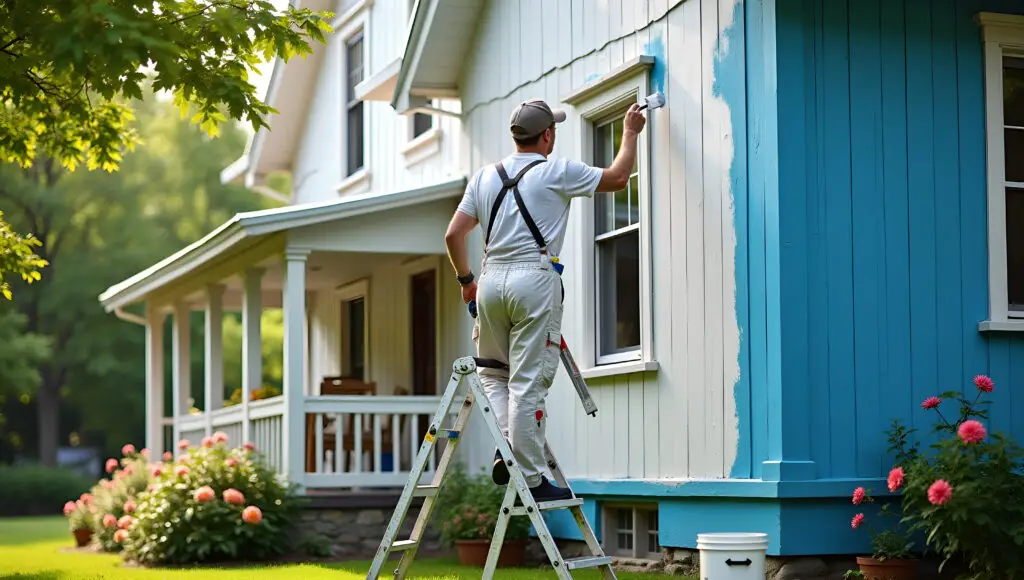
Coastal homes are subjected to some of the harshest environmental conditions in the United States. While inland homes deal with standard weathering, shoreline properties face a “double hit” of direct sunlight and UV rays reflected off the ocean. Without the right protective coatings, paint can quickly lose its bond, fade in color, and degrade structurally.
Quick Answer: Coastal Homes Need Exterior Paint That Resists UV, Moisture, and Salt Air
To survive near the water, a paint must be formulated with high-resin content and advanced UV blockers. Traditional paints often become brittle when exposed to constant salt spray and intense sun, leading to cracking. A professional-grade coastal paint remains flexible, allowing it to expand and contract with the home’s siding during temperature swings while shielding the substrate from solar degradation.
Why coastal homes fade faster
Reflected UV radiation is significantly more intense than direct sunlight alone. This “albedo effect” from the water and sand means your home is being hit by radiation from multiple angles. This breaks down the chemical binders in the paint, causing the pigment to dissipate and the surface to lose its luster.
Why standard exterior paint may not last as long near the coast
Standard paints are designed for average humidity and sun exposure. Near the coast, the constant presence of salt acts as an abrasive and a desiccant, drawing moisture into the paint film and eventually behind it. If the paint isn’t highly “breathable” and salt-resistant, it will bubble and peel far sooner than the manufacturer’s estimated lifespan.
What UV Protection Means in Exterior Paint
UV protection in a high-end coating isn’t just a marketing term; it refers to the chemical stability of the product.
- Fade Resistance: Quality paints use inorganic pigments that are naturally more stable under UV light. This ensures that a deep navy or a vibrant cottage green stays true to its original swatch for years.
- Color Retention: Advanced resins act like a “clear coat” for your color, locking the pigments in place so they don’t wash away or bleach out.
- Resistance to Chalking and Breakdown: When UV rays destroy paint binders, the paint turns into a white, powdery residue known as chalking. UV-protective paints are engineered to resist this erosion, maintaining a solid protective film.
Why Coastal Homes Need More Than Just UV Resistance
Sun is only half the battle. A truly coastal-ready paint must address these three additional factors:
Salt exposure
Salt is chemically aggressive. It can penetrate inferior paint films and reach the wood or masonry beneath, causing rot or efflorescence. Coastal paints are designed to be “slicker,” making it harder for salt crystals to adhere to the surface.
Humidity and mildew
The constant moisture of sea air creates a breeding ground for mold and mildew. Coastal paints typically include higher concentrations of antimicrobial additives (mildewcides) to prevent black streaks from forming on the shady side of the house.
Wind-driven moisture
Coastal storms can push water into the smallest microscopic pores of a paint film. A high-performance coating must be hydrophobic, meaning it repels liquid water while remaining vapor-permeable to let internal moisture escape.
Best Paint Features for Coastal Homes
When reviewing specifications with a professional contractor, look for these key indicators of quality:
- 100% Acrylic Exterior Paint: Acrylic is the gold standard for flexibility. Unlike oil-based paints, which become brittle over time, 100% acrylic resins stay “rubbery,” preventing cracks where salt and water could enter.
- Fade-Resistant Resins and Pigments: Look for products specifically labeled for “High-UV” environments.
- Mildew-Resistant Finish: A finish that is “chemically cured” to resist organic growth is essential in high-humidity zones.
- Flexible Coating Performance: The ability to bridge small hairline fractures as the house settles or shifts in high coastal winds.
Where UV Damage Shows Up First on a Coastal Home
Regular inspections are key to preventing structural damage. Pay close attention to:
- South- and west-facing walls: These receive the most direct afternoon sun and usually show signs of fading first.
- Trim, shutters, and doors: These architectural details often use darker colors, which absorb more heat and UV radiation than lighter siding.
- High-sun exposure surfaces: Dormers and gables that are not shaded by trees or neighboring structures.
Prep Tips Before Repainting a Coastal Exterior
Even the best UV-protective paint will fail if applied over salt.
- Washing away salt and chalking: A thorough professional power wash (using a salt-neutralizing solution) is mandatory. You cannot paint over salt deposits.
- Priming weathered surfaces: Surfaces that have already begun to “silver” or weather from the sun need a high-penetration primer to re-bond the wood fibers.
- Choosing the right sheen: Satin or Low-Lustre sheens are often preferred for coastal homes. They offer more moisture resistance than flat finishes but are less prone to showing surface imperfections than high-gloss.
FAQ: UV Protection Paint for Coastal Homes
What is the best exterior paint for sun exposure?
A 100% acrylic latex paint with inorganic pigments. Brands like Benjamin Moore (Aura) and Sherwin-Williams (Emerald) offer specialized lines designed for maximum UV and weather resistance.
Does coastal weather fade paint faster?
Yes. Due to reflected UV rays and salt air erosion, coastal homes may experience fading up to 30% faster than inland properties.
Is acrylic paint best for beach homes?
Yes. Its flexibility and breathability make it superior to oil-based paints, which tend to peel in high-moisture environments.
How often should a coastal home be repainted?
Most coastal homes require a fresh coat every 5 to 7 years to maintain maximum protection, though high-quality UV paints can extend this to 10 years with proper maintenance.
Get Exterior Painting Help for Coastal Homes in CT
Protecting your shoreline investment requires an expert eye and the right materials. At Anderson’s Painting, we specialize in the unique requirements of Connecticut’s coastal properties. We understand how to battle the salt, the sun, and the sea to give your home a finish that lasts.
- Coastal-Grade Material Selection: We source only the highest-rated UV and salt-resistant coatings.
- Meticulous Surface Preparation: Our multi-step cleaning and priming process ensures a long-lasting bond.
- Professional Results: Restore your home’s beauty and shield it from the elements for years to come.
Contact Anderson’s Painting today for a free exterior painting estimate and protect your coastal home!