
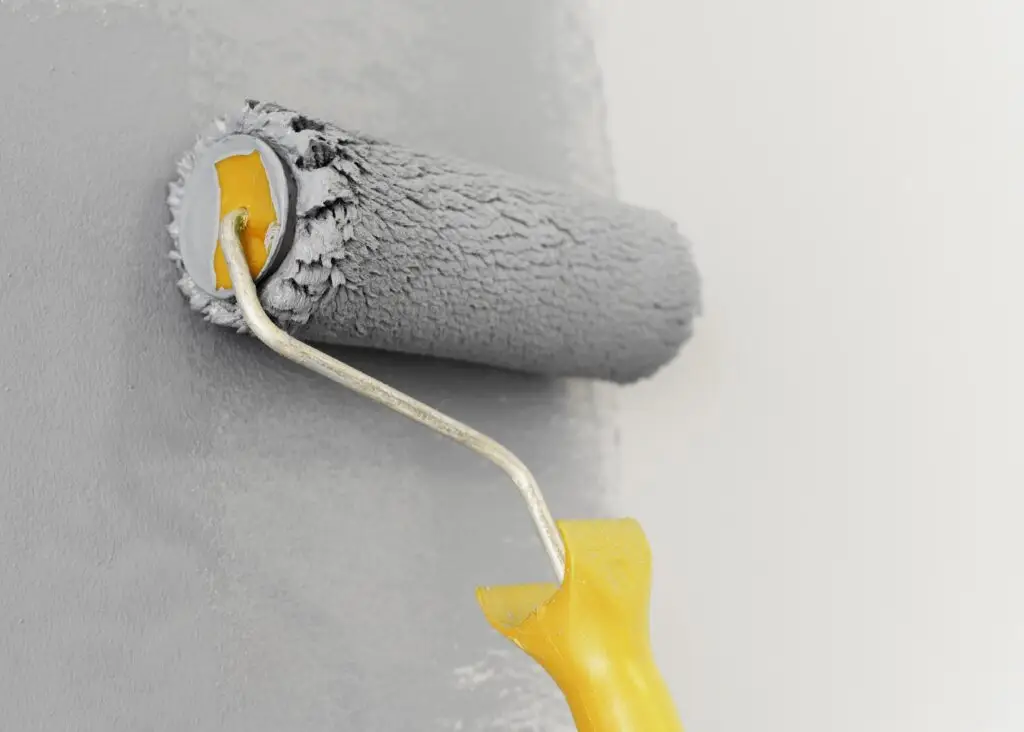
Deciding whether to spray or roll is one of the most critical steps in planning a painting project. While a paint sprayer promises lightning-fast coverage, a roller offers unmatched control. The “better” tool depends entirely on your specific space, your budget, and the finish you want to achieve.
At Anderson’s Painting, we balance these methods based on the unique demands of each room. Here is a breakdown of when to choose one over the other.
Paint Sprayer vs. Roller: Quick Comparison
| Feature | Paint Sprayer | Roller |
| Speed | Extremely Fast | Moderate |
| Finish Quality | Ultra-smooth, glass-like | Texture-heavy, traditional |
| Prep Time | High (Masking everything is required) | Low (Drop cloths usually suffice) |
| Paint Waste | Higher (Due to overspray) | Minimal |
| Cleanup | Involved (Complex machine maintenance) | Simple (Washable tools) |
When a Paint Sprayer Works Best
Spray guns are precision tools designed for efficiency on large or complex surfaces.
- Cabinets: For that factory-grade, smooth look, spraying is essential. Rolling cabinets often leaves unwanted texture.
- Trim and Doors: Spraying allows for flawless coverage of intricate molding and corners that are difficult to reach with a brush or roller.
- Large Empty Spaces: If you have a high-ceilinged great room or an empty new construction home, spraying can cut painting time by 70%.
- Exterior Surfaces: For fences, siding, or brick, sprayers are the only practical way to get into all the surface gaps.
When a Roller Works Best
Rollers are the reliable, low-maintenance choice for everyday interior spaces.
- Occupied Homes: You won’t need to wrap every piece of furniture in plastic. A roller is surgical; you can paint around what you need to without protecting the entire house.
- Interior Walls: Rollers provide a consistent texture that most homeowners prefer for drywall.
- Small Rooms: In a tight bathroom or hallway, the time spent setting up a sprayer and masking is often longer than the time it would take to simply roll the walls.
- Touch-ups: Keeping a roller and a small amount of paint on hand makes fixing future scuffs simple.
Painting With a Spray Gun vs. Roller
- Coverage: Spraying applies a very uniform, thin layer of paint. Rolling applies a thicker film, which is often more durable for high-traffic walls.
- Overspray Risk: This is the sprayer’s biggest downside. Fine paint mist can travel across a room, landing on windows, floors, and fixtures. If you aren’t an expert at masking, you could ruin your floors.
- Back Rolling: This is the professional “secret.” Even when pros spray, they often use a roller immediately afterward to “back roll”—this pushes the paint into the drywall pores, ensuring better adhesion and a more uniform texture.
Cost and Time Differences
- DIY Equipment: A quality airless sprayer is a significant investment ($300–$600+). For a single DIY project, the cost of the machine plus the massive amount of masking tape and plastic sheeting often exceeds the cost of a few rollers and brushes.
- Professional Labor: Pros prioritize efficiency. We use sprayers to move fast, but we spend hours on prep. If you are hiring us, you are paying for the high-level prep work that makes the speed of spraying safe.
Which Method Do Professional Painters Use?
The answer is both. Professional painting is project-dependent. We rarely stick to one method for an entire house. We might spray your trim, doors, and ceilings, but roll the walls to ensure a durable, manageable texture. The “spray and back-roll” method is the industry standard for achieving a fast, high-quality, and durable finish on new drywall.
FAQ
Is spraying paint better than rolling?
“Better” is relative. Spraying is faster and smoother, but rolling is cleaner, more durable for drywall, and easier to manage in occupied homes.
Do paint sprayers use more paint?
Yes. Due to “overspray” (paint lost to the air) and the need to prime the machine lines, you will generally use 20–30% more paint with a sprayer than with a roller.
Should interior walls be sprayed or rolled?
If you are living in the house, roll them. If the house is empty, spraying followed by back-rolling is the most efficient way to achieve a professional finish.
Do professionals roll after spraying?
Yes! It’s called back-rolling. It ensures the paint is evenly pressed into the wall surface and creates a consistent texture.
Which gives a smoother finish: sprayer or roller?
The sprayer. It eliminates the “orange peel” texture left by a roller cover, resulting in a perfectly uniform, smooth look.
Ready to get the perfect finish for your walls, cabinets, or trim?
Whether it’s the speed of a professional sprayer or the control of a expert hand-roll, Anderson’s Painting knows exactly which tool will deliver the best result for your home.
Contact us today to discuss your project and get a professional estimate!