
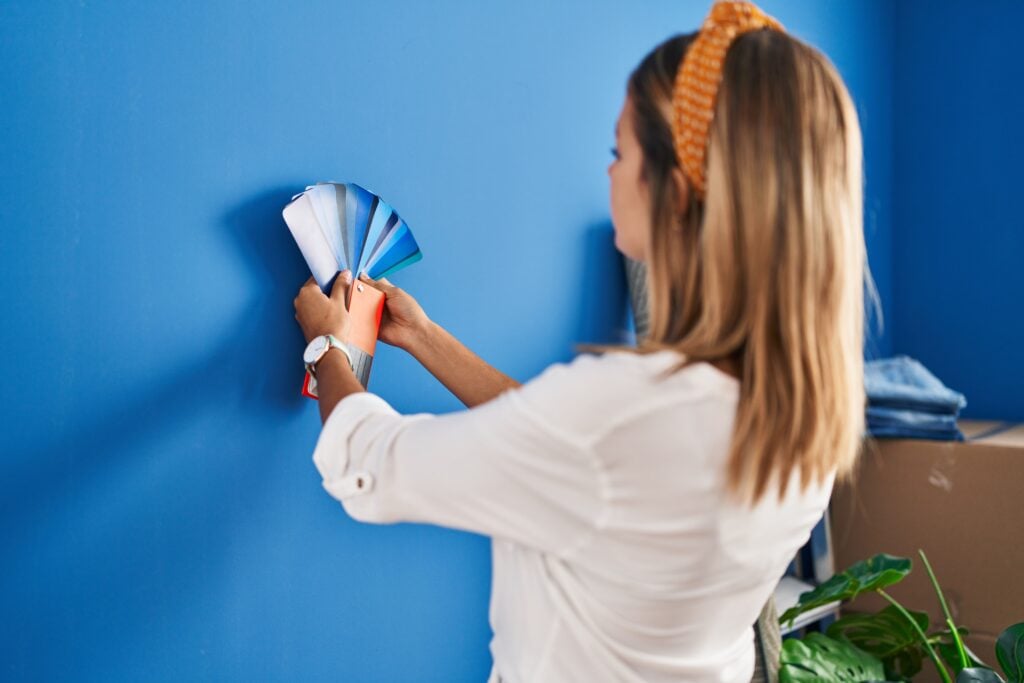
When dealing with limited square footage, the goal isn’t to change the architecture—it’s to change the perception of space. Paint is the ultimate tool for visual expansion. By choosing the right hue, you can blur the boundaries of a room and make walls feel as though they are receding. At Anderson’s Painting, we’ve transformed countless cramped spaces into light, airy sanctuaries using a few strategic color secrets.
Quick Answer: What Colors Make a Small Room Look Bigger?
To make a room feel larger, lean toward cool-toned, light-reflecting colors like soft whites, light grays, pale blues, and soft greens. These shades reflect natural light, which minimizes the appearance of shadows and makes walls feel further away. The key is choosing colors that “recede” rather than “advance.”
The Science of Light and Space
Color affects our spatial perception through light reflection and color temperature:
- Light Reflection: Light-colored walls act as a mirror, bouncing sunlight around the room and eliminating the dark “corners” that define a room’s physical limits.
- Color Temperature: Cool colors (blues, greens, grays) are perceived as being further away from the eye, whereas warm, saturated colors (reds, oranges, dark browns) tend to “advance,” making walls feel like they are closing in on you.
The Best Colors for Expansion
- Soft White: The classic choice for a reason. It creates a crisp, clean slate that maximizes every ounce of available light.
- Warm Neutral: If white feels too sterile, a warm neutral (with yellow or pink undertones) adds coziness without sacrificing the feeling of space.
- Light Gray: A sophisticated way to add depth while maintaining that “receding” cool tone.
- Pale Blue: Blue is naturally calming and “airy,” making it a fantastic choice for bedrooms and bathrooms.
- Soft Green: Green brings a sense of the outdoors in, which creates a natural, expansive feel.
- Greige: The perfect hybrid of gray and beige. It offers the warmth of beige with the modern, cool clarity of gray.
Debunking the “White-Only” Myth
While white is the most effective at reflecting light, it isn’t the only option. In rooms with very little natural light, a stark white can sometimes look gray or dingy. In those cases, a soft blue or a light, warm neutral can often make a small room feel more open because the color itself adds life and dimension, whereas white might just feel empty.
Pro-Tips for Maximizing Space
The “Monochromatic” Trick
One of the most effective ways to make a room look bigger is to paint the walls, trim, and baseboards the same color. When you break up a small wall with white trim, you draw lines that define the room’s dimensions. By painting everything one continuous color, you blur those boundaries, making the walls feel taller and longer.
The Finish Matters
Avoid high-gloss finishes in small rooms. High-gloss creates a “glare” that can feel distracting and claustrophobic. Eggshell or satin finishes are ideal; they provide a soft, even glow that diffuses light beautifully across the surface.
Accent Walls: The “Yes” or “No”?
Accent walls in small rooms are a risky business. A dark accent wall can act like a “stop sign,” immediately drawing the eye to the end of the room and highlighting its small size. If you want an accent, use a shade only slightly darker than your main wall color to keep the transition subtle and sophisticated.
Common Mistakes to Avoid
- Over-saturated colors: Stay away from primary colors or dark, heavy hues, which suck the light out of the room.
- Ignoring the Ceiling: A bright white ceiling is good, but painting the ceiling a slightly lighter shade than the walls can create an illusion of height.
- Cluttered Palette: Stick to a simple, consistent color story throughout the room to keep the eye moving smoothly.
FAQ
What wall color makes a room look bigger?
Light, cool-toned colors like soft gray, pale blue, or crisp white are the most effective at reflecting light and making space feel expanded.
Should small rooms be painted light or dark?
Light is generally better for expansion. Dark colors can be used in small rooms to create a “jewel box” effect, but they won’t make the room look larger.
Does painting the ceiling the same color make a room look bigger?
Yes. It eliminates the horizontal line at the top of the wall, which helps the eye travel upward and makes the ceiling feel higher.
What paint finish is best for small rooms?
Eggshell is preferred. It is easy to clean but doesn’t have the high-gloss shine that can make a small, light-filled space feel overstimulating.
What colors make a bedroom feel larger?
Pale blues, soft greens, and light, airy neutrals are excellent for bedrooms because they create a serene atmosphere that feels open and uncluttered.
Need help choosing the right palette for your home? Color selection is an art. If you aren’t sure which shade of white or gray will work in your unique lighting conditions, we’re here to help. Click here to get a free estimate from Anderson’s Painting and let our color consultants create the perfect, airy atmosphere for your home!