
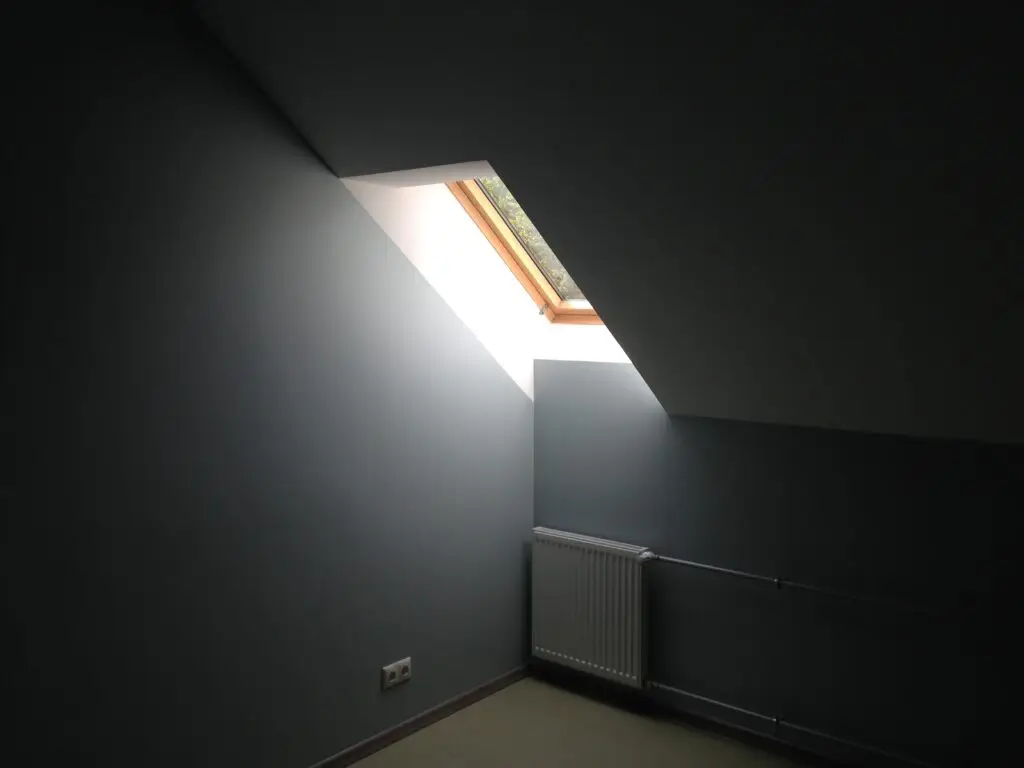
In modern American home renovation, the basement is no longer just a dark storage space—it is a valuable extension of the home’s living area. One of the most significant design shifts in recent years is the move away from traditional drop ceilings or drywall in favor of an exposed, black-painted ceiling.
Often referred to as the “industrial” or “urban loft” look, this style has become a staple in finished basements across the U.S. But is it the right choice for your home? At Anderson’s Painting, we’ve transformed countless basements with this technique. Here is everything you need to know about the pros, cons, and technical requirements of painting your basement ceiling black.
Why Homeowners Paint Basement Ceilings Black
The trend started in commercial lofts and high-end restaurants, but it quickly migrated to residential basements for two primary reasons.
Exposed Ceilings and Industrial Style
An exposed ceiling leaves the joists, subfloor, and mechanical systems visible. Painting these elements black creates a sleek, cohesive, and intentional look. It leans into a modern industrial aesthetic that pairs perfectly with luxury vinyl plank (LVP) flooring, brick accents, and leather furniture.
Hiding Ducts, Pipes, and Wiring
A basement ceiling is a “highway” for your home’s infrastructure. You have silver ductwork, copper pipes, yellow gas lines, and colorful electrical wires. When you paint everything a uniform, deep black, these disparate elements “disappear” into the shadows. The eye no longer focuses on the individual pipe; it sees a singular, textured surface.
Pros of a Black Basement Ceiling
Beyond the aesthetic appeal, there are several practical advantages to choosing a dark, exposed ceiling over a traditional drop ceiling.
Creates Visual Depth
Contrary to popular belief, a black ceiling can actually make a basement feel taller. Because black absorbs light and hides the hard lines of the joists, the “ceiling” becomes an infinite void. This lack of a defined boundary trick the eye into thinking the ceiling is further away than it actually is.
Modern, Finished Look
A painted exposed ceiling provides an immediate “cool factor.” It moves the basement away from the “utility room” feel and into the realm of a modern lounge, home theater, or “man cave.”
Easier Access for Future Repairs
This is the biggest practical win. If you have a plumbing leak or need to run a new internet cable, a drywall ceiling has to be cut open and patched. A drop ceiling has fragile tiles that often break. With a painted exposed ceiling, your home’s systems remain fully accessible. If a repair is made, you simply spray the new pipe or patch with matching black paint.
Potential Drawbacks to Consider
While the look is stunning, it is important to understand the environmental changes it brings to your basement.
Light Absorption
Black is the ultimate light absorber. Unlike a white drywall ceiling that reflects light back down into the room, a black ceiling will soak it up. If your basement has small windows or low natural light, the space can feel significantly darker after painting.
Need for Proper Lighting Design
To make a black ceiling work, you must upgrade your lighting. Traditional “boob” lights or low-wattage bulbs won’t suffice. We recommend:
- Recessed Lighting: To provide direct downward illumination.
- Track Lighting: To highlight specific areas.
- Industrial Pendants: To add to the aesthetic while bringing light lower into the room.
Paint Types & Application Tips
Painting an exposed ceiling is a technical task that requires specific equipment and preparation.
Flat vs. Matte Finishes
We almost exclusively recommend a Flat Black or Ultra-Matte finish.
- Why Flat? Glossy or satin paints reflect light. If you use a shiny paint, every imperfection in the wood joists or every dent in the ductwork will be highlighted. A flat finish creates that “disappearing” effect that makes the ceiling look like a shadow.
Spraying vs. Rolling
Painting an exposed ceiling with a roller is nearly impossible and will produce a messy, uneven result. Professional Airless Spraying is the only way to ensure 100% coverage. A sprayer can reach into the gaps between joists, coat the back of pipes, and provide a uniform finish on different materials (wood, metal, PVC) simultaneously.
Prep for Exposed Surfaces
Preparation is the most time-consuming part of the job.
- Cleaning: Dust and cobwebs must be blown out or vacuumed.
- Masking: Everything not being painted—walls, floors, windows, and water heaters—must be meticulously covered in plastic and drop cloths.
- Priming: Some metal ductwork may require a specialized bonding primer to ensure the black paint doesn’t flake off over time.
FAQs
Does a black ceiling make basements feel smaller?
Surprisingly, no. Because the black creates a “void” effect where the ceiling height becomes hard to distinguish, it often makes the room feel more expansive and open than a low-hanging drop ceiling would.
Is spraying the best method?
Yes. Spraying is the only method that provides the “wraparound” coverage needed for the complex geometry of an exposed ceiling. It is also significantly faster than hand-brushing.
What lighting works best with black ceilings?
High-lumen LED recessed cans are the best choice. They provide crisp, bright light that compensates for the paint’s light absorption, ensuring the living area remains bright while the “utilities” stay hidden in the dark ceiling.
Ready to Transform Your Basement?
A black-painted ceiling is a bold design choice that adds value, style, and practicality to your home. However, the quality of the finish depends entirely on the precision of the application.
At Anderson’s Painting, we specialize in professional basement transformations. Our team handles the heavy-duty masking, professional-grade spraying, and cleanup, leaving you with a stunning, modern space.
Contact Anderson’s Painting Today for a Free Basement Painting Estimate