
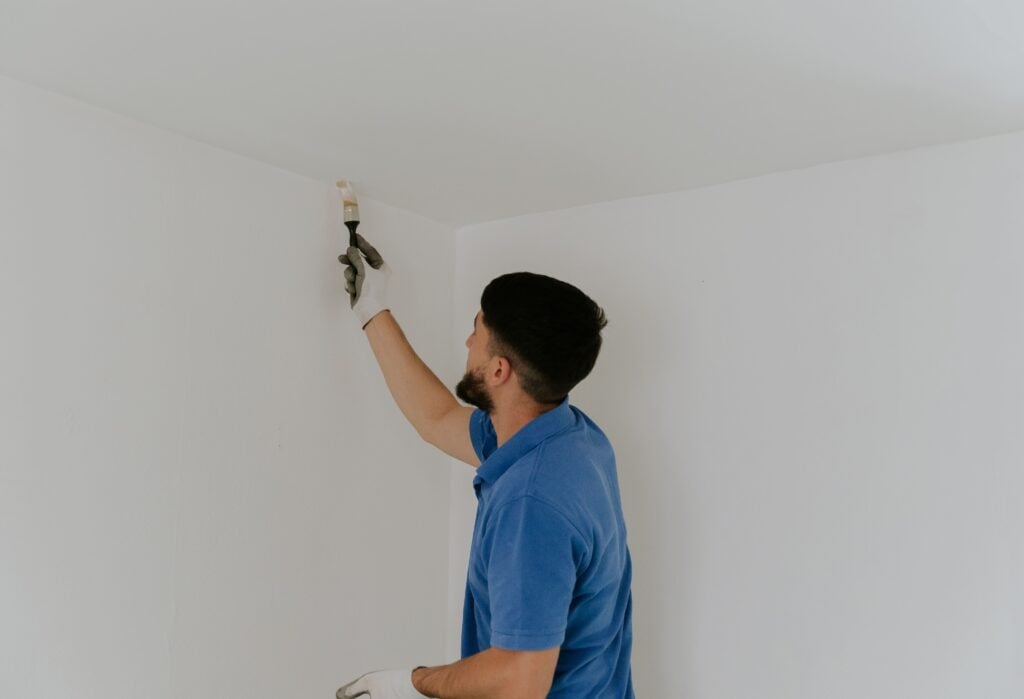
Technically, paint will stick to drywall, but it won’t look or behave the way you want it to. In the professional painting landscape of 2026, specialists categorize raw drywall and joint compound as “high-suction” surfaces. If you apply finish paint directly to these materials, the moisture is sucked out of the paint too quickly, preventing it from leveling out and bonding correctly.
Quick Answer: You Should Always Prime Drywall Before Painting
The short answer is no, you should not paint directly on bare drywall if you want a durable, uniform finish. New drywall and the “mud” used on seams have vastly different absorption rates. Primer acts as a chemical bridge that seals these pores, ensuring your final color looks consistent from corner to corner. Skipping this step often results in “flashing”—a phenomenon where the seams are visible even under multiple coats of paint.
What Happens If You Skip Primer?
Skipping the primer might seem like a time-saver, but in 2026, it is widely recognized as a “budget-killer.”
- Uneven Sheen (Flashing): Joint compound is more absorbent than drywall paper. Without a sealer, the paint over the seams will look dull, while the rest looks shiny, creating visible “stripes” on your walls.
- Higher Costs: Because bare drywall is so absorbent, you may need three or four coats of expensive finish paint to get full coverage. A single coat of affordable primer usually reduces this to just one or two topcoats.
- Peeling and Flaking: Paint is designed to sit on a surface, not soak into it. Paint that is absorbed into the drywall fibers can become brittle and peel away within just a few years.
How Primer Helps
A specialist-grade primer provides three “Gold Star” benefits:
- Sealing: It fills the microscopic pores in the paper and gypsum, creating a non-absorbent surface.
- Adhesion: Primer is formulated with more “resin” than paint, allowing it to grip the drywall fibers and provide a “tacky” base for the color to stick to.
- Texture Uniformity: It hides the “fuzz” created by sanding the drywall paper, ensuring the wall feels smooth to the touch.
Step-by-Step Process for a “Masterpiece” Finish
- Dust Removal: Use a microfiber cloth or a vacuum with a brush attachment. Primer cannot bond to drywall dust.
- Choose Your Specialist Primer:
- PVA Primer: The industry standard for new drywall. It’s affordable and specifically designed to seal porous surfaces.
- Acrylic Primer-Sealer: Better for bathrooms or high-humidity areas where mold resistance is key.
- Apply the Primer: Roll it on evenly, starting from the top. In 2026, we recommend a “W” pattern for even distribution.
- Light Sand: Once the primer is dry (usually 1–2 hours), do a very light “pole sand” with 220-grit paper to knock down any raised fibers before your first coat of paint.
FAQ: Priming Like a Pro
Do I need primer on new drywall?
Absolutely. New drywall is the most important surface to prime. Even “Paint + Primer” products are often not sufficient for the high porosity of raw gypsum and joint compound. For a true “Masterpiece” result, a dedicated PVA primer is required.
What happens if I don’t prime?
You will likely see “ghosting” or “flashing” where the seams were taped. Additionally, the color may appear darker or lighter in different spots, and the paint will be much more prone to chipping if bumped by furniture or vacuum cleaners.
Can I use two coats of paint instead of primer?
While two coats of paint might eventually cover the color, they won’t seal the surface. You will still experience sheen issues, and you will have spent significantly more money on paint than you would have on a single gallon of primer.
Ready for a Flawless “Masterpiece” Transformation?
At Anderson’s Painting, we don’t believe in shortcuts. We understand that the beauty of your home depends on the specialist-level preparation we do before the first drop of color hits the wall. Our “Gold Star” team ensures every drywall repair and new installation is perfectly sealed and primed, providing a durable, stunning finish that lasts for years.
- Professional Surface Preparation: We never skip the essential steps.
- Specialist Material Knowledge: Using the best 2026 primers for your specific home environment.
- Marlborough’s Quality Leaders: Committed to excellence in every coat.
Don’t let poor preparation ruin your new walls. Contact Anderson’s Painting today for a professional painting consultation and let’s ensure your home gets the “Masterpiece” finish it deserves!