
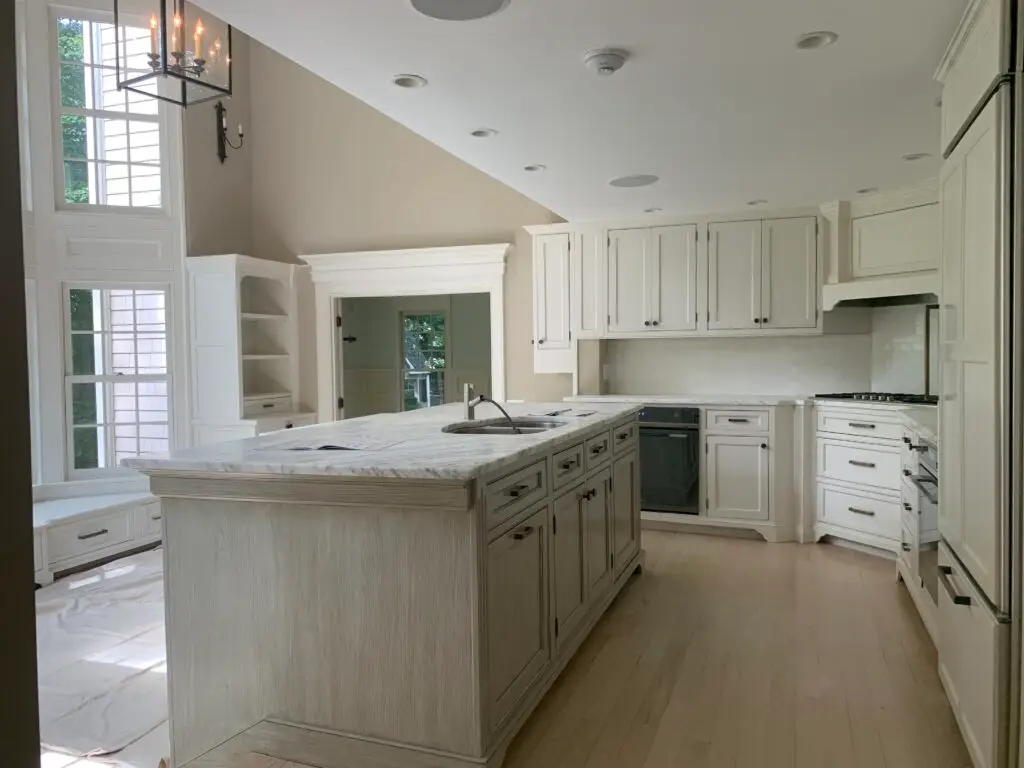
Painting kitchen cabinets is a highly effective and budget-friendly way to refresh your kitchen’s look without the high cost and disruption of a full remodel. However, one of the first questions homeowners ask is, “How much will it cost?” The price can vary significantly depending on several factors, from the size of your kitchen to the complexity of the job and whether you opt for a DIY approach or professional service. Anderson’s Painting breaks down the typical costs associated with painting kitchen cabinets, explores the key factors influencing pricing, compares DIY versus professional expenses, and guides you on how to get an accurate estimate for your project.
National Average Cabinet Painting Costs
While exact figures fluctuate based on regional labor rates, material costs, and economic conditions, here’s a general overview of typical professional cabinet painting costs in the United States.
On average, homeowners can expect to pay anywhere from $1,500 to $10,000 or more for a complete professional kitchen cabinet painting project. This range accounts for various kitchen sizes and complexities.
| Kitchen Size | Typical Professional Cost Range (USD) |
|---|---|
| Small Kitchen (e.g., galley kitchen, few cabinets) | $1,500 – $3,000 |
| Medium Kitchen (e.g., standard L-shaped kitchen) | $3,000 – $6,000 |
| Large Kitchen (e.g., kitchen with island, many cabinets) | $6,000 – $10,000+ |
These averages typically include labor, professional-grade materials (primer, cabinet-specific paint, sanding supplies, masking, etc.), and the comprehensive preparation required. It’s crucial to obtain localized quotes, as prices in dense metropolitan areas or high-cost-of-living regions might be significantly higher than the national average.
Factors That Affect Pricing
Several key elements directly influence the final cost of painting kitchen cabinets, whether you do it yourself or hire a professional.
1. Material Type, Cabinet Size, Number of Doors
Cabinet Material:
- Wood: Generally good candidates for painting. Solid wood can often be sanded and prepped more easily.
- Laminate/Melamine/Thermafoil: These slick surfaces require specialized bonding primers and more meticulous preparation, which can increase labor time and material cost for adhesion.
- MDF/Particle Board: Can be painted, but often absorb more primer and paint. Damaged or swollen MDF might require more extensive repairs.
Total Surface Area / Number of Doors and Drawers: Professional painters typically quote based on the “linear feet” of cabinetry (measuring wall space where cabinets are) or, more accurately, the total number of doors and drawer fronts. More doors and drawers mean more individual pieces to prep, prime, and paint, which directly increases labor and material costs.
For example, a kitchen with 20 doors and 8 drawer fronts will cost significantly less to paint than a kitchen with 40 doors and 15 drawer fronts, even if both kitchens occupy similar linear feet.
Check t out: Best Type of Paint to Use on Kitchen Cabinets
Cabinet Condition:
- Good Condition: Cabinets that are clean, smooth, and only require light sanding will be less expensive to paint.
- Poor Condition: Cabinets with extensive grease buildup, deep scratches, dents, chipping paint, or water damage will require more intensive cleaning, repairs, and sanding, adding significantly to labor time and cost.
2. Paint Quality and Type
Premium Paints: High-quality cabinet-specific paints (e.g., acrylic-urethane enamels, water-based alkyds) are more expensive per gallon but offer superior durability, smoother finish, and better adhesion. They are highly recommended for kitchen cabinets due to daily wear. Primer Type: Specialized bonding primers or stain-blocking primers, necessary for certain cabinet materials or conditions, can add to material costs. Color Change: Drastic color changes (e.g., from dark to very light) may require additional coats of primer and paint to achieve full coverage, increasing material and labor.
3. Labor and Expertise
Professional Skill Level: Highly experienced painters who specialize in cabinet refinishing may charge more, but their expertise often results in a superior, more durable finish that is less likely to chip or peel prematurely. Preparation Intensity: The bulk of a professional painting cost comes from the meticulous preparation (disassembly, cleaning, sanding, priming, masking). This labor-intensive work ensures the paint adheres properly and lasts. Location: Labor rates vary by region within the U.S. Larger metropolitan areas typically have higher labor costs than smaller towns.
4. Additional Services
New Hardware Installation: If you plan to install new knobs or pulls that require drilling new holes, some painters may include this, while others charge extra. Minor Repairs: Filling small holes or dings is often part of the prep, but extensive repairs to cabinet boxes or doors will be an additional charge. Interior Painting: Most quotes are for the exterior visible surfaces. Painting the inside of cabinets (boxes and shelves) will add to the cost.
DIY vs. Professional Cost Comparison
Deciding between DIY and hiring a professional involves weighing costs, time, and the desired quality of the finish.
DIY Costs:
Materials Only: You pay only for the supplies:
- Paint: $100 – $300 (for 1-2 gallons of high-quality cabinet paint)
- Primer: $50 – $150
- Supplies: Sandpaper, brushes, rollers, painter’s tape, drop cloths, cleaning supplies ($150 – $350)
Total DIY Material Cost: Typically ranges from $300 to $800+.
Hidden Costs/Considerations:
- Time Commitment: DIY is very time-consuming (multiple days or even weeks for drying/curing).
- Learning Curve: Requires research, patience, and attention to detail. Mistakes can be costly to fix.
- Quality: The finish may not be as smooth or durable as a professional spray-applied finish.
- Tools: You might need to buy specialized tools (e.g., orbital sander, spray gun if attempting a sprayed finish).
Check it out: How to paint kitchen cabinets? DIY guide
Professional Costs:
All-Inclusive: Includes all materials, labor, specialized equipment, and expertise. Total Professional Cost: As mentioned above, generally ranges from $1,500 to $10,000+.
Benefits:
- Superior Finish: Professionals use specialized techniques (often spray application), high-quality products, and meticulous preparation for a factory-like finish.
- Durability: Professional application often leads to a much more durable and long-lasting finish.
- Time Savings: The project is completed much faster, with minimal disruption to your home.
- Guaranteed Work: Reputable painters offer warranties or guarantees on their work.
- No Stress: Avoid the hassle, mess, and potential frustrations of a DIY project.
Value vs. Replacement Cost
Painting your kitchen cabinets offers significant value compared to replacing them.
- Painting Cost: $1,500 – $10,000+ (professional) or $300 – $800+ (DIY materials).
- Replacement Cost: Replacing kitchen cabinets can cost anywhere from $8,000 to $50,000 or more, depending on the size of the kitchen, materials, and customization. This often doesn’t include demolition, installation, or new countertops/backsplashes.
The Value Proposition: Painting provides a dramatic aesthetic upgrade at a fraction of the cost of replacement. It’s an excellent return on investment for improving your home’s appearance and potentially increasing its resale value without a major renovation budget. For cabinets that are structurally sound but aesthetically dated, painting is almost always the more cost-effective and logical solution.
How to Get an Accurate Estimate
To get a precise quote for your kitchen cabinet painting project, follow these steps:
Prepare Your Cabinets for Assessment:
- Clear off countertops.
- Empty the cabinet interiors (at least for the areas being painted).
- This allows the painter to clearly see the condition of the cabinets.
Count Doors and Drawers: Have an approximate count of how many doors and drawer fronts you have. This is often a key metric for pricing. Identify Cabinet Material: Know if your cabinets are solid wood, laminate, MDF, etc., as this affects prep and primer choice. Note Any Damage/Repairs Needed: Point out any existing chips, deep scratches, water damage, or areas of peeling paint that will require extra attention. Specify Desired Finish/Color Change:
- Sheen: Do you want satin, semi-gloss, or gloss?
- Color Change: Are you going from a dark stain to a light paint? This can affect the number of coats.
Get Multiple Quotes: Contact at least 2-3 reputable painting companies, like Anderson’s Painting, that specialize in cabinet refinishing.
Ask for a Detailed Written Estimate: Ensure the estimate clearly outlines:
- What’s Included: Preparation steps (cleaning, sanding, repairs), number of primer coats, number of paint coats, specific type/brand of primer and paint.
- What’s Excluded: Are interiors painted? Is new hardware installation included?
- Timeline: Expected start and completion dates.
- Warranty/Guarantee: What kind of guarantee do they offer on their work?
Check References and Reviews: Look for companies with positive reviews and ask for references for past cabinet painting projects.
By being prepared and asking the right questions, you can ensure you get a transparent and accurate estimate for your kitchen cabinet painting project, setting the stage for a beautiful and lasting transformation.
Ready to revitalize your kitchen with beautifully painted cabinets? Anderson’s Painting specializes in professional kitchen cabinet painting, delivering exceptional results that combine stunning aesthetics with lasting durability. We provide transparent, detailed estimates and use only high-quality materials and expert techniques to transform your kitchen efficiently and affordably. Contact us today for a personalized consultation and a free, no-obligation quote!