
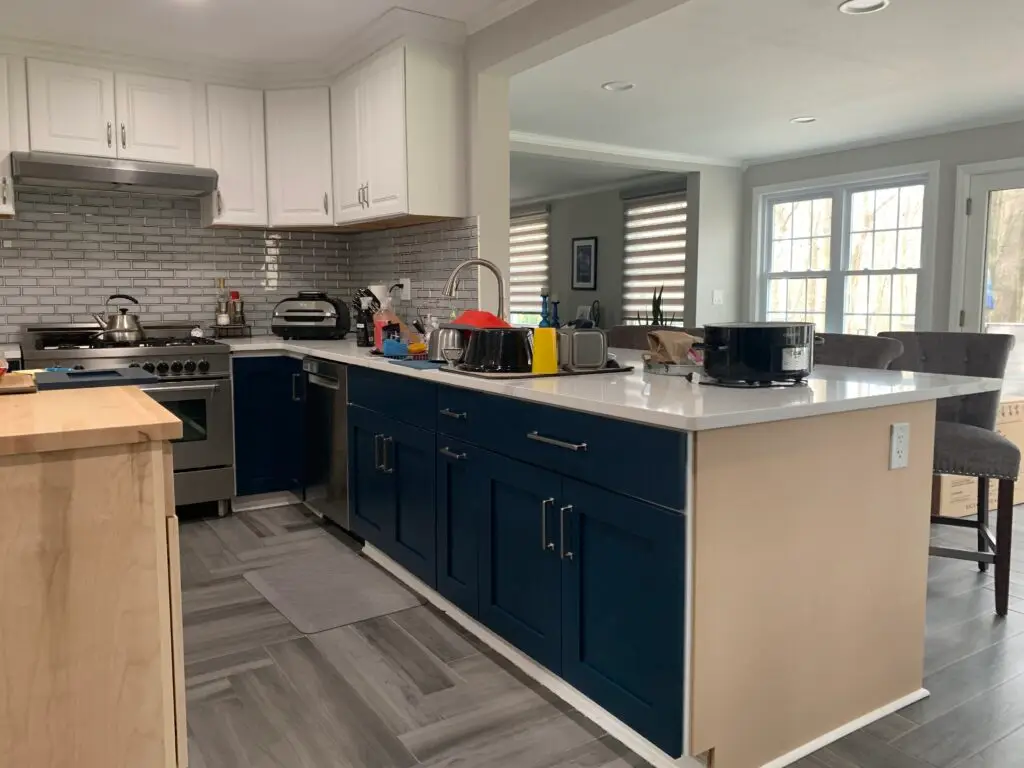
Painting your kitchen cupboards is one of the most cost-effective ways to give your kitchen a complete facelift. It’s a project that requires patience and attention to detail, but the results can look just as professional as a high-end renovation. A fresh coat of paint can instantly brighten the space, update a dated kitchen, and make the entire room feel new. This comprehensive guide will walk you through every step of the process, ensuring you get a beautiful and durable finish that lasts for years.
Should you paint or replace kitchen cupboards?
Before you commit to painting, it’s important to consider whether it’s the right choice for your cabinets.
Paint if…
- The cabinets are in good structural shape. Painting is a great option if the wood is solid and the frames are sturdy.
- You’re on a budget. Painting is significantly cheaper than a full cabinet replacement.
- You want a quick, transformative update. A new color can completely change the look of your kitchen in a weekend or two.
Replace if…
- The cabinets are falling apart. If the wood is warped, chipped, or water-damaged, paint won’t fix the underlying issues.
- The layout is bad. If the flow of your kitchen is poor, painting won’t solve the problem.
- You want a major change in style. While paint changes the color, it doesn’t change the door style. If you want a more modern or shaker-style cabinet, replacement is the better option.
Tools and supplies you’ll need
- Drop cloths and painter’s tape: To protect your countertops, floor, and appliances.
- Screwdriver or power drill: For removing doors, drawers, and hardware.
- Degreaser or TSP cleaner: To remove all grease and grime.
- Sandpaper: Various grits, from coarse () to fine (220), for sanding.
- Tack cloth: For wiping away dust.
- Primer: A high-quality bonding primer that adheres to slick surfaces and blocks stains.
- Paint: Choose a durable paint designed for cabinets, such as a satin or semi-gloss finish for easy cleaning.
- Paintbrushes and rollers: A high-quality angled brush for corners and a foam roller for smooth surfaces.
- Protective gear: Gloves, safety glasses, and a face mask for sanding.
Preparation: Cleaning, sanding, and priming
Preparation is a crucial step that determines the quality of your final result. Don’t rush this!
- Empty and Label: Empty all cupboards and drawers. Use a numbered system (e.g., tape a number inside each cabinet door and on the corresponding cabinet frame) to remember where each piece goes.
- Remove Hardware: Take off all handles, knobs, and hinges. Place them in separate labeled bags to keep them organized.
- Clean Thoroughly: Use a degreaser or TSP solution to scrub away all grease, oil, and grime. Pay special attention to areas around the handles.
- Sand for Adhesion: Lightly sand all surfaces with medium-grit sandpaper (120−150). The goal is to scuff the surface, not to remove the old finish entirely. This provides a “tooth” for the primer to grip.
- Clean Again: Wipe down all surfaces with a tack cloth to remove any remaining dust.
- Prime All Surfaces: Apply a thin, even coat of bonding primer to all surfaces. This ensures the paint adheres properly and covers any stains. Let it dry completely.
Painting steps for a professional finish
- First Coat of Paint: Once the primer is dry, apply your first coat of paint. Use a paintbrush for the recessed areas and a foam roller for the flat surfaces to minimize brush marks.
- Light Sanding: After the first coat dries, give it a very light sanding with a fine-grit sandpaper (220) to smooth out any imperfections. This is a key step for a professional finish.
- Second Coat: Wipe away any dust with a tack cloth and apply the second coat of paint. For a darker color, you might need a third coat.
- Curing Time: Wait for the paint to fully cure before re-attaching the doors and hardware. This can take several days to a week. Rushing this step can lead to chipping and scratching.
Mistakes to avoid when painting cabinets
- Not Cleaning Enough: Any grease or grime left on the surface will prevent the paint from adhering properly, leading to peeling.
- Skipping Primer: Primer is essential for a durable, long-lasting finish, especially on glossy or slick surfaces.
- Applying Thick Coats: Thin, multiple coats are always better than one thick coat. Thick coats can drip and create a lumpy texture.
- Not Curing the Paint: Patience is key. If you re-hang your doors before the paint has fully hardened, you risk scuffing and scratching the new finish.
Looking to tackle another DIY project, or need help with home renovation ideas? Let’s plan it together!