
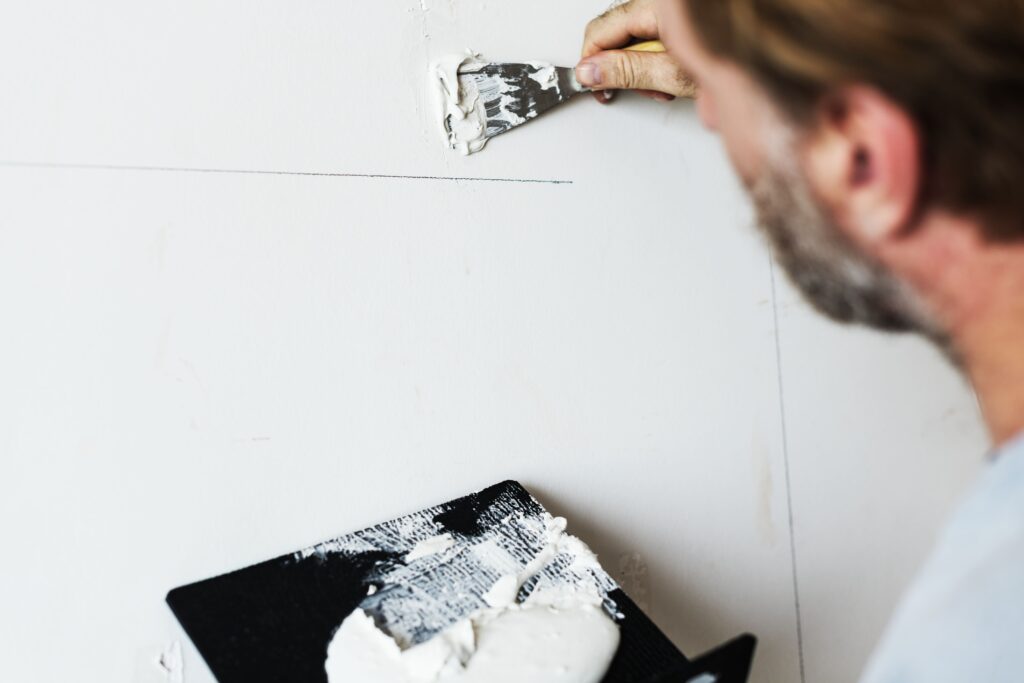
Quick Answer: What Drywall Repairs Are Needed Before Painting?
The most crucial rule of interior painting is that paint reveals flaws rather than hiding them. Before rolling your first coat of color, you must patch small holes, reset and screw down nail pops, tape and mud settlement cracks, feather out seams, and always prime your repaired patches. Skipping proper drywall repair leaves unsightly bumps, sheen flashes, and hollow shadows that ruin an otherwise fresh paint job.
Why Paint Does Not Hide Wall Damage
Light reveals imperfections
When sunlight streams through windows or interior recessed lighting hits a wall at an angle, any uneven surface shadow stands out immediately. Fresh paint—especially in satin or semi-gloss sheens—only highlights these flaws more sharply.
Paint can make patches more visible
If you apply paint directly over unprimed spackle, the porous compound sucks the moisture and liquid binders right out of the paint. This creates a dull, chalky patch known as “flashing” that looks completely different from the surrounding wall.
Texture and primer affect the final result
Achieving a seamless wall requires repairing the physical contour of the drywall and sealing the patched area with a high-solids primer to match the surrounding wall porosity and sheen.
Common Drywall Issues to Fix First
Nail pops
When framing lumber shrinks or shifts, drywall nails or screws push outward, creating small circular bumps. You must drive a drywall screw slightly above and below the pop, sink the old fastener, and patch the indentation.
Small holes
Doorknob impacts, picture hooks, and anchor holes need to be cleaned of loose paper, filled with lightweight joint compound, allowed to dry, and sanded flat.
Settlement cracks
Diagonal hairline cracks around doors and windows or vertical cracks along corner beads should be scraped open slightly, reinforced with fiberglass mesh tape, and covered with joint compound.
Seam lines
Visible tape joints occur when drywall tape was improperly feathered. Applying a wide skim coat of joint compound blends the seam smoothly into the flat wall plane.
Water stains
Stains from past leaks must be treated with a pigmented shellac or oil-based primer before patching or painting, otherwise the stain will bleed right through your fresh paint.
Texture mismatches
If a patch is completely smooth on a wall covered in orange peel or knockdown texture, it will stick out like a sore thumb. Texture must be sprayed or sponged to match before painting.
Repair, Sand, Prime, Then Paint
The golden sequence for flawless walls follows four strict steps:
- Repair: Patch holes, set nail pops, and apply joint compound.
- Sand: Once fully dry, sand patches flush with 150- to 220-grit sandpaper until you cannot feel an edge with your fingertips.
- Prime: Apply a specialized drywall primer-sealer directly over every repaired patch to seal porous spackle and ensure uniform paint sheen.
- Paint: Roll your two topcoats across the entire wall.
When Drywall Repair Needs a Professional
While small nail holes are easy DIY weekend tasks, extensive water damage, crumbling tape, large holes, or complex textured ceilings require professional drywall technicians. Professionals have the tools and experience to patch and texture walls so they look completely untouched.
Checklist: Repair Severity and Recommended Next Step
| Damage Severity | Common Issues | Recommended Next Step |
| Minor | Nail pops, picture hanger holes, scuffs | DIY spackle, spot sand, spot prime, and paint |
| Moderate | Settlement cracks, taped seams, dented corners | Mesh tape application, skim coat, sand, and prime |
| Severe | Water damage, sagging drywall, structural cracks | Professional drywall replacement, re-taping, and texturing |
FAQ
Should drywall be repaired before painting?
Yes, absolutely. Painting over un-repaired holes, cracks, and uneven patches only highlights the damage under light.
Can paint hide drywall cracks?
No. Standard paint cannot bridge structural gaps or settle into hairline cracks. Cracks must be properly filled, taped, and sanded flat before painting.
Do nail pops need to be fixed before painting?
Yes. If you paint over a nail pop, the bump remains clearly visible, and the movement behind it will eventually cause the paint to crack or flake off.
Should repaired drywall be primed?
Yes! Repaired spackle and joint compound are highly porous. Applying a dedicated primer seals the patch so your topcoat maintains a uniform sheen without flashing.
Can one contractor handle drywall repair and painting?
Yes. Hiring a full-service painting contractor who handles both drywall repair and painting ensures seamless quality control from the first patch to the final coat of color.
To explore more about preparing your home, check out our helpful guides on How to Repair Nail Pops in Drywall?, learn How to Prep Drywall for Paint?, and discover why Can You Put Drywall Mud Over Paint?. For complete service details, explore our Drywall Repair service page.
Book Drywall Repair and Painting Together
Tired of looking at dents, cracks, and nail pops on your walls? Request a professional painting estimate from Anderson’s Painting today and let our experts handle the drywall repairs and flawless painting together.