
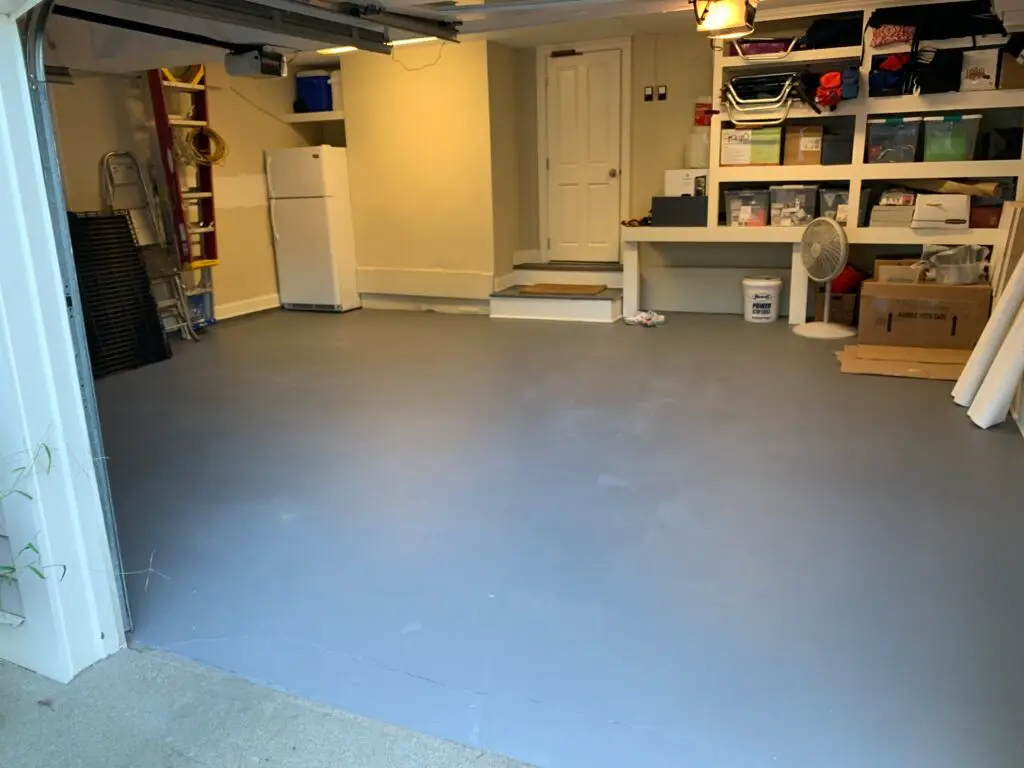
Painting your garage floor is an excellent way to protect the concrete, enhance aesthetics, and create a cleaner, more functional space. However, one of the most common questions homeowners have is, “How long until I can use my garage again?” The answer isn’t as simple as a few hours. Understanding the difference between drying and curing, and the factors that influence these times, is crucial for a successful and long-lasting garage floor finish.
Factors that affect dry time (paint type, humidity, temperature)
The time it takes for your garage floor paint to dry to the touch and, more importantly, to fully cure, is influenced by several key environmental and product-specific factors.
1. Paint Type:
- 1-Part Epoxy or Acrylic Latex Paint: These are typically water-based and dry relatively quickly. You might be able to walk on them (lightly) within 4-12 hours, but full cure times are longer.
- 2-Part Epoxy Coatings: These are much more durable and chemical-resistant, but often have longer dry and cure times due to the chemical reaction between the two components (resin and hardener). Exact times vary significantly by product, but expect longer waits before heavy use.
- Oil-Based Paints: While less common for garage floors today, oil-based paints generally dry and cure much slower than latex or acrylic options.
2. Temperature:
- Ideal Temperature: Most garage floor paints perform best when applied in temperatures between 60∘F and 85∘F (15∘C and 30∘C).
- Too Cold: Low temperatures significantly slow down the drying and curing process, potentially leading to incomplete curing or poor adhesion. Below 50∘F (10∘C), many paints will not cure properly at all.
- Too Hot: Extremely high temperatures can cause paint to dry too quickly on the surface, preventing proper solvent evaporation or full chemical reaction, which can lead to blistering, wrinkling, or a less durable finish.
3. Humidity:
- Ideal Humidity: Lower humidity levels (below 50-60%) are best for faster drying and proper curing.
- High Humidity: High humidity slows down the evaporation of water (in latex/acrylic paints) and solvents (in oil-based paints), extending both dry and cure times. It can also interfere with the chemical reaction of epoxies.
4. Ventilation:
- Good airflow helps carry away evaporating solvents and moisture, significantly speeding up the drying process. A stagnant environment will trap these vapors, slowing things down.
5. Coat Thickness:
- Applying paint too thickly will dramatically increase dry and cure times and can lead to uneven curing, bubbling, or peeling. It’s always better to apply two thin coats rather than one thick one.
6. Surface Porosity and Preparation:
- A properly etched and clean concrete surface will allow for better adhesion and more efficient drying/curing than a poorly prepped, slick, or contaminated surface.
Drying vs. Curing: What’s the difference?
Understanding these two distinct stages is critical for the success and longevity of your garage floor paint.
- Drying Time (Dry to Touch / Recoat Time):
- This is the initial stage where the solvents or water in the paint evaporate, and the surface feels dry to the touch. It means the paint is no longer wet or sticky.
- “Dry to touch” indicates you can lightly touch the surface without paint coming off.
- “Recoat time” is the specific window, recommended by the manufacturer, within which you can apply a subsequent coat without disrupting the first. Applying too soon can cause issues, while waiting too long can compromise inter-coat adhesion.
- Typical Dry to Touch/Recoat Times:
- 1-Part Acrylic Latex: 2-6 hours
- 2-Part Epoxy: 8-24 hours (can vary widely by product)
- Curing Time (Full Cure / Return to Service Time):
- This is the more crucial stage where the paint fully hardens, achieves its maximum durability, and reaches its intended chemical resistance and adhesion strength. This involves a chemical reaction (especially with epoxies) and complete solvent/water evaporation.
- During curing, the paint is still vulnerable to damage, scuffs, and chemical exposure.
- “Return to service time” refers to when the floor can safely withstand light foot traffic, heavy foot traffic, or vehicle traffic.
- Typical Full Cure Times:
- 1-Part Acrylic Latex: 2-7 days for light traffic, 7-14 days for vehicle traffic.
- 2-Part Epoxy: 3-7 days for light foot traffic, 7-14 days for vehicle traffic. Some heavy-duty epoxies recommend 30 days before full chemical exposure or heavy-duty use.
Always refer to the specific paint manufacturer’s instructions on the product label for precise drying and curing times, as these can vary significantly between brands and formulations.
When is it safe to walk or park on the floor?
Using your garage floor too soon is one of the most common mistakes that leads to paint failure.
- Light Foot Traffic:
- 1-Part Acrylic Latex: Typically safe for very light foot traffic (e.g., walking in socks, no shoes) after 24 hours, but ideally wait 48 hours.
- 2-Part Epoxy: Often safe for light foot traffic after 24-48 hours.
- Always walk gingerly and avoid dragging anything across the floor during this initial period.
- Heavy Foot Traffic / Placing Items:
- 1-Part Acrylic Latex: Wait at least 3-5 days before heavy foot traffic, moving heavy items, or placing large storage containers.
- 2-Part Epoxy: Usually safe for heavy foot traffic after 3-7 days.
- Vehicle Traffic:
- 1-Part Acrylic Latex: Allow a minimum of 7 days, but 10-14 days is safer, especially for hot tires.
- 2-Part Epoxy: Typically 7 days is recommended for vehicle traffic. For optimal performance and to resist hot tire pickup, many professionals recommend waiting a full 10-14 days, and some even 30 days, before parking a vehicle, especially a hot one.
Hot Tire Pickup: This is a major concern. Hot tires can soften partially cured paint, causing the paint to delaminate and stick to the tire. Always wait the full recommended cure time for vehicle traffic to avoid this. If you must park earlier, place cardboard or plywood under your tires.
How to speed up dry time safely
While you can’t rush the chemical curing process significantly, you can optimize conditions to help the paint dry more efficiently.
- Ensure Proper Ventilation:
- Open garage doors and windows.
- Use box fans or floor fans to circulate air across the floor. Point them towards open doors to push out humid air and pull in fresh air.
- Maintain Optimal Temperature:
- Apply paint when temperatures are within the manufacturer’s recommended range (60∘F to 85∘F is ideal for most).
- If painting in cooler weather, use space heaters to gently warm the garage (ensure they are safe for use in a garage and away from paint fumes). Do not blast heat directly onto the floor.
- Control Humidity:
- If you live in a high-humidity area, consider using a dehumidifier in the garage. This will pull moisture from the air, allowing water-based paints to dry faster.
- Apply Thin Coats:
- Resist the urge to apply a thick coat in hopes of finishing faster. Thick coats take much longer to dry and cure, and are more prone to bubbling, peeling, and improper curing. Apply two thin, even coats, following recommended recoat times.
- Proper Surface Preparation:
- A properly cleaned and etched surface allows the paint to adhere better and dry/cure more efficiently. Any contaminants or a slick surface will hinder the process.
- Avoid Painting in Adverse Weather:
- Do not paint if rain is expected, or if humidity levels are predicted to be very high for the next few days. Check the forecast before starting.
By respecting the drying and curing times, and optimizing your environment, you’ll ensure your newly painted garage floor achieves maximum durability and lasts for years to come. Patience truly pays off in this project!
Check it out: What color to paint your garage: Interior & exterior ideas
Ready to transform your garage floor with a durable, long-lasting finish? Anderson’s Painting specializes in professional garage floor coatings, ensuring meticulous preparation, expert application, and guidance on proper drying and curing times for a flawless result. Let us give your garage floor the professional treatment it deserves! Contact us today for a free consultation.