
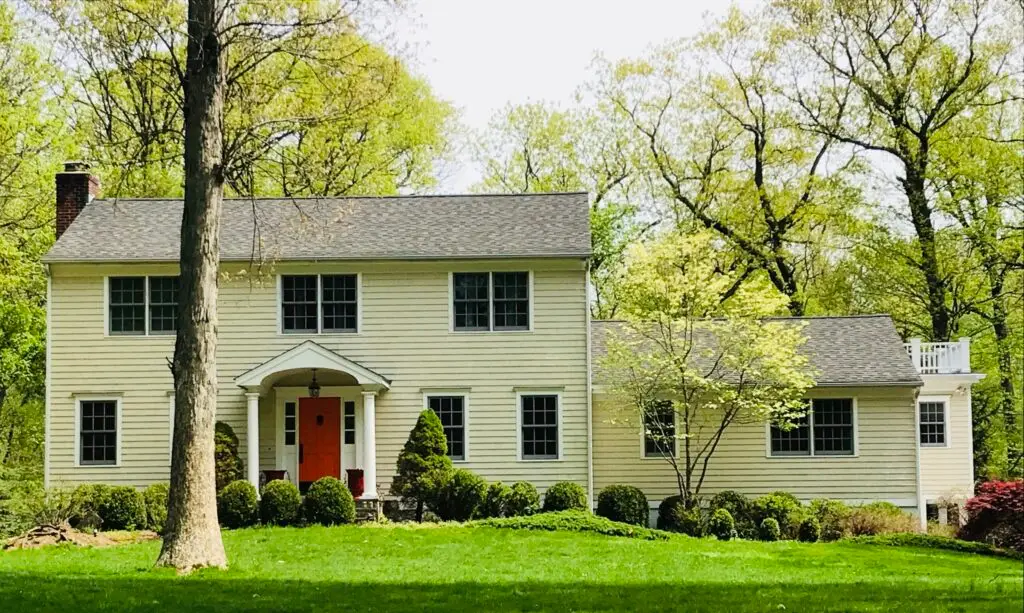
When you choose an exterior paint color, you’re not just selecting a shade; you’re deciding how your home interacts with the sun’s energy. The right color can significantly impact your home’s thermal performance, influencing everything from the temperature of your siding to your monthly utility bills.
While insulation does the heavy lifting, the final coat of paint is the first line of defense against the elements. Here is a deep dive into the science of how paint color affects your home’s temperature and comfort.
The Science Behind Paint Color and Heat
The relationship between color and heat comes down to two key properties: absorption and reflection.
Light vs. Dark Color Heat Absorption
The basic principle is well-known: dark colors get hotter in the sun than light colors.
- Dark Colors (Low Reflectance): Shades like deep blues, charcoal grays, and black absorb a high percentage of the sun’s infrared energy. This absorbed heat raises the temperature of the siding or roofing material dramatically, sometimes reaching up to 150°F or more on a hot day. This heat is then transferred slowly into the structural components of the home.
- Light Colors (High Reflectance): Whites, pale yellows, and light grays reflect most of the sun’s energy away from the surface. This keeps the siding much cooler, reducing the heat load transferred into the attic and walls.
Solar Reflectance and Thermal Gain Explained
Professional painters and material scientists use specific metrics to measure a color’s interaction with the sun:
- Solar Reflectance (SR): This is a measure of how much solar energy (including visible, infrared, and ultraviolet light) is reflected by a surface. SR is expressed on a scale from 0 to 1, where 1 means 100% reflection (pure white) and 0 means 0% reflection (pure black). A higher SR value means a cooler surface.
- Thermal Gain: This refers to the overall increase in a building’s internal temperature due to solar absorption. High thermal gain in the summer forces your air conditioning system to work harder.
The difference in surface temperature between a highly reflective white and a highly absorptive black can exceed 50°F, translating directly to how much heat load your home faces.
Best Exterior Colors for Hot and Cold Climates
Choosing a color that complements your local weather patterns is a strategic move that affects energy use year-round.
Cool Colors That Reflect Sunlight
In hot, sunny climates (like the Southern or Southwestern US), the goal is to minimize solar heat gain.
- Ideal Choices: Pure White, Off-White, Pale Blue, Light Gray, Cream, and any pastels.
- The Benefit: These colors keep the exterior surface cool, minimizing the burden on your attic and walls, which keeps your interior comfortable and reduces the runtime of your air conditioning unit.
- Modern Note: Many paint manufacturers now offer “cool technology” paints, which contain special pigments that reflect infrared heat even in darker colors.
Warm Tones That Retain Heat
In cold climates (like the Northeast or Midwest), you might actually prefer a moderate amount of thermal gain during the winter months.
- Ideal Choices: Medium-to-Dark Grays, Muted Greens, Terracotta, and Earthy Browns.
- The Benefit: These darker colors absorb some solar radiation, which slightly warms the siding and, in turn, can help melt snow and ice faster. While they contribute minimally to interior heating, they can help warm a sun-facing wall enough to reduce the chilling effect.
- Caution: Even in cold climates, extremely dark colors are discouraged because the wide temperature swings (freezing overnight, 120°F in direct sun) can increase the stress on the paint film and substrate, potentially leading to premature cracking or blistering.
Energy Efficiency and Comfort
Paint color is a simple, cost-effective tool in your overall energy strategy.
How Paint Color Affects Energy Bills
While it won’t single-handedly eliminate high bills, choosing a highly reflective color can result in measurable savings, especially in climates where cooling dominates. Studies show that switching from a dark roof color to a light, highly reflective one can reduce the peak cooling energy demand by 10% to 15%. This principle holds true for sun-exposed walls.
By preventing the sun’s heat from penetrating the exterior, you decrease the workload on your HVAC system, leading to lower consumption and longer equipment life.
Combining Color with Proper Insulation
It’s crucial to remember that paint is only the surface layer. Paint color is a secondary defense. The primary factors for maintaining interior temperature are:
- Insulation: Proper wall and attic insulation acts as a barrier, preventing heat transfer regardless of the exterior temperature.
- Air Sealing: Sealing gaps around windows, doors, and utility penetrations stops conditioned air from escaping.
The optimal strategy is to pair an appropriately colored paint job with robust insulation and air sealing for maximum comfort and savings.
Practical Tips When Choosing Exterior Colors
Don’t sacrifice your dream color, but use these professional tips to make the best possible choice for your home’s unique situation.
Match Tone to Climate and House Orientation
- Hot Climates/Sun Exposure: Prioritize light colors and confirm that any medium or dark tone you choose is a “Cool” or “Reflective” formulation from the manufacturer.
- Shaded Walls: Walls that rarely receive direct sunlight (often the North-facing side) can handle darker colors without any significant heat gain risk. You can use this to create visual interest.
Consider Reflective Paints for Eco-Friendly Homes
Many paint companies now offer specialized exterior paints labeled as “Cool Roof” or “Solar Reflective.” These paints use infrared-reflective pigments that are invisible to the eye but actively repel solar heat.
This technology allows you to use a wider range of colors, including subtle medium tones, without generating the high surface temperatures historically associated with darker shades. Always ask your professional painter about their available low-emissivity or reflective paint options.
FAQs
Does paint color change interior temperature?
Yes, indirectly. An extremely dark exterior color significantly heats the siding and the underlying structure. This heat penetrates the wall and attic cavities, eventually radiating into the interior living spaces, forcing the air conditioner to run longer to compensate. A light, reflective color minimizes this penetration.
What’s the most energy-efficient color for siding?
The most energy-efficient color, purely from a reflection standpoint, is Pure White (SR close to 1.0). It reflects the maximum amount of solar energy. However, for practical and aesthetic reasons, the most optimal energy-efficient choice is often a Light to Medium tone combined with a Cool Reflective paint technology to balance heat management with curb appeal.
Choosing the perfect exterior color is about blending your vision with smart science. The color you select protects your home and contributes to its long-term comfort and energy efficiency.
Ready to find a color that looks amazing and lowers your energy footprint? Contact Anderson’s Painting today for a professional exterior consultation. We’ll help you choose a beautiful, durable, and thermally smart solution for your home!