
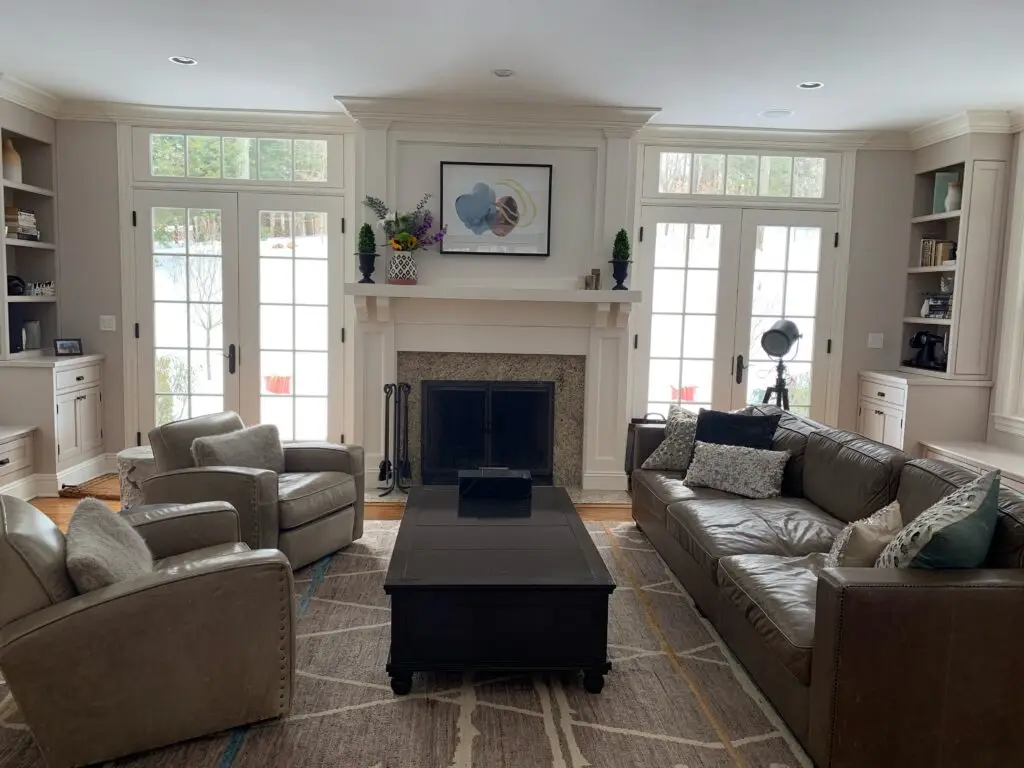
Painting a brick fireplace can be a transformative home improvement project, instantly modernizing a room and brightening a space that might otherwise feel dark and dated. It’s an effective way to update the look of your fireplace without a major renovation, but it’s not a decision to be taken lightly. Once brick is painted, it’s a difficult and messy process to return it to its natural state. If you’ve decided that painting is the right choice for your home, this guide will walk you through the process, from preparation to the final coat, ensuring a beautiful and durable finish.
Should you paint a brick fireplace? Pros & cons
Before you begin, consider the advantages and disadvantages to decide if painting is right for your fireplace.
Pros:
- Aesthetics: A fresh coat of paint can instantly modernize a room, especially if the current brick color clashes with your decor.
- Brightens the Room: A lighter paint color can make a room feel larger, more open, and brighter.
- Hides Imperfections: Painting can cover up unsightly stains, smoke damage, or discolored bricks.
- Cost-Effective: It is a much cheaper alternative to completely re-facing the fireplace.
Cons:
- Permanent: Reverting to the natural brick look is extremely difficult and requires labor-intensive sandblasting or stripping.
- Hides Texture: While it can hide color, painting can also obscure the natural, rustic texture of the brick that many people love.
- Increased Maintenance: A painted fireplace will eventually require touch-ups or a new coat of paint to maintain its fresh look.
Tools and materials you’ll need
- Drop Cloths and Painter’s Tape: To protect the surrounding floors, walls, and mantel.
- Wire Brush: For scrubbing old soot and dirt from the brick.
- Tack Cloth: To remove fine dust after cleaning.
- Masonry Cleaner: A product specifically designed to clean brick, such as a trisodium phosphate () solution.
- Safety Gear: Gloves, safety glasses, and a face mask.
- Primer: A high-quality, heat-resistant masonry primer. Ensure it’s rated for the temperatures your fireplace will reach.
- Paint: A high-quality, heat-resistant latex or masonry paint. Do not use standard interior paint, as it will not withstand the heat.
- Paintbrushes: A thick, short-bristled brush is best for working paint into the porous texture of the brick and grout lines. A small brush for touch-ups.
Preparation: Cleaning and priming brick surfaces
This is the most time-consuming but essential step. A bad prep job will lead to peeling and chipping paint.
- Protect the Area: Lay down drop cloths and use painter’s tape to mask off the mantel, hearth, and any adjacent walls.
- Clean Thoroughly: Use the wire brush to scrape off any loose dirt, soot, or flaking mortar. Then, mix your masonry cleaner according to the package directions and scrub the entire surface.
- Rinse and Dry: Use a spray bottle with clean water to rinse the surface. It is critical that the brick is completely dry before priming. Allow at least 24 hours for it to dry, and potentially longer depending on humidity.
- Prime the Brick: Apply a liberal, even coat of your masonry primer. Make sure to get into all the nooks and crannies of the grout lines and the porous brick.
Step-by-step painting process
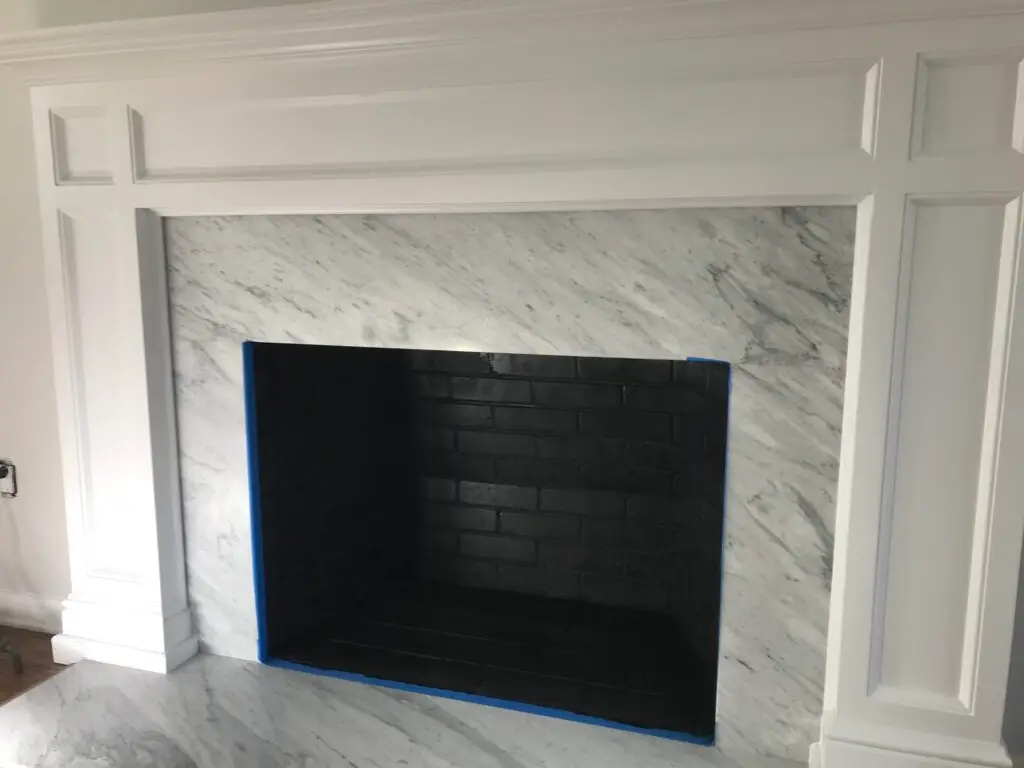
- First Coat: Once the primer is dry, apply your first coat of heat-resistant paint. Use your thick-bristled brush and work in small sections, dabbing and pushing the paint into the grout lines and brick texture.
- Allow to Dry: Let the first coat dry completely according to the manufacturer’s instructions, typically a few hours.
- Second Coat: Apply a second coat. This will ensure full, even coverage and a more durable finish.
- Touch-Ups: Once the second coat is dry, use a small paintbrush to touch up any spots that were missed.
- Cure Time: Allow the paint to fully cure before using the fireplace. This can take several days to a week.
Fireplace safety tips after painting
Once your fireplace is painted, be mindful of these safety tips:
- Ventilation: The first few fires after painting can release paint fumes. Ensure your room is well-ventilated during this time.
- Curing: Do not use the fireplace until the paint has fully cured. Lighting a fire on uncured paint can cause bubbling, peeling, and fire hazards.
- Regular Inspection: Regularly check your painted fireplace for any signs of blistering or peeling, especially in high-heat areas.
Thinking about painting your fireplace or a different home improvement project? We can help you plan!