
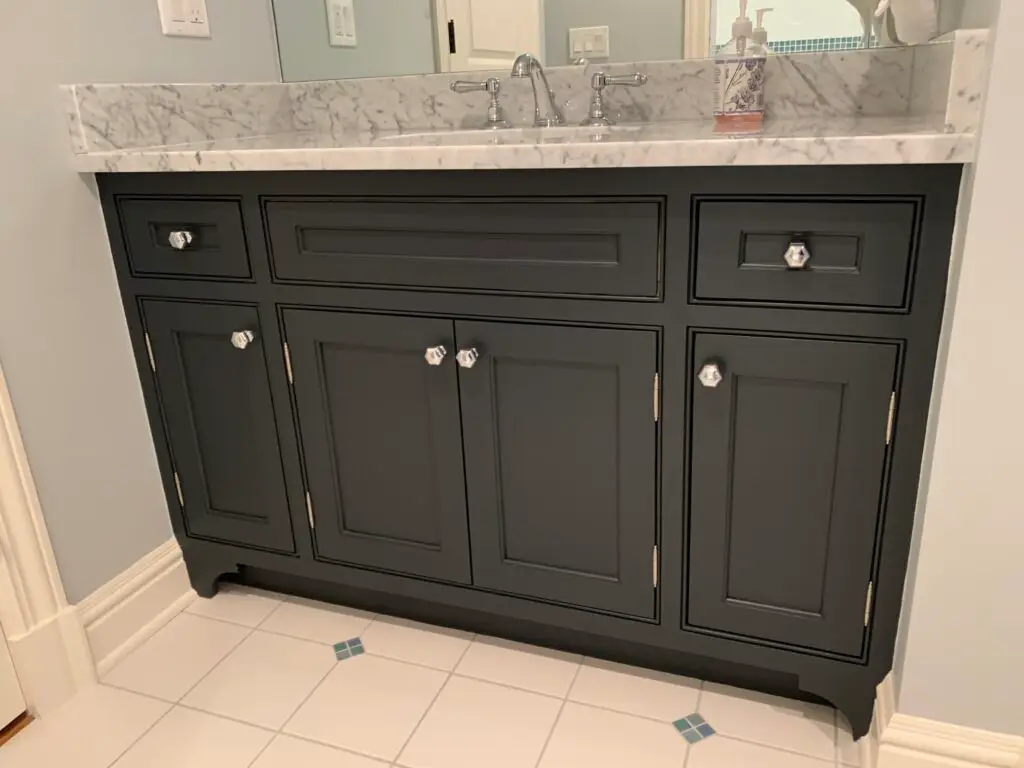
Laminate cabinets are often affordable, but their hard, non-porous surface presents a challenge for paint adhesion. Unlike wood, paint cannot penetrate laminate; it must chemically and physically bond to the top layer. Successful painting of laminate cabinets hinges almost entirely on superior preparation and the use of specialized primers.
Can You Paint Laminate Cabinets?
Yes, you can successfully paint laminate cabinets, provided you follow a strict protocol.
Why Laminate Requires Special Prep
Laminate is essentially a plastic or paper layer fused over a wood substrate (like particleboard or MDF). This surface is often slick, sometimes glossy, and highly resistant to moisture and chemical absorption.
- No Pores: Standard paint relies on soaking into tiny surface pores for adhesion. Laminate has virtually none.
- High Risk of Peeling: Without a proper bonding agent, the paint will sit on top of the surface and be easily scraped, scratched, or peeled off, especially near handles or moisture sources (like the sink).
When Painting Laminate Is a Good Option
Painting laminate is an excellent choice when:
- The Cabinets are Structurally Sound: The boxes and doors are in good shape, with no significant peeling, warping, or water damage.
- You Want a Modern Look: You can achieve a smooth, factory-like finish that mimics custom cabinetry for a fraction of the cost.
- A Budget Renovation is Necessary: It is a low-cost, high-impact DIY project.
Essential Prep Before Painting
Preparation is 80% of the job when dealing with laminate. Do not skip or rush any of these steps.
Cleaning and Degreasing the Surface
All grease, oil, cooking residue, and cleaning product buildup must be eliminated.
- Dismantle: Remove all doors, drawer fronts, and hardware (hinges, handles, knobs). Label everything clearly so you know where it goes back later.
- Heavy Duty Wash: Use a strong degreaser, such as a Trisodium Phosphate (TSP) substitute, or a specialized kitchen degreaser. Wipe the frames and doors down thoroughly.
- Rinse: Rinse the cabinets completely with clean water and a sponge to ensure no cleaning product residue remains. Residue will block the primer.
- Dry: Allow all surfaces to air-dry completely.
Light Sanding for Adhesion
Sanding laminate is not about smoothing wood; it’s about scuffing the surface to create “tooth” for the primer to grip onto.
- Grit Selection: Use 180- to 220-grit sandpaper or a sanding sponge.
- Scuff: Sand the entire surface lightly until the glossy finish is visibly dull. Focus on high-traffic areas and edges. Do not over-sand, as you could expose the particleboard core underneath.
- Dust Removal: Wipe down the sanded surfaces with a tack cloth or a microfiber towel lightly dampened with denatured alcohol. This must remove all sanding dust—even small particles will create bumps in your finish.
Using a Bonding or Adhesion Primer
This is the single most critical step in painting laminate. You must use a primer engineered to stick to slick, difficult surfaces.
- Recommended Products: Look for products labeled as bonding primer, adhesion primer, or “extreme bond” primer. Brands like Zinsser B-I-N (shellac-based) or Stix (water-based acrylic-urethane) are highly recommended by professionals for their superior grip on laminate.
- Avoid: Do not use standard latex primer or oil-based wood primer.
Step-by-Step Painting Process
Applying Primer
- Application: Apply the bonding primer using a high-quality angled paintbrush for edges and details, and a small, dense foam roller or a very fine-nap (1/4-inch) cabinet roller for flat areas.
- Thin Coat: Apply the primer in a very thin, even coat. Thick primer pools and dries soft, which compromises adhesion. You may see some of the original color through the first coat—this is normal.
- Dry Time: Follow the manufacturer’s specific instructions. Shellac-based primers dry quickly (often under an hour); water-based bonding primers require longer, usually 4–6 hours before recoating.
Adding First and Second Coats
The best paint for cabinets is often a specialty cabinet enamel, but high-quality acrylic-urethane or alkyd-hybrid enamels also work well.
- First Coat: Apply the first coat of paint in a light, even layer, using the same technique (brush for corners, foam roller for flats).
- Allow Drying: Wait the manufacturer’s recommended time between coats (usually 4–8 hours).
- Light Sanding (Optional): If the first coat feels rough, you can very lightly sand with 400-grit sandpaper after it is fully dry. Immediately clean the dust with a tack cloth before the second coat.
- Second Coat: Apply the second coat. This coat should bring the color to full opacity and smooth out any remaining imperfections.
Dry Time and Curing
This is the phase where most DIY projects fail due to impatience.
- Dry to the Touch: The paint may feel dry in a few hours. You can usually re-install the hardware and rehang the doors after 24–48 hours.
- Cure Time: Paint needs a long time to harden fully. Avoid aggressively scrubbing, scraping, or cleaning the surface for at least 7 days, and preferably 30 days. The paint reaches its maximum hardness and durability during this time. Treat the cabinets gently during the curing phase.
Best Paints for Laminate Cabinets
Choosing the right topcoat ensures durability against daily kitchen wear and tear.
Acrylic Latex (Water-Based)
- Pros: Easy cleanup with water, low odor, fast drying. Modern acrylics are durable and flexible.
- Cons: Not as hard as true oil-based paints; can chip more easily if not protected by a strong bonding primer.
Alkyd/Urethane Enamel (Hybrid)
- Pros: The modern gold standard. These are water-based paints that contain alkyd/urethane resins, offering the hardness and durability of oil-based paint with the easier cleanup of latex. They level beautifully, minimizing brush and roller marks.
- Cons: Slightly longer dry time than pure acrylic.
Cabinet-Specific Paints
Many brands offer lines specifically marketed for cabinets (e.g., Benjamin Moore Advance, Sherwin-Williams Emerald Urethane Trim Enamel). These paints are self-leveling, extremely durable, and provide a professional, factory-like finish.
FAQs About Painting Laminate Cabinets
“Will paint peel off laminate?”
Yes, paint will peel off laminate if you use the wrong primer or skip the cleaning and sanding steps. Laminate provides no natural adhesion, so if the primer fails to bond, the topcoat will fail. With the correct bonding primer and preparation, the paint will adhere reliably.
“Do I need to sand laminate before painting?”
Absolutely. You are not sanding to remove the material, but to de-gloss the surface. The light scuffing provides physical “key” or “tooth” marks that the bonding primer can grip, significantly increasing its mechanical adhesion. Without scuffing, even the best primers struggle to hold.
“How long will laminate paint last?”
A properly prepared and painted set of laminate cabinets, using high-quality bonding primer and a durable cabinet-specific enamel, can easily last 5 to 10 years or more. Longevity depends on how well the preparation steps were executed and the level of abuse the cabinets sustain (e.g., constant scraping, heavy cleaning).
Ready to give your kitchen a fresh, new look without the expense of a full replacement? Don’t let your project fail due to improper preparation.
Contact Anderson’s Painting today for a guaranteed, long-lasting laminate cabinet transformation.