
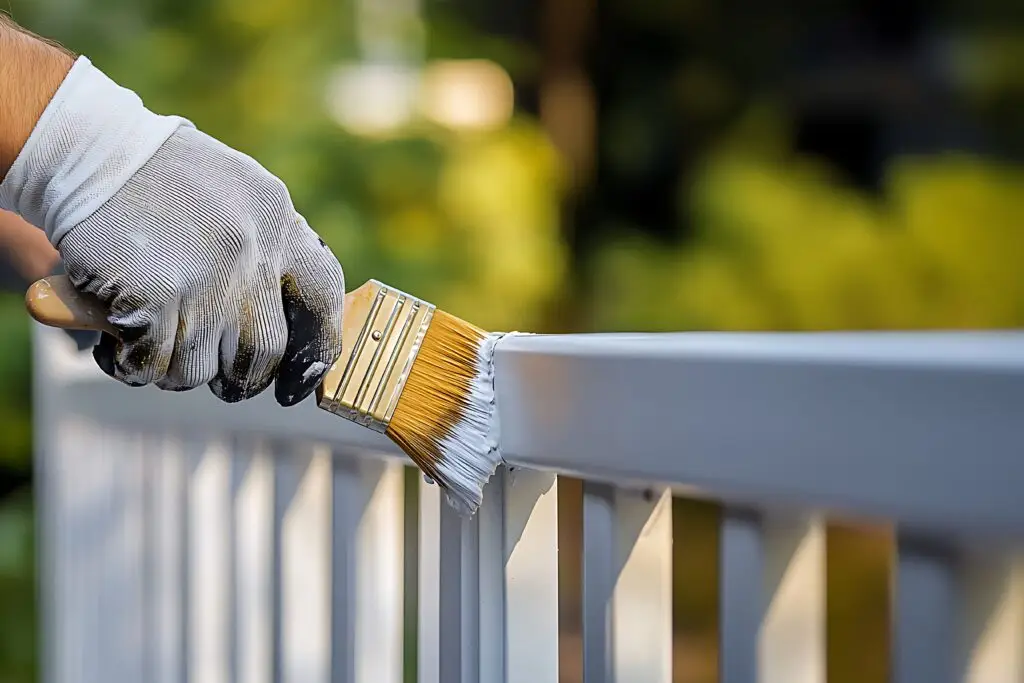
Metal handrails are high-traffic surfaces that endure constant friction, moisture, and temperature fluctuations. Because they are functional safety elements, the finish must be more than just attractive—it must be durable enough to withstand the oils from human skin and the abrasive nature of outdoor debris.
Quick Answer: Clean, Sand, Prime, Then Paint
Achieving a professional-grade finish on metal requires a four-pillar approach: thorough cleaning to remove contaminants, mechanical sanding to create a “profile” for the paint to grab, applying a specialty metal primer to prevent oxidation, and finishing with a high-performance topcoat.
Why skipping steps causes peeling
Unlike wood or drywall, metal is non-porous. If you skip cleaning, the paint bonds to the layer of dirt or oil rather than the metal itself. If you skip sanding, the surface is too slick for the paint to adhere. The result is “delamination,” where the paint peels off in large sheets or chips away at the slightest touch.
Step-by-Step Metal Handrail Painting Process
Following a systematic workflow ensures that the new coating lasts for years rather than months.
Cleaning grease and dirt
Before any tools touch the metal, the surface must be de-greased. In the U.S., a solution of TSP (Trisodium Phosphate) or a heavy-duty citrus-based degreaser is the standard. This removes skin oils, atmospheric pollutants, and “mill scale.” Use a lint-free cloth or a scrub brush to ensure all crevices—especially around joints and welds—are free of residue.
Removing rust and old paint
You do not need to remove all the old paint, but you must remove anything that isn’t firmly attached.
- Wire Brushing: Use a stiff wire brush to scrape away loose, flaking paint and “scaling” rust.
- Sanding: Use 80 to 120-grit sandpaper for rusted areas to get down to shiny metal. For the remaining sound paint, use 220-grit sandpaper to “scuff” the surface. This creates microscopic scratches that provide a “mechanical key” for the new paint.
- Dust Removal: Wipe the entire rail down with a tack cloth or a rag dampened with mineral spirits after sanding to ensure a dust-free surface.
Priming correctly
A primer is not an optional “first coat”; it is a chemical bond.
- Ferrous Metals (Steel/Iron): Use a rust-inhibitive primer (Red Oxide or Zinc-Chromate types).
- Non-Ferrous (Aluminum/Galvanized): Use a high-adhesion acrylic primer. Never use an oil-based primer on galvanized metal, as it will react with the zinc and peel (saponification).
Applying paint evenly
To avoid “runs” and “drips,” which are very common on vertical and round railings, apply multiple thin coats rather than one heavy coat. If using a brush, work in long, continuous strokes following the length of the rail to minimize brush marks.
Best Tools for Painting Handrails
Choosing the right applicator depends on the complexity of the railing design and the environment.
Brushes vs rollers vs spray
- Brushes: Best for intricate designs, finials, and scrollwork. Use a high-quality synthetic brush for acrylics or a natural china bristle brush for oil-based paints.
- Rollers: For long, straight top rails, a 4-inch “cigar” roller with a high-density foam cover or a short-nap mohair cover provides a very smooth, factory-like finish.
- Spray: Provides the most uniform finish with zero texture. However, it requires significant “masking” to protect surrounding areas from overspray.
When spray painting makes sense
Spraying is highly efficient for complex “wrought iron” style fences or railings with many vertical pickets. In a U.S. residential setting, using an HVLP (High Volume Low Pressure) sprayer or high-quality aerosol cans designed for metal is effective. Spraying is best done on calm days with low humidity to prevent the paint from drying mid-air (dry spray).
Drying and Curing Time
There is a critical difference between paint feeling dry and being fully cured.
Handling vs full cure
- Dry to Touch: Usually occurs within 1–4 hours. The surface is no longer sticky.
- Dry to Handle: Usually 24 hours. You can touch it, but it is still soft.
- Full Cure: This can take 7 to 30 days depending on the humidity and whether the paint is water-based or oil-based. During this time, the paint film reaches its maximum hardness and chemical resistance.
When handrails can be used again
While you can technically touch a rail after 24 hours, it is best to leave it unused for at least 48 to 72 hours. High-friction use (tightly gripping the rail while walking) during the first few days can cause the soft paint to smudge or indent.
FAQs
Can I paint metal handrails without sanding?
It is not recommended. Without sanding, the surface tension of the metal often causes the paint to “bead up” or fail to bond, leading to premature failure. If the metal is in perfect condition, you might use a “liquid de-glosser,” but manual scuff-sanding remains the U.S. industry standard for longevity.
What sheen is best for handrails?
Semi-gloss or Gloss. These sheens have a higher resin-to-pigment ratio, making them harder and more resistant to the moisture and oils from hands. Flat or eggshell finishes are too porous and will show “burnishing” (shiny spots) where people grip the rail.
Can rust come back after painting?
Yes, if any active oxidation was trapped under the primer. This is why using a “rust converter” or sanding down to bare metal is vital. If moisture finds even a pinhole in the paint, rust will begin to spread beneath the surface.
Are your handrails showing signs of wear or becoming a safety hazard due to corrosion? Don’t wait for the metal to fail. Click here to schedule a professional consultation and give your property the protection it deserves!