
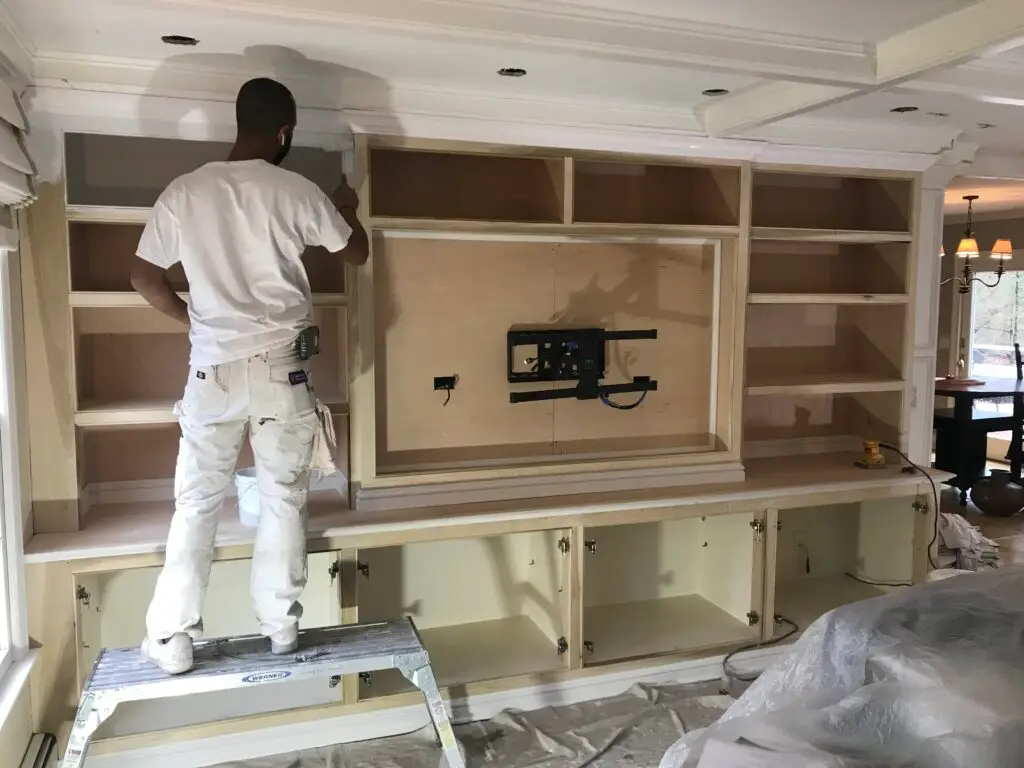
Crisp, beautifully painted trim can elevate the entire look of a room, providing a clean contrast to walls and defining architectural details. Conversely, messy lines or an uneven finish on trim can detract from even the most carefully chosen wall color. Mastering how to paint trim is a skill that ensures a professional, polished outcome for any interior painting project, creating clean transitions and a smooth, durable finish.
Tools and supplies you’ll need
Having the right arsenal of tools and materials is the first step toward a successful trim painting project.
- Cleaning and Prep:
- Vacuum with hose attachment
- Mild all-purpose cleaner and rags/sponges
- Spackle or wood putty and putty knife
- Fine-grit sandpaper (180-220 grit) or sanding sponge
- Paintable caulk (acrylic latex) and caulk gun
- Tack cloth or slightly damp rag
- Protection:
- Painter’s Tape: High-quality tape (e.g., FrogTape, ScotchBlue with Edge-Lock) for masking walls, floors, or windows. Choose the appropriate width (e.g., 1.5 inch for wall lines, 1 inch for thinner trim).
- Drop Cloths/Plastic Sheeting: To protect floors, furniture, and any areas not being painted.
- Paint Shield/Trim Guard (Optional but Recommended): A thin metal or plastic tool for quickly protecting adjacent surfaces without tape.
- Painting:
- Paint: High-quality interior trim paint (semi-gloss or satin enamel is typical).
- Primer (if needed): Stain-blocking primer for bare wood, repairs, or changing from oil to latex paint.
- Angled Sash Brush: A good quality, comfortable angled brush (1.5-inch or 2-inch) is essential for precision work and cutting in.
- Paint tray or small container (e.g., a “cut bucket”)
- Paint stir stick
- Roller (Optional): Small foam or fine-nap roller (4-inch) for flatter, wider trim pieces.
- Extension Pole (if using roller for baseboards): For comfort.
Prep work: Cleaning, sanding, and taping
Meticulous preparation is the secret to a professional-looking and long-lasting paint job on trim. Do not rush or skip these steps!
- Clear the Area: Remove any furniture, rugs, or obstacles near the trim to provide clear access.
- Clean the Trim:
- Vacuum the trim to remove dust, cobwebs, and loose debris.
- Wipe down the entire trim surface with a damp rag and a mild all-purpose cleaner to remove dirt, grime, and grease.
- Rinse with a clean, damp cloth and allow the trim to dry completely. Any residue or moisture can compromise paint adhesion.
- Inspect and Repair:
- Fill Holes/Dents: Use spackle or wood putty to fill any nail holes, minor dents, or imperfections. Apply with a putty knife, ensuring it’s slightly overfilled. Allow to dry according to product instructions.
- Sand Smooth: Once repairs are dry, lightly sand the patched areas with fine-grit sandpaper (180-220 grit) until perfectly smooth and flush with the trim. If the existing paint is glossy, lightly scuff sand the entire trim surface to create a “tooth” for the new paint to adhere.
- Remove Dust: After sanding, use a tack cloth or a slightly damp rag to thoroughly remove all sanding dust.
- Caulk Gaps:
- Apply a thin, consistent bead of paintable acrylic latex caulk to any gaps between the trim and the wall, or between sections of trim.
- Smooth the caulk bead immediately with a wet finger, a damp rag, or a specialized caulk tool for a seamless finish. This seals gaps, prevents paint from seeping into cracks, and gives a polished look.
- Allow caulk to cure fully before painting (check product label, typically 30 minutes to a few hours).
- Masking with Painter’s Tape:
- Taping Walls: If your walls are already painted and dry, apply high-quality painter’s tape along the top edge of the baseboard where it meets the wall. Press the tape down firmly with your finger or a putty knife to ensure a tight seal and prevent paint bleed.
- Protecting Floors/Carpet: For hard floors, lay down drop cloths or tape plastic sheeting over the floor right up to the trim. For carpet, use the “tape and tuck” method (pushing the tape under the baseboard with a putty knife) or use a paint shield (see previous responses for detailed carpet protection methods).
- Doors/Windows: Tape off hinges, doorknobs, and window glass if applicable.
Brushing vs. Spraying trim paint
Both brushing and spraying have their pros and cons for painting trim. The best method depends on your skill level, the project size, and desired finish.
- Brushing Trim Paint:
- Pros:
- Control: Offers excellent control, making it ideal for cutting in crisp lines and working in occupied rooms.
- Penetration: Allows paint to be worked into the grain of wood or into small imperfections, ensuring good adhesion.
- Less Masking: Requires significantly less masking than spraying.
- Lower Initial Cost: Only requires brushes and paint.
- Cons:
- Slower: Can be time-consuming, especially for large amounts of trim.
- Brush Marks: Can leave visible brush marks if not applied carefully or if the paint doesn’t have good self-leveling properties.
- Best For: Most DIYers, smaller projects, rooms where furniture cannot be removed, or when a very controlled application is necessary.
- Pros:
- Spraying Trim Paint (with an airless sprayer):
- Pros:
- Speed: Extremely fast application for large areas of trim.
- Smooth Finish: Can achieve a perfectly smooth, factory-like finish with no brush marks, especially with the right paint and technique.
- Even Coverage: Ensures uniform application, especially on intricate profiles.
- Cons:
- Extensive Masking: Requires immense amounts of masking to protect walls, floors, ceilings, and furniture from overspray. This often takes longer than the actual spraying.
- Equipment Cost/Rental: Sprayers are expensive to buy and can be costly to rent.
- Learning Curve: Requires practice to avoid drips, runs, and uneven application.
- Cleanup: Sprayer cleanup can be time-consuming.
- Best For: Professionals, large-scale renovations where trim is removed and sprayed off-site, or for very experienced DIYers tackling large trim projects where speed and a flawless finish are top priorities and extensive masking is feasible.
- Pros:
Recommendation: For most homeowners, brushing is the more practical and manageable method for painting trim, yielding excellent results with proper technique and good quality tools.
Common mistakes and how to avoid them
Avoiding these common pitfalls will save you time, effort, and ensure a higher quality finish.
- Inadequate Surface Prep:
- Mistake: Not cleaning, sanding, or caulking properly.
- Avoid: Follow all prep steps meticulously. A clean, smooth, properly sealed surface is paramount for adhesion and a professional look.
- Skipping Primer:
- Mistake: Painting directly over bare wood, patched areas, or glossy finishes without priming.
- Avoid: Always prime bare wood, MDF, or areas where wood filler was used. Use a bonding primer over glossy or previously oil-painted surfaces. Primer ensures adhesion and a consistent topcoat.
- Using the Wrong Paint:
- Mistake: Using wall paint (flat or eggshell) on trim, or an inferior quality paint.
- Avoid: Choose a high-quality interior acrylic latex enamel specifically designed for trim and cabinetry, in a satin or semi-gloss finish.
- Overloading the Brush:
- Mistake: Dipping too much paint on the brush, leading to drips and runs.
- Avoid: Dip only 1-1.5 inches of bristles. Tap off excess paint on the side of the can or tray.
- Applying Too-Thick Coats:
- Mistake: Trying to achieve coverage in one thick coat, resulting in drips, sags, and prolonged drying.
- Avoid: Always apply two thin, even coats. Thin coats dry faster, cure harder, and look smoother.
- Not Letting Paint Dry Between Coats:
- Mistake: Recoating too soon, causing previous layers to peel, wrinkle, or show brush marks.
- Avoid: Adhere strictly to the manufacturer’s recommended recoat times on the paint can label.
- Removing Tape Too Late:
- Mistake: Letting paint dry completely before removing painter’s tape, leading to paint tearing or leaving jagged lines.
- Avoid: Remove painter’s tape while the paint is still slightly wet (but not tacky). Pull slowly at a 45-degree angle away from the painted surface. If paint is dry, score the edge of the tape lightly with a utility knife before pulling.
Drying time and final touch-ups
Understanding drying and curing times is essential for protecting your freshly painted trim.
- Dry to Touch:
- Most acrylic latex trim paints are dry to the touch within 1-2 hours. This means you can lightly touch them without paint coming off.
- Recoat Time:
- The time you must wait before applying a second coat. For acrylic latex, this is typically 2-4 hours. Always check the paint can for exact manufacturer recommendations.
- Handling Dry Time:
- This is the time before the paint is hard enough to handle or be subject to light contact without damage. For trim, this might be 24-48 hours. Avoid bumping or scuffing the trim during this period.
- Full Cure Time:
- This is the period (often 7-30 days) during which the paint completely hardens and achieves its maximum durability, washability, and scratch resistance. Avoid heavy cleaning or aggressive scrubbing until the paint is fully cured.
- Final Touch-Ups:
- Once the paint is dry (after the final coat), carefully remove all painter’s tape.
- Inspect your work for any small drips, missed spots, or imperfections. Use a small artist’s brush for precision touch-ups.
- If you find any paint bleed under the tape on the wall, you can carefully scrape it away with a razor blade or touch it up with your wall paint using a very small brush.
By approaching your trim painting project with careful preparation, the right tools, and proper application techniques, you’ll achieve crisp lines and a smooth, durable finish that makes your entire room shine.
Dreaming of perfectly painted trim without the hassle? Anderson’s Painting specializes in expert interior painting, providing meticulous prep work, crisp lines, and a flawless, durable finish on all your trim, baseboards, and doors. Let our experienced team elevate the look of your home! Contact us today for a free consultation.