
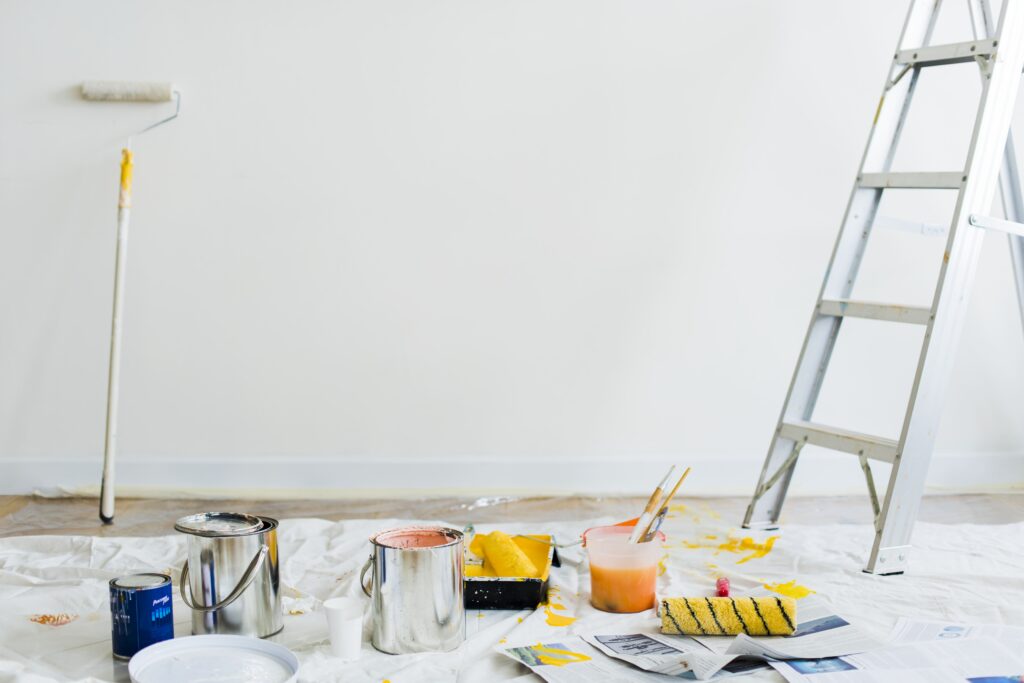
Hardwood floors are one of the most valuable features of a home, but they are also incredibly vulnerable to the drips, splatters, and heavy equipment that come with any painting project. At Anderson’s Painting, we treat every home like a showroom. Protecting your floors isn’t just about avoiding a mess—it’s about ensuring that once the walls are finished, your floors remain in pristine, scratch-free condition.
Quick Answer: Best Way to Protect Hardwood Floors From Paint
The professional “Gold Standard” is a two-layer system: first, cover the floor with Rosin Paper or Ram Board to create a rigid, spill-proof barrier against impact and paint drips. Second, place heavy-duty canvas drop cloths on top in high-activity areas to soak up any liquid spills and prevent items from sliding.
Why Hardwood Floors Need Extra Protection
Hardwood is porous and finished with lacquers or oils that can react to chemicals. Even small paint splatters can dry into the wood grain, while plastic sheeting can trap moisture against the wood, potentially causing cupping or finish damage. Furthermore, the constant shifting of ladders and buckets creates microscopic scratches that degrade the finish over time.
The Pro-Toolkit for Floor Safety
- Rosin Paper or Ram Board: These paper-based boards are breathable, which is critical for protecting the wood’s moisture balance.
- Canvas Drop Cloths: Unlike plastic, canvas grips the floor, doesn’t slide, and absorbs drips rather than allowing them to pool.
- Blue or Green Painter’s Tape: Specifically designed to release without tearing the finish off your baseboards or floor edges.
- Adhesive-Back Plastic (For Carpet Only): Never use this on hardwood—the adhesive is too strong and will pull the floor finish up.
What Not to Use
- Loose Plastic Sheets: These are slippery, dangerous for workers, and if a spill occurs, the paint will bead up and slide off the plastic, often landing directly on your floor.
- Cheap Masking Tape: Never use standard beige masking tape. The adhesive is aggressive and can peel your wood finish off when removed.
- Wet Cloths: Leaving damp cloths on hardwood can cause the wood to swell and warp.
Professional Floor Protection Step-by-Step
1. The Deep Clean
Sweep or vacuum the floor thoroughly before laying down protection. If you trap a small grain of sand or dirt under your floor board, walking on it all day will grind it into the wood, creating thousands of tiny scratches.
2. Edging with Tape
Use high-quality painter’s tape to secure the paper to the floor. Run the tape tightly along the edge of the baseboards, ensuring no gaps exist where paint could potentially slide under.
3. Lay the Barrier
Roll out your Rosin Paper or Ram Board. Overlap the edges by a few inches and tape the seams down so the boards don’t shift.
4. Layer with Canvas
Place your canvas drop cloths over the work zone. Canvas provides the “friction” that prevents your ladders from slipping and absorbs any “oops” moments with a brush.
5. Careful Removal
When the project is finished, don’t rip the tape up. Pull it back slowly at a 45-degree angle to ensure the tape releases cleanly from both the trim and the floor finish.
How to Prevent Splatters and Drips
The best protection is prevention. Always use a “bucket inside a bucket” approach—keep your paint tray or brush cup inside a secondary, larger container. If a spill happens, it stays contained. Additionally, keep a damp (not soaking) rag nearby to wipe up any wayward drips immediately.
Cleaning Paint From Hardwood
If you do get paint on your hardwood, stay calm.
- Wet paint: Wipe gently with a damp cloth.
- Dry paint: Apply a tiny amount of rubbing alcohol to a Q-tip or soft cloth and gently rub the spot. The alcohol breaks the bond of the paint without damaging most modern floor finishes. Always test this in an inconspicuous spot first.
Why Professionals Use Layered Protection
We use layered protection because it’s not just about stopping a leak; it’s about providing a safe surface for our equipment. Heavy ladders have metal feet that can dent wood in seconds. A rigid board barrier disperses that weight across a wider area, keeping your floors dent-free.
FAQ
What is the best floor covering for painting?
A combination of floor protection board (like Ram Board) and heavy-duty canvas drop cloths is the safest and most effective method.
Are canvas drop cloths safe for hardwood floors?
Yes, but they should only be used on top of paper or board. Canvas alone won’t stop paint from soaking through to the wood if you have a major spill.
Can painter’s tape damage wood floors?
Only if you use the wrong type of tape or leave it on for weeks. Use high-quality blue/green painter’s tape and remove it promptly after the project.
How do you remove paint drops from hardwood?
If the paint is dry, gently use a plastic scraper or a soft cloth with a small amount of isopropyl alcohol to lift the spot without scratching the wood finish.
Should you use plastic or canvas drop cloths?
Always choose canvas. Plastic is slippery, does not absorb paint, and can trap moisture that ruins hardwood finishes.
Need your home painted without the stress of floor damage? At Anderson’s Painting, we treat your floors with the same care as your walls. Click here to get a free estimate and let us handle your next interior project from top to bottom, with full protection guaranteed!