
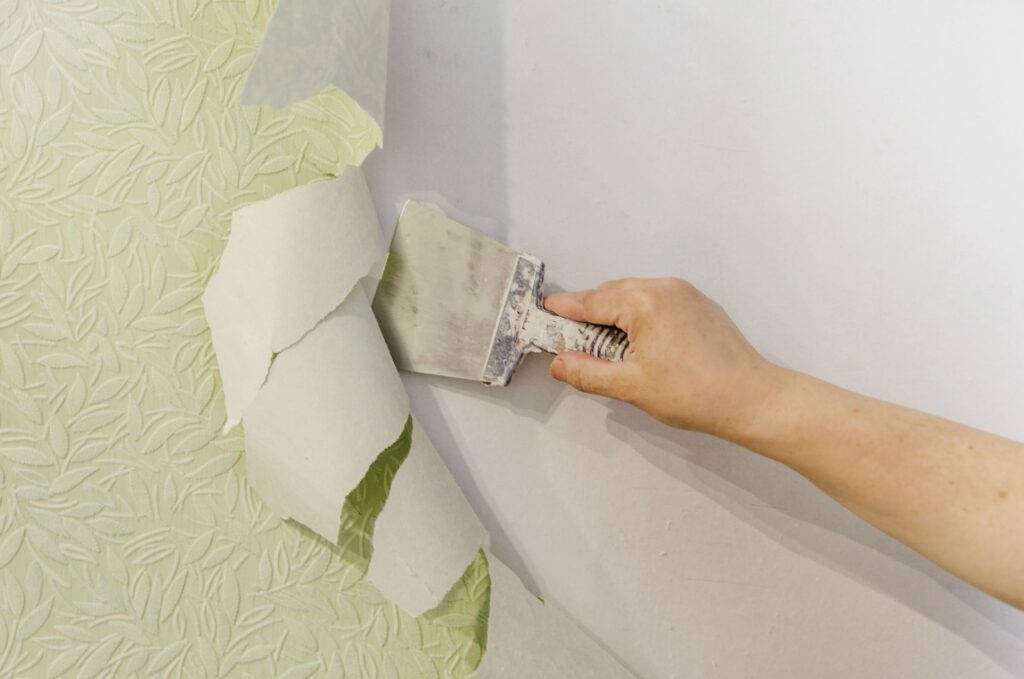
There is a common temptation to try and “shortcut” a room transformation by painting directly over wallpaper. While it sounds like a time-saver, it is almost always a mistake that leads to peeling, bubbling, and an unprofessional aesthetic. At Anderson’s Painting, we advocate for a clean slate. Removing wallpaper is undeniably labor-intensive, but it is the only way to ensure your new paint job looks crisp, smooth, and permanent.
Quick Answer: Should Wallpaper Be Removed Before Painting?
Yes. Unless the wallpaper is a high-quality, perfectly bonded vinyl that specifically states it can be painted (which is rare), you should remove it. Painting over old wallpaper often causes the adhesive underneath to reactivate or fail, leading to the paper bubbling or peeling away from the wall months after you’ve finished painting.
The Risks of Painting Over Wallpaper
When you apply wet paint to wallpaper, you are introducing moisture to old, potentially brittle paper and aging glue. This can:
- Cause Bubbling: The moisture forces the wallpaper to expand, creating unsightly bubbles.
- Fail Adhesion: The weight of the new paint can cause the seams of the old wallpaper to curl and peel.
- Show Seams: Even if the paper stays put, the seams of the wallpaper will remain visible through your new paint, making the wall look textured in an unintended way.
When You Might Get Away With It
In rare cases—such as when the wallpaper is applied to pristine drywall, is perfectly smooth, and is a modern vinyl type—a professional might recommend a specific oil-based primer to seal it. However, this is risky and requires expert judgment. If the paper is old, porous, or peeling, removal is the only valid path.
Essential Toolkit
- Wallpaper Scoring Tool: Creates tiny perforations to let the remover penetrate.
- Wallpaper Steamer: The “nuclear option” for tough, multi-layered, or vintage wallpaper.
- Putty Knife (Broad): For scraping without gouging the drywall.
- Adhesive Remover: A liquid solution to dissolve the glue left behind.
- Sanding Sponge: To smooth out any minor drywall nicks after scraping.
Step-by-Step Wallpaper Removal
1. Preparation
Protect your floors with heavy-duty drop cloths and turn off electricity to any outlets you are working near. Cover outlet plates and light switches with painter’s tape.
2. Score the Paper
Use your scoring tool to make light, cross-hatched cuts across the wallpaper. Be gentle—you want to break the surface of the paper, not carve deep grooves into the drywall.
3. Penetrate and Peel
Apply your wallpaper remover solution (or steam) and let it “dwell” for at least 10–15 minutes. This is where many DIYers fail; you must give the solution time to dissolve the glue. Once the paper is saturated, start at a seam and peel it back slowly.
4. Adhesive Removal
Once the paper is gone, you’ll be left with a layer of sticky “gunk.” Use an adhesive remover solution and a wide putty knife to scrape this off. Do not skip this. If you leave glue on the wall, your new paint will never adhere.
5. Smooth and Prime
After washing the wall and letting it dry, sand any gouges you might have made with your putty knife. Finally, always prime the wall. After wallpaper removal, the drywall is often porous and “thirsty.” A high-quality primer will seal the surface and ensure your paint goes on uniformly.
Pro-Tip: The Steamer vs. The Solution
If you are dealing with vintage or thick, multi-layered paper, skip the spray bottle and rent a professional wallpaper steamer. It uses heat and water vapor to break down the adhesive bond much faster than chemical solutions alone, saving hours of scraping.
When to Call a Pro
Wallpaper removal is physically exhausting and requires a careful touch to avoid ruining the drywall underneath. If you find the wallpaper is tearing off in tiny, postage-stamp-sized pieces, or if you are working in a room with elaborate plasterwork or high ceilings, it is time to call Anderson’s Painting. We have the tools and experience to strip the room without damaging your walls.
FAQ
Is it better to remove wallpaper before painting?
Yes, it is the only way to guarantee a smooth, long-lasting, and professional finish.
What is the easiest way to remove old wallpaper?
A combination of scoring and a professional-grade wallpaper steamer is the fastest and most effective method for most residential wallpaper.
Do I need to prime after removing wallpaper?
Yes, absolutely. Once the paper and glue are removed, the drywall needs to be sealed with a high-quality primer before any paint touches it.
Can wallpaper glue ruin paint?
Yes. Any leftover adhesive will create a “bumpy” texture or prevent the paint from sticking, eventually causing your new paint job to peel.
Should I hire a painter to remove wallpaper?
If you are short on time, if the paper is old and stubborn, or if you want to avoid the risk of gouging your drywall, hiring a professional is a highly recommended investment.
Tired of looking at dated wallpaper? Stripping wallpaper is a messy, difficult job—but the transformation is worth it. Let us handle the hard work so you can focus on the final look. Click here to get a free estimate from Anderson’s Painting and let us reveal the true potential of your walls!