
Quick Answer
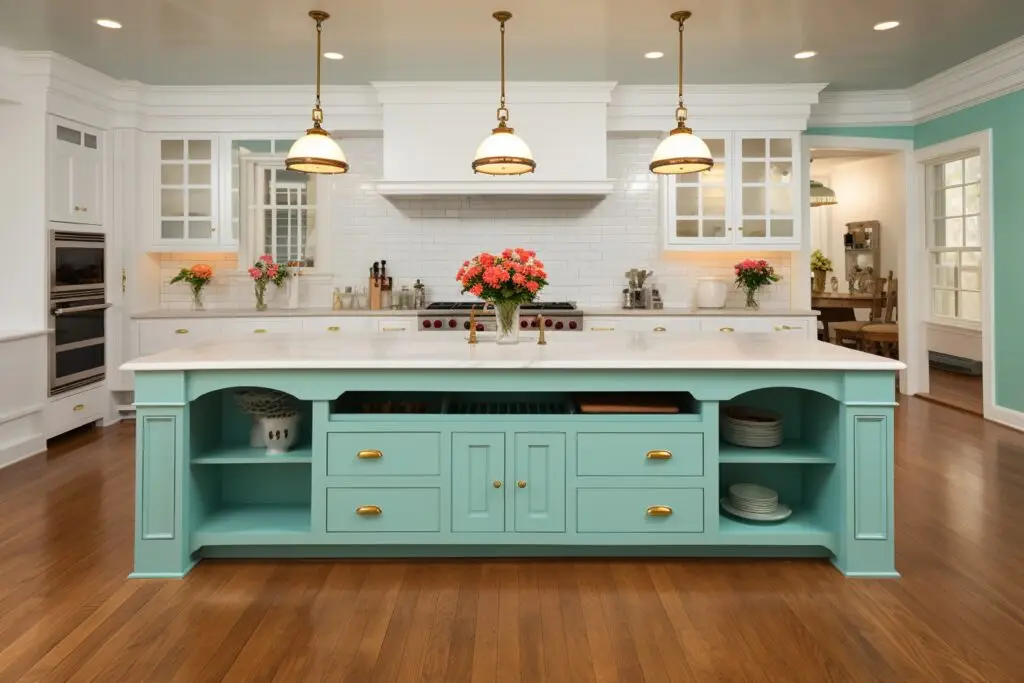
White perimeter cabinets give you the widest choice of island colors, because white does not compete with other hues. Navy and blue-gray, sage or olive green, black or charcoal, natural wood and soft gray are the most dependable picks. Match the island’s undertone to your white, choose satin or semi-gloss, and use a hard-wearing cabinet enamel.
Why the island is the best place for color
In open floor plans the kitchen is often visible from the living and dining areas. A colored island lets you pull a tone from those rooms into the kitchen without repainting every cabinet. It also covers a smaller area than the perimeter, so a bold choice is easier to live with and easier to change later.
Popular island colors with white cabinets
Navy and blue-gray. Navy gives a white kitchen a grounded, tailored look that works in coastal, traditional and transitional styles. If navy feels too heavy for the room, a blue-gray (often described as slate or denim) gives softer contrast.
Sage and olive green. Sage reads soft and calm and pairs well with brass or gold hardware. Olive is deeper and earthier, which suits farmhouse and craftsman kitchens and behaves almost like a neutral.
Black and charcoal. A black or charcoal island creates the strongest anchor in a white kitchen. With a light quartz or marble-look top it feels both modern and classic. Deep colors show dust and fingerprints more readily, so plan on a durable, wipeable finish.
Neutral island options
Natural wood. If you want to break up an all-white kitchen without a painted color, a stained oak, walnut or maple island adds grain and warmth. The texture keeps a white kitchen from feeling flat.
Soft gray. A light or medium gray defines the island with a gentle shadow rather than a hard break. Gray also works with most granite and quartz patterns.
Matching the island to your white
Whites vary. Some lean warm (creamy or yellow), others cool (crisp, with a gray or blue cast). Benjamin Moore’s guide to warm and cool colors explains how undertones interact.
- Warm whites pair naturally with olive, sage, warm grays and wood.
- Cool whites pair naturally with navy, blue-gray, charcoal and cooler grays.
- Check samples in your own light. Paint large swatches on the island, then view them in daylight and under your kitchen lighting before you decide.
Choosing the paint and sheen
An island takes kicks at the stools, bumps from bags and frequent wiping, so the product matters as much as the color.
- Sheen. Benjamin Moore’s paint finish guide notes that higher sheens are more durable and easier to clean but show surface flaws more. Satin is the usual balance on an island; semi-gloss is tougher but highlights dents and brush marks.
- Product. Use a cabinet-grade enamel. Benjamin Moore describes its Advance waterborne alkyd as flowing and leveling like a traditional oil paint while cleaning up with soap and water, in satin, semi-gloss and high-gloss.
- Prep. Clean, degrease, scuff-sand and prime before any color goes on. Our step-by-step guide on how to paint a kitchen island walks through the process.
- Cure. Enamels feel dry well before they reach full hardness, so treat the island gently for the first weeks and follow the recoat and cure guidance on the label.
Ready for a new island color?
If you’d rather have a pro handle it, our residential painting services cover kitchen islands and cabinets, with the scope and price set after an on-site visit. For prep, sheen and dry-time basics, see our interior painting guide. We work with homeowners in Connecticut, including Danbury, CT.
FAQ
Do island and perimeter cabinet hardware need to match?
No. Mixing metals is common: for example, matte black pulls on white perimeter cabinets and brass on a navy or green island, which makes the island read like a separate piece of furniture. Keep the finish consistent within each group.
Does a dark island show scuffs more than a light one?
Usually yes. Black, charcoal and navy show dust, fingerprints and shoe scuffs more than mid-tones. A wipeable satin or semi-gloss enamel and a careful cleaning routine help.
Which white cabinet tone works best with a green island?
Warm or creamy whites tend to sit most comfortably with sage and olive, because the undertones agree. Very cool, blue-leaning whites can make green look dull; test both side by side.
Is a bold island color risky for resale?
Deep classic tones such as navy, charcoal, gray or natural wood are widely seen as safe. Very bright or unusual colors may narrow appeal, but an island is one of the easier surfaces to repaint before listing.