
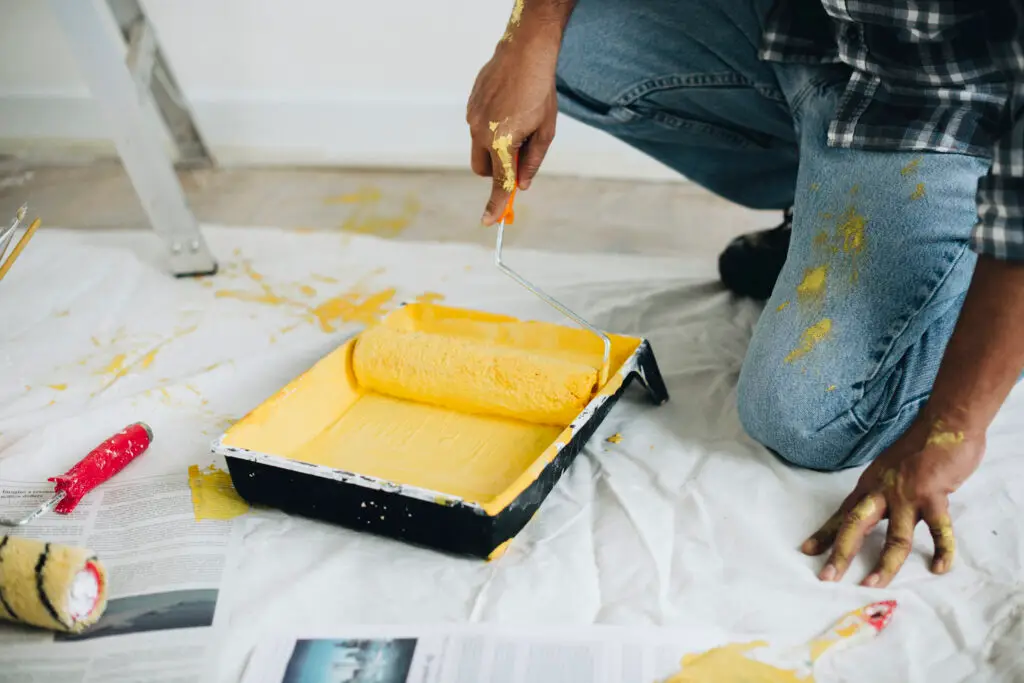
Once the dominant choice for professional and DIY painters, oil-based paint (often referred to as alkyd paint) has taken a back seat to modern latex and water-based formulas. Despite its reduced prominence, it remains the gold standard in certain applications where maximum durability, a furniture-grade finish, and superior adhesion are required. Understanding its composition and unique curing process is essential for knowing when to reach for an oil-based product.
What Is Oil-Based Paint?
Oil-based paint is a type of solvent-borne paint, meaning the carrier fluid (solvent) must evaporate completely for the paint to dry, and the remaining binder must undergo a chemical reaction to fully harden or cure.
Solvent-Based Formula and Curing Process
The primary components of traditional oil-based paints are:
- Binder (Resin): Historically, this was derived from natural oils like linseed oil. Today, most consumer oil-based paints use synthetic alkyd resins (a polymer that mimics the properties of oil) for consistency and durability.
- Pigments: Provide color and opacity.
- Solvents (Thinners): These volatile organic compounds (VOCs)—such as mineral spirits or turpentine—keep the resin in a liquid state. They evaporate during the drying process and are responsible for the characteristic strong odor.
The curing process is what defines oil-based paint’s strength. As the solvents evaporate, the alkyd resins react chemically with oxygen in the air (a process called oxidation). This reaction forms strong, cross-linked bonds, creating a rock-hard, continuous film.
Difference Between Drying and Curing
This distinction is crucial when working with oil-based products:
- Drying Time (To the Touch): This is the period until the solvents have evaporated and the surface feels dry. Oil-based paint typically takes 6 to 24 hours to dry to the touch, depending on temperature, humidity, and ventilation. During this time, the paint can still be easily damaged or marred.
- Curing Time (Full Hardness): This is the necessary period for the chemical oxidation process to complete, resulting in maximum film hardness and durability. Oil-based paint requires a substantially longer curing time than latex, often needing 7 to 30 days—or sometimes even longer in cool, humid conditions—to fully cure. Furniture and surfaces should be handled carefully until this process is complete.
Best Uses for Oil-Based Paint
Due to its superior hardness and resistance to scuffing, oil-based paint is best reserved for areas that demand a professional, protective enamel-like finish.
Trim, Doors, Cabinets, and Metal Surfaces
Oil-based paint excels on interior and exterior architectural elements that are frequently touched, opened, or exposed to minor impacts.
- Wood Trim and Doors: The self-leveling nature of the paint allows it to settle into an extremely smooth, glossy, or semi-gloss finish, minimizing brush strokes. The resulting hard shell protects the wood from chips and dents caused by daily life.
- Kitchen and Bathroom Cabinets: When applied correctly, an alkyd paint creates a hard, washable, and stain-resistant surface, making it highly suitable for areas that require frequent cleaning.
- Metal Surfaces: Oil-based paint adheres tenaciously to clean, primed metal surfaces (like railings, radiators, or window frames) and offers excellent corrosion resistance, making it an ideal protective coating.
High-Traffic and High-Abuse Areas
Any surface that is prone to scuffing, cleaning, or physical contact benefits from the cross-linked durability of oil paint.
- Floors and Porch Decks: While specialized floor coatings exist, oil-based porch and floor enamels are exceptionally durable against foot traffic and weather elements.
- Window Sills: These are constantly exposed to moisture, sun, and dirt. Oil-based finishes provide a tough, water-repellent barrier.
Pros and Cons Compared to Latex Paint
For homeowners deciding between oil-based and modern water-based (latex) enamels, the trade-offs are significant.
Pros: Durability, Smooth Finish, Stain Resistance
| Advantage | Detail |
| Superior Durability | Once fully cured, the film is much harder, resisting scratches, scuffs, and chipping better than most latex alternatives. |
| Exceptional Smoothness | Oil-based paint has a long “open time” (it stays wet longer), allowing gravity to pull out brush strokes and resulting in a mirror-smooth, professional, furniture-quality finish. |
| Stain Blocking/Resistance | Its non-porous finish makes it far less susceptible to absorbing oils, grease, and stains, making cleaning easier. |
| Adhesion | It adheres tenaciously to many difficult surfaces, including previously finished wood and certain metals. |
Cons: Odor, VOCs, Longer Drying Time
| Disadvantage | Detail |
| Strong Odor and VOCs | The high concentration of solvents releases potent fumes (Volatile Organic Compounds), requiring excellent ventilation and making application uncomfortable or hazardous in confined spaces. |
| Long Drying and Curing Time | The extended waiting period for drying (up to 24 hours) and full curing (weeks) complicates projects and can leave surfaces tacky for a frustratingly long time. |
| Cleanup | Brushes and equipment require harsh solvents (mineral spirits or paint thinner) for cleanup, which is more complex and less environmentally friendly than water-based cleanup. |
| Yellowing Over Time | Particularly noticeable in white or light colors, oil-based paints are prone to oxidizing further over time, leading to a subtle yellow or amber shift. |
Why Oil-Based Paint Is Used Less Today
The market shift away from oil-based paint has been driven by a combination of government mandates and technological advancement.
Environmental Regulations
The largest factor in the decline of traditional oil-based paints is environmental regulation, particularly rules limiting VOC content. High VOC levels contribute to poor air quality and smog formation.
- Federal and State Mandates: Regulatory bodies, including the EPA and local Air Quality Management Districts, have continuously reduced the acceptable VOC limits for architectural coatings. These regulations have made many traditional, high-VOC oil-based formulas illegal to sell in certain parts of the country, forcing manufacturers to reformulate or discontinue products.
- VOC-Compliant Alternatives: Today, many “oil-modified” or “hybrid” paints exist, which are often water-based but incorporate some alkyd resins to mimic the hardness and flow of oil paint while remaining VOC-compliant.
Advances in Water-Based Enamels
The demand for lower VOCs has spurred significant innovation in the latex paint sector.
- Modern water-based enamels and acrylic-alkyd hybrids now offer remarkable durability, flow, and leveling capabilities that closely rival the smooth finish of traditional oil paint, but with the added benefits of fast drying time, easy soap-and-water cleanup, and negligible odor. For most homeowners, these hybrid alternatives provide a perfect balance of performance and convenience.
FAQs
Is oil-based paint still legal?
Yes, oil-based paint is still legal and widely available. However, due to VOC regulations, the formulas have been modified, and the variety of products, particularly in high-VOC states like California, may be limited compared to years past. Always check the container’s label and consult with a local paint retailer to ensure the product meets regional air quality standards.
Can oil paint be used indoors?
Yes, it can, but it requires serious consideration for ventilation. While it provides an excellent interior finish for trim and cabinetry, the strong, lingering solvent odor and high VOC release necessitate opening windows, using high-quality respirator masks, and possibly running fans to exhaust air outside. It is generally not recommended for large interior surfaces like walls due to the extensive cure time and odor.
How long does oil-based paint take to cure?
Oil-based paint typically takes 7 to 14 days to achieve a durable, functional cure under ideal conditions (moderate temperature and low humidity). In cooler, more humid environments, this period can extend up to 30 days or more. Never expose the painted surface to full traffic or heavy abuse before the full curing time has passed.
Planning a high-durability project like cabinets or doors?
Our experts can help you navigate the choice between traditional oil-based formulas and the latest water-based enamels to achieve the perfect, lasting finish for your home.
Consult our paint specialists today.