
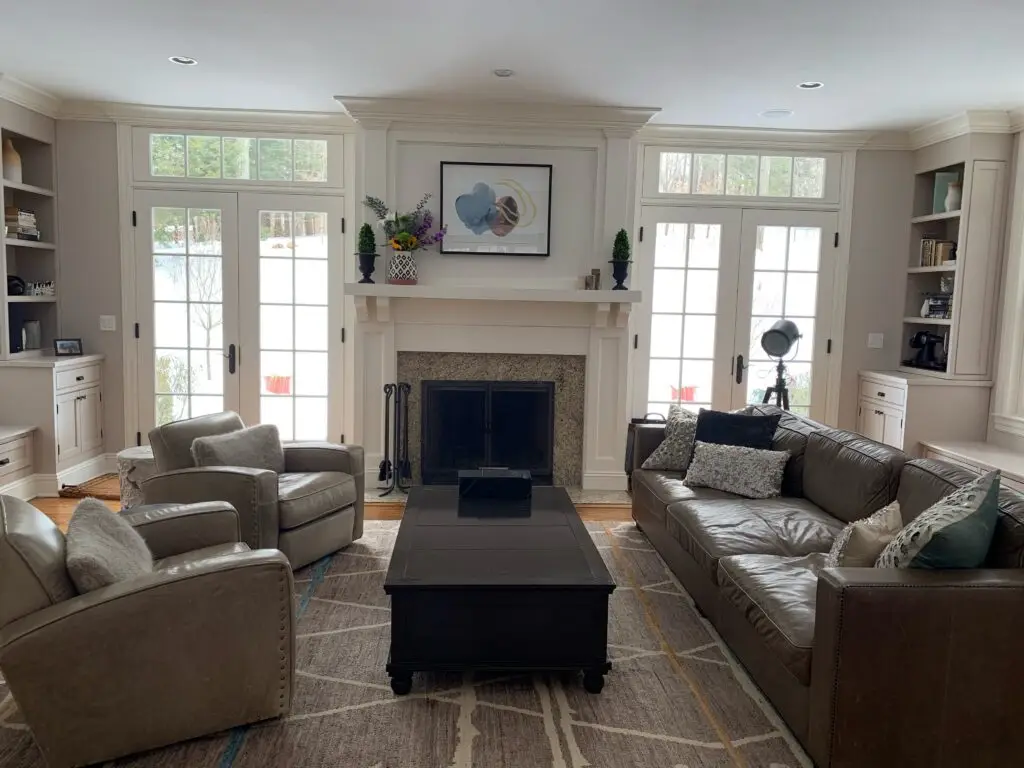
A fireplace is the architectural anchor of a living room. Whether it’s a floor-to-ceiling brick monolith or a simple mid-century hearth, its finish dramatically impacts the room’s style. While exposed brick can be beautiful, painting it offers an immediate, impactful transformation, allowing you to seamlessly integrate the fireplace into a contemporary or classic design scheme.
Popular Painted Fireplace Styles
The color you choose dictates the mood and style of your living space, ranging from bright and airy to dramatic and grounded.
White and Off-White Fireplaces
White is arguably the most popular choice for painted brick. It instantly lightens a room, creates a sense of airiness, and elevates the brick texture from rustic to refined.
- Farmhouse/Transitional Look: Use a clean, crisp white (e.g., a pure white without strong undertones) to create a striking contrast against colored walls. This provides a clean focal point that highlights the surrounding décor.
- Monochromatic Glow: Use an off-white or creamy hue (with slight yellow/beige undertones) that closely matches your wall color. This creates a cohesive, subtle, and warm look where the fireplace integrates smoothly into the background, allowing artwork or a mantel display to shine.
Black and Charcoal Modern Looks
For a dramatic, sophisticated, or modern farmhouse aesthetic, opt for dark, matte colors.
- Modern Contrast: A flat, dark black or deep charcoal gray works exceptionally well against light-colored walls (white or light gray). This grounds the room, adding a powerful, architectural statement. It is a highly effective way to make a large, imposing brick structure disappear while adding immediate sophistication.
- Industrial Edge: Use a deep matte black for both the brick and the firebox trim (where heat-rated paint is required). This creates a minimalist, industrial vibe that pairs well with metal accents and raw wood.
Soft Gray and Neutral Designs
If you want to maintain character without the stark contrast of black or white, a middle-ground neutral is ideal.
- Soft Greige: A warm greige (gray with beige undertones) offers the best of both worlds. It provides the softness of gray but prevents the fireplace from looking cold or sterile, pairing beautifully with natural wood flooring and warm textiles.
- Muted Taupe: A deeper taupe is perfect for creating a cozy, hygge-inspired space. It offers more color depth than a light gray but remains a versatile neutral that allows the room’s furniture and accessories to carry the main color palette.
Choosing the Right Color for Your Space
Successful fireplace painting requires careful consideration of how the new color will interact with the fixed elements already in your room.
Contrast with Walls and Flooring
Think of your fireplace as a piece of large furniture that needs to coordinate with its surroundings.
- High Contrast: If your walls are a saturated color (e.g., deep blue or olive green), painting the fireplace a bright white will make it pop and define the room’s central axis.
- Low Contrast (Blend): If you prefer a tranquil, enveloping space, choose a fireplace color that is one shade lighter or darker than your walls. This creates visual texture through the brick but keeps the overall color scheme monochromatic, making the room feel larger.
- Flooring Balance: If you have cool-toned flooring (like gray laminate or white marble), painting the brick a warm neutral (like a creamy off-white or light beige) will add necessary balance and keep the room from feeling stark. If your floors are warm (e.g., red oak), you can opt for a soft gray to cool the center of the room slightly.
Matching Mantels and Trim
The mantel and trim (baseboards, crown molding) should coordinate to create a polished look.
- Same Color: Painting the brick and the mantel the exact same color (e.g., all white or all black) creates a seamless, contemporary silhouette that emphasizes the shape of the fireplace structure.
- Opposing Contrast: If the brick is painted white, painting the wooden mantel shelf a contrasting dark stain or black allows the mantel to stand out as a decorative feature, often enhancing a rustic or craftsman style.
- Coordinated Trim: Always ensure the fireplace color works with the room’s baseboards and door casings. If the room trim is a standard bright white, sticking with a very light neutral on the fireplace will simplify the color transitions.
Paint Finish & Texture Options
The sheen and application method dramatically alter the final look and feel of the painted brick.
Matte vs. Satin Finishes
- Matte (Flat) Finish: Recommended for nearly all painted brick. A flat or matte finish hides imperfections, uneven mortar lines, and the natural roughness of the brick. It absorbs light, giving the fireplace a soft, sophisticated, and earthy quality.
- Satin/Semi-Gloss Finish: Generally discouraged. These finishes reflect light, highlighting every bump, crumbly mortar joint, and flaw in the brick. While easier to clean, they often look cheap or plastic on brick and are best reserved only for the wooden mantel or trim, not the masonry itself.
Limewash vs. Solid Paint
The choice between these two applications depends entirely on whether you want a heavily textured, worn look or a completely uniform color.
- Solid Paint (100% Coverage): Achieved by fully coating the brick in primer and topcoat. This look is clean, modern, and provides maximum transformation by completely covering the original brick color.
- Limewash: A mineral-based coating that penetrates the brick and creates a beautiful, mottled, aged look. Limewash is applied thinly, allowing some of the original brick color to show through, providing a rustic, Old World, or subtly weathered appearance. It is highly durable and breathable but is permanent and requires a specific technique to apply evenly.
When to Paint vs. When to Keep Brick Natural
Deciding whether to paint a fireplace often involves balancing personal taste with architectural integrity and future resale value.
Architectural Style Considerations
- Paint It: When the brick is poorly colored (e.g., orange/red that clashes with current décor), severely stained, or if you are aiming for a modern, Scandinavian, or coastal aesthetic. Painting can also save a fireplace made from visually unappealing modern brick.
- Keep It Natural: If the brick is a high-quality, period-appropriate color (e.g., deep burgundy in a Victorian home or a beautiful blend in a classic mid-century ranch) and is in excellent condition. Natural brick is often integral to the original design and can command a premium with buyers who appreciate authentic materials.
Resale Impact
In the current US housing market, painting an outdated or heavily textured red-orange brick fireplace a neutral white or greige is generally considered a value-add, as it caters to the modern buyer’s preference for move-in-ready, neutral spaces. However, painting rare or historically significant brick should be approached with caution, as it is permanent and could alienate buyers who prefer restoration.
FAQs
Does painting a fireplace reduce home value?
In most cases, painting a dated, poorly colored, or unattractive brick fireplace a modern, neutral color (white, greige, or black) increases its appeal to the average buyer and does not reduce value. It reduces the perceived need for a major renovation. Value reduction only occurs if the natural brick was highly desirable (e.g., antique or architecturally unique) or if the paint job is executed poorly (e.g., peeling, wrong finish, or a polarizing color).
Can I repaint a fireplace later?
Yes. Once brick has been painted, it can be repainted any number of times, just like any other interior wall. The original layer of primer and paint acts as the new surface. However, you cannot easily revert the brick back to its natural, unpainted state without costly, messy chemical stripping or sandblasting.
How do I update a dated painted fireplace?
If your fireplace was painted years ago (perhaps in a yellowish beige or a very dark, glossy brown), you can easily update it by:
- Cleaning: Deeply clean the existing painted surface with a mild degreaser.
- Scuff Sanding: Lightly scuff the surface with fine-grit sandpaper (120-180 grit) to create adhesion for the new coat (especially if the old paint was satin or semi-gloss).
- Repainting: Apply a fresh coat of Matte acrylic latex paint in a crisp white, subtle greige, or modern charcoal. This simple change from a dated color and finish to a modern color and matte finish will instantly refresh the space.
We are passionate about helping homeowners achieve their dream spaces. If you’ve recently used one of these design ideas to transform your fireplace, we would love to see how the final look turned out!