
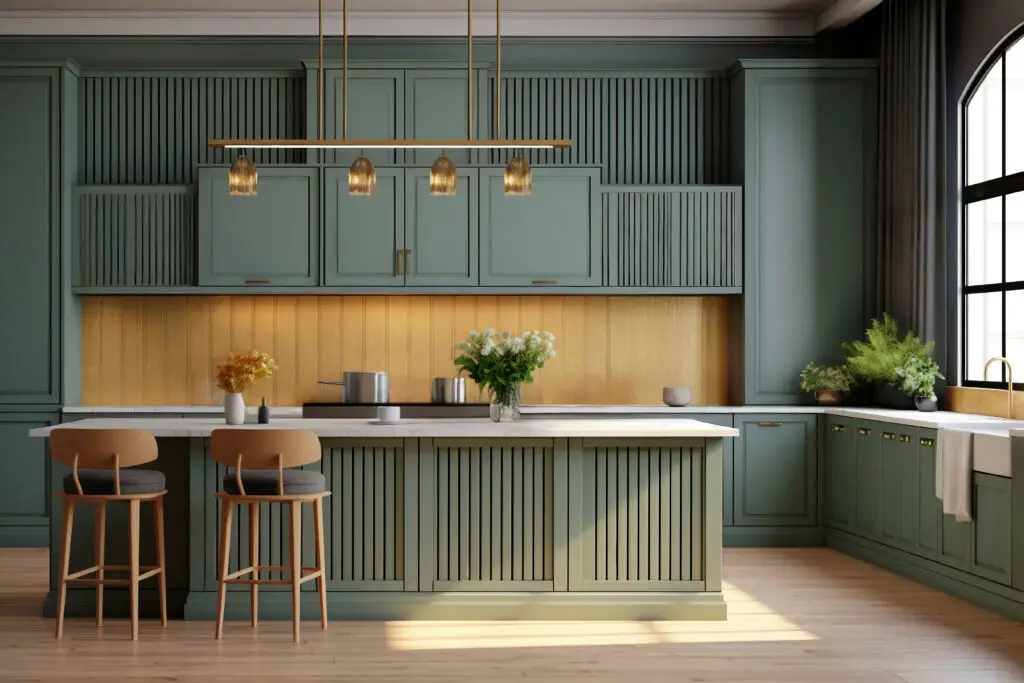
The kitchen island is the heart of the modern American home. It is where we prep meals, help kids with homework, and gather during parties. Because the island is physically separated from the rest of the cabinetry, it offers a unique opportunity to experiment with design without committing to a full kitchen overhaul.
Quick Answer: Islands Are Perfect for Bold Color Choices
If you’ve been dreaming of a bold color but are afraid it might overwhelm your kitchen, the island is the perfect “safe zone.” By painting just the island a different hue, you create a focal point that adds personality and depth to the room while keeping the overall look balanced.
Why islands don’t have to match cabinets
In contemporary U.S. interior design, the “tuxedo” or “two-tone” kitchen has become a standard. Designers treat the island more like a piece of furniture than a built-in fixture. Choosing a contrasting color for the island breaks up the monotony of a single-color kitchen and allows you to highlight the center of the room as a specific architectural feature.
Popular Kitchen Island Paint Colors
While any color is possible, certain palettes have become favorites for their ability to complement standard countertop materials like white marble or gray quartz.
Navy Blue
Navy blue is perhaps the most popular choice for a contrasting island in the United States. It provides a classic, nautical, or “Hamptons” vibe. Navy acts as a “neutral with personality,” pairing beautifully with gold hardware and white perimeter cabinets.
Sage Green
As homeowners lean toward more “organic” and earthy tones, sage green has surged in popularity. It brings a sense of calm and nature indoors. This color works exceptionally well in kitchens with natural wood accents or butcher-block island tops.
Charcoal and Black
For those seeking a high-end, sophisticated look, charcoal gray or true black is the way to go. A dark island provides an anchor for the room, making a white kitchen feel more grounded and modern. It is also an excellent backdrop for showing off high-end bar stools.
Choosing the Right Paint for Kitchen Islands
Because an island is a high-impact area—literally, as it often gets kicked by feet at the bar—the choice of paint is more important here than on a wall.
Durability and washability
You should always opt for a cabinet-grade paint. In the U.S. market, professionals prefer water-based alkyd urethanes. These paints are designed to “level out” as they dry, leaving a smooth, factory-like finish that is incredibly resistant to the scuffs and spills common in a busy kitchen.
Satin vs semi-gloss finishes
- Satin: This is the current favorite for modern kitchens. It offers a soft glow that hides imperfections well while still being easy to clean.
- Semi-Gloss: If you have children or pets, semi-gloss provides a slightly harder “shell” that is even easier to wipe down, though it will show more of the wood’s texture and any minor dings.
Prep Tips for a Long-Lasting Finish
A kitchen island is subjected to grease, steam, and physical contact. Without proper prep, even the best paint will eventually peel.
Cleaning and sanding
The first step is a deep clean using a de-greaser (like TSP). Even if the island looks clean, cooking oils can linger on the surface. Once clean, the surface must be lightly sanded to remove the previous sheen and create a “profile” for the new paint to bond to.
Priming correctly
Never skip the primer. For kitchen islands, especially those being painted a dark color over light wood (or vice versa), a high-quality stain-blocking primer is essential. It prevents the wood tannins from bleeding through and ensures the final color is rich and even.
FAQs
Should island color match cabinets?
Not necessarily! While matching creates a uniform look, using a different color for the island is a great way to add visual interest. A common rule of thumb is to keep the perimeter cabinets neutral (white, cream, or light gray) and use the island for your “accent” color.
Do dark islands show more wear?
Dark colors are excellent at hiding scuffs from shoes, but they may show dust or dried flour more easily than lighter colors. However, because islands are often kicked by people sitting on stools, a dark color can actually stay looking “cleaner” regarding scuff marks than a bright white one.
Can islands be repainted easily?
Yes! Because the island is a contained unit, it is much easier and faster to repaint than an entire kitchen. It is one of the most cost-effective ways to update the look of your home in just a few days.
Transform Your Space with Anderson’s Painting
Ready to turn your kitchen island into a stunning centerpiece? Achieving a smooth, professional finish on cabinetry requires specialized equipment and expertise. At Anderson’s Painting, we bring years of experience in fine-finish painting to every project.
We handle the heavy lifting—from the intensive cleaning and sanding to the precision spraying that delivers a durable, beautiful finish. Let us help you find the perfect shade for your home.
Give your kitchen the “wow” factor it deserves. Contact Anderson’s Painting today for your kitchen island transformation quote!