
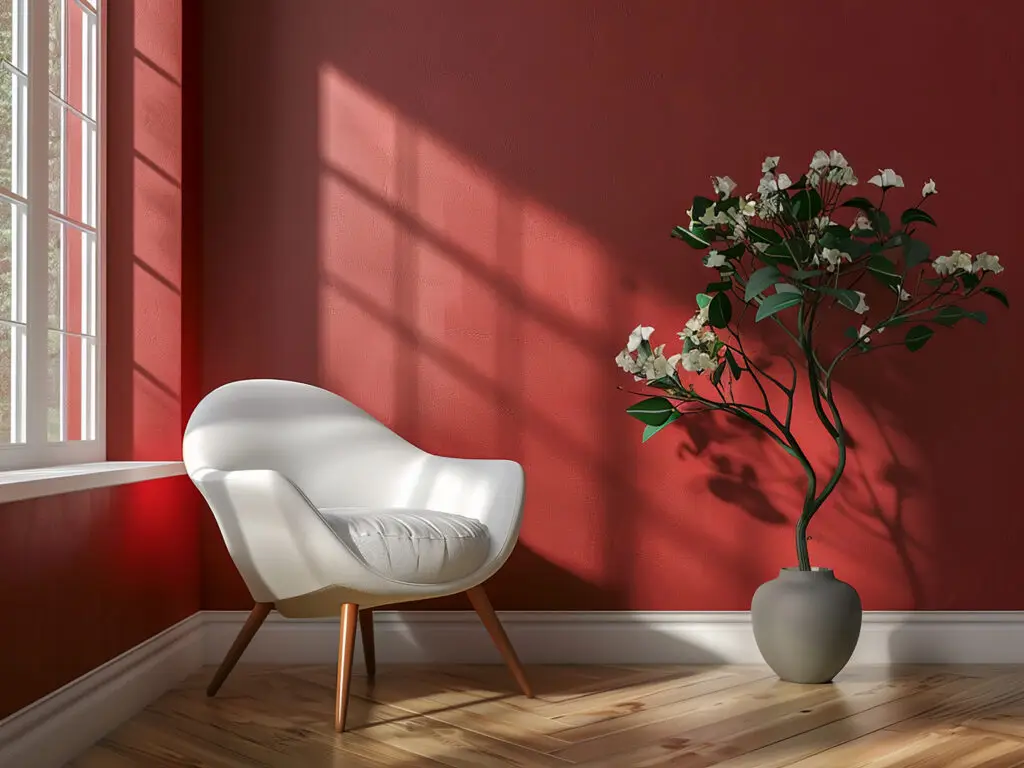
Red is perhaps the most emotionally charged color in the interior designer’s palette. It is a bold, high-energy choice that can transform a mundane room into a sophisticated, high-end space. However, because red is a “dominant” color, it requires a strategic approach to application and lighting to ensure the result is inviting rather than agitating.
Quick Answer: Red Works Best as an Accent or in Balanced Spaces
In modern American interior design, red is most effective when used as a focal point or in rooms where high energy and social interaction are desired. Because of its intensity, it requires “breathing room”—balance provided by neutral trim, ample lighting, or complementary textiles—to prevent the color from saturating the environment.
Why red can overwhelm rooms quickly
Red has the shortest wavelength of all colors on the visible spectrum, which makes it appear closer to our eyes than it actually is. This creates an “advancing” effect. If all four walls in a small room are painted a vibrant red, the walls feel as though they are closing in, which can trigger a sense of claustrophobia or visual fatigue. Furthermore, red increases the heart rate and stimulates the senses, which is why it is rarely recommended for bedrooms or nurseries where relaxation is the primary goal.
Best Rooms for Red Wall Paint
While it is a challenging color, certain spaces in the home are traditionally enhanced by the warmth and drama of red.
Dining rooms
The “Red Dining Room” is a classic American design staple. Red is scientifically suggested to stimulate the appetite and encourage conversation, making it ideal for hosting. Deep shades like burgundy or russet paired with white wainscoting and crown molding create a formal, traditional atmosphere that feels both historic and luxurious.
Accent walls
If you love the energy of red but fear the “box-in” effect, an accent wall is the perfect compromise. Placing red on a single wall—typically behind a fireplace or a headboard—creates a strong focal point. It allows you to introduce the color’s warmth without dominating the room’s entire light profile.
Powder rooms
Powder rooms are often referred to as “jewelry boxes” because they are the perfect place to experiment with bold colors that might be too intense for larger living areas. Since guests spend only a short time in a powder room, a high-gloss or deep crimson red can feel like a daring, high-design surprise rather than an overwhelming choice.
Choosing the Right Shade of Red
Not all reds are created equal. The undertone of the paint will determine whether the room feels cozy or modern.
Warm vs. cool reds
- Warm Reds: These have orange or yellow undertones (e.g., Tomato, Brick, Poppy). They feel energetic, cozy, and sunny. They work best in rooms with North-facing light to help “warm up” the cooler natural light.
- Cool Reds: These have blue or purple undertones (e.g., Cherry, Ruby, Wine). They feel more formal, sophisticated, and “expensive.” Cool reds tend to be easier on the eyes in large doses than warm, bright reds.
How lighting changes red paint
Red is a “metameric” color, meaning it changes drastically under different light sources. Under incandescent or “warm” LED bulbs, red can look glowing and rich. Under “cool” or “daylight” bulbs, a red wall can look muddy or even slightly brownish. Always test a large swatch and observe it at midday and again at night under your home’s specific lighting before committing to a gallon.
Tips for Painting Over Red Walls
Red is notoriously difficult to hide because the pigments are transparent. If you decide to change your color later, you cannot simply paint a light color over it.
Primer selection
To cover red, you should use a “Grey-Tinted Primer.” It sounds counter-intuitive, but a grey base neutralizes the vibrancy of the red much better than white does. For the red paint itself, many U.S. manufacturers offer “High-Hide” primers specifically designed for “hot” colors.
Coverage expectations
When applying red paint, expect to apply at least three coats for a professional, streak-free finish. Even high-end “one-coat” paints often struggle with the depth of a true red. Using a high-quality, short-nap microfiber roller will help achieve a uniform “stipple” and prevent the patchy look often seen with DIY red paint jobs.
FAQs
Is red paint hard to cover?
Yes. Red pigment is very persistent. If you attempt to paint white over red without a dedicated grey-toned primer, the red will often “bleed” through, giving your new white walls a pinkish hue.
Does red make rooms look smaller?
Technically, yes. Because red is an “advancing” color, it makes walls feel closer. In a large, cavernous room, this is a benefit as it makes the space feel more intimate. In a tiny room, it can make the space feel cramped unless used on a single wall or in a high-gloss finish that reflects light.
What colors pair well with red?
- Classic: Red and Crisp White (provides a clean, nautical or farmhouse feel).
- Sophisticated: Red and Charcoal Grey (modern and grounded).
- Bold: Red and Navy Blue (a timeless, patriotic, or scholarly palette).
- Natural: Red and Sage Green (complementary colors that feel organic and earthy).
Are you ready to bring the bold energy of red into your home? Click here to book a color consultation with our experts and find the perfect shade for your space!