
Quick Answer
Solid stain can cover some previously painted wood when the paint is sound, dull, and compatible with an exterior stain system. Clean thoroughly, remove loose coating, dull glossy film, and test adhesion on a small area first. Peeling, chalking, or thick unstable paint usually needs more preparation or full stripping. Compare opacity options separately from the stain-versus-paint decision.
Can you put solid stain over paint?
Sometimes—and that is the question this page answers. Queries like “solid stain over paint,” “can you put stain over paint,” and “can you stain over paint” all turn on surface condition and product compatibility, not on marketing names alone.
A solid stain is designed for wood and outdoor exposure. It still needs a stable surface. Sound, well-adhered paint that can be cleaned and scuffed may accept a compatible exterior solid-stain system. Soft, peeling, chalking, or contaminated paint will not hold a new film for long.
This article is about staining over existing paint. For how solid stain differs from paint as a finish choice—opacity, grain show-through, and maintenance—see solid stain vs. paint.
What solid stain is doing on painted wood
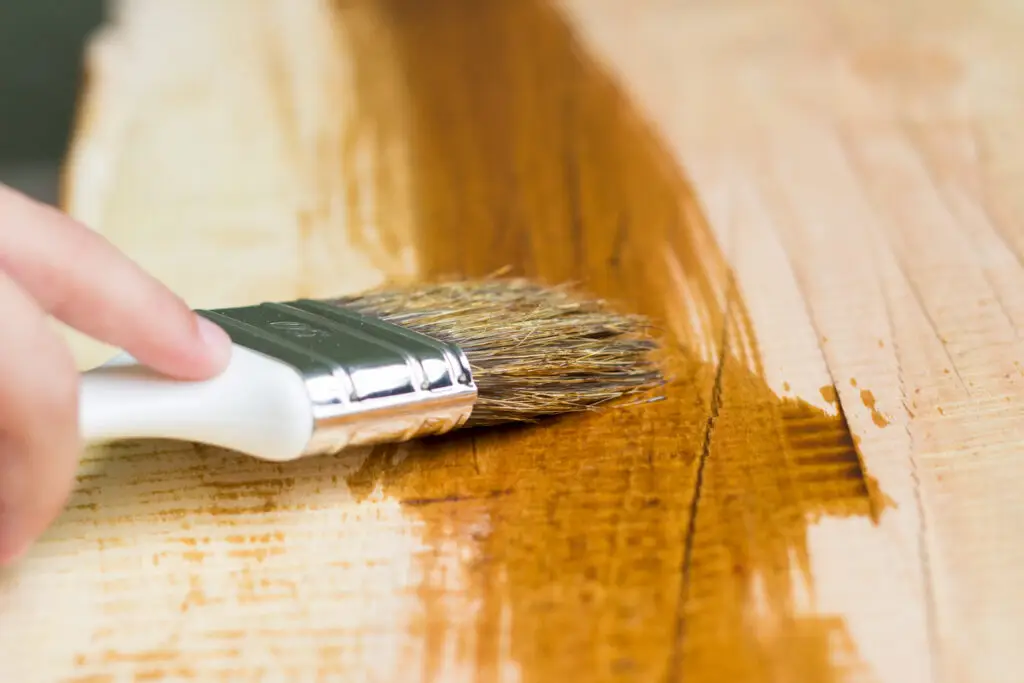
Solid stains sit toward the opaque end of exterior wood finishes. They hide more grain and prior color than translucent products while still reading as a wood finish rather than a high-build enamel. On bare wood they can penetrate and bond into fibers; over paint they behave more like a coating on a coating. That is why adhesion prep matters more than “stain” branding.
Benjamin Moore’s wood-stain guide explains opacity choices and sampling on real wood. Use the selected product’s TDS for whether painted substrates are allowed.
Surface prep: clean, dull, and remove loose paint
- Identify the existing coating and the wood condition (deck, fence, siding, furniture).
- Clean dirt, mildew residue, and chalk with a method approved for exterior wood.
- Remove loose or flaking paint to a sound edge—do not stain over active peel.
- Dull glossy areas by sanding or as the stain system requires so the new coat can grip.
- Vacuum or wipe sanding dust; leftover dust blocks adhesion.
- Spot-test the full system and inspect after drying before coating the whole project.
- Apply only when weather matches the product’s temperature and rain-free windows.
Review EPA lead-safe renovation guidance before disturbing older paint that may contain lead.
Primer or bonding coat—when the system calls for it
Some exterior systems recommend a bonding primer over difficult painted wood before a solid stain or opaque topcoat. Others require bare wood. Do not invent a primer step the TDS does not support, and do not skip one the TDS requires. Primers can improve adhesion, even out porosity after spot scraping, and help with stain blocking of tannins or old colors—only when the manufacturer specifies that path.
When to strip instead of staining over paint
Strip or remove paint when:
- Adhesion fails on a tape or scratch test after cleaning
- The film is thick, multi-layer, and unstable
- The intended stain or opacity needs bare wood
- Large areas are already peeling faster than you can feather
Solid stain will not repair failed paint underneath. If the deck or trim needs structural repair, resolve that before finishing. When the painted surface is in excellent condition and you want a glossy enamel look, repainting may be the better route than forcing a solid stain.
Application outline after prep
Check weather, stir thoroughly, cut in edges, then roll or brush thin coats while keeping a wet edge. Many exterior solid stains call for two thin coats rather than one heavy pass. Avoid intense midday flash-drying on sun-baked faces when the label warns against it. Recoat only inside the product’s window.
Maintenance after a successful over-paint stain
Even a well-bonded solid stain needs upkeep. Watch for edge wear, chalking, and UV fade on sun-facing faces. Recoat on the manufacturer’s maintenance cycle rather than waiting for widespread failure. If the old paint starts to peel later, stop coating over it and return to stripping or spot repair. Regular cleaning extends the interval between recoats.
DIY or hire?
A small, sound surface with known coatings can suit careful DIY work. Large decks, failing paint, height, or uncertain older coatings justify assessment. Explore residential painting services and Danbury painting information for local project planning.
FAQ
Will solid stain hide every old paint color on a deck?
It can cover more than a translucent stain, but coverage depends on opacity, color, and preparation. Test a dried sample on the prepared surface.
Do I always need to strip paint before using solid stain outdoors?
No. Sound paint that can be cleaned and prepared may work with a compatible system. Strip when the paint is failing or the product requires bare wood.
Can you put wood stain over paint on a fence without sanding?
Usually not if the paint is glossy or chalky. Cleaning alone rarely replaces dulling and removing loose film. Follow the stain system’s prep steps.
Does a bonding primer let any solid stain go over any paint?
No. Use primer only when the selected system allows it, and still confirm adhesion with a test patch. Incompatible stacks can fail even over primer.