
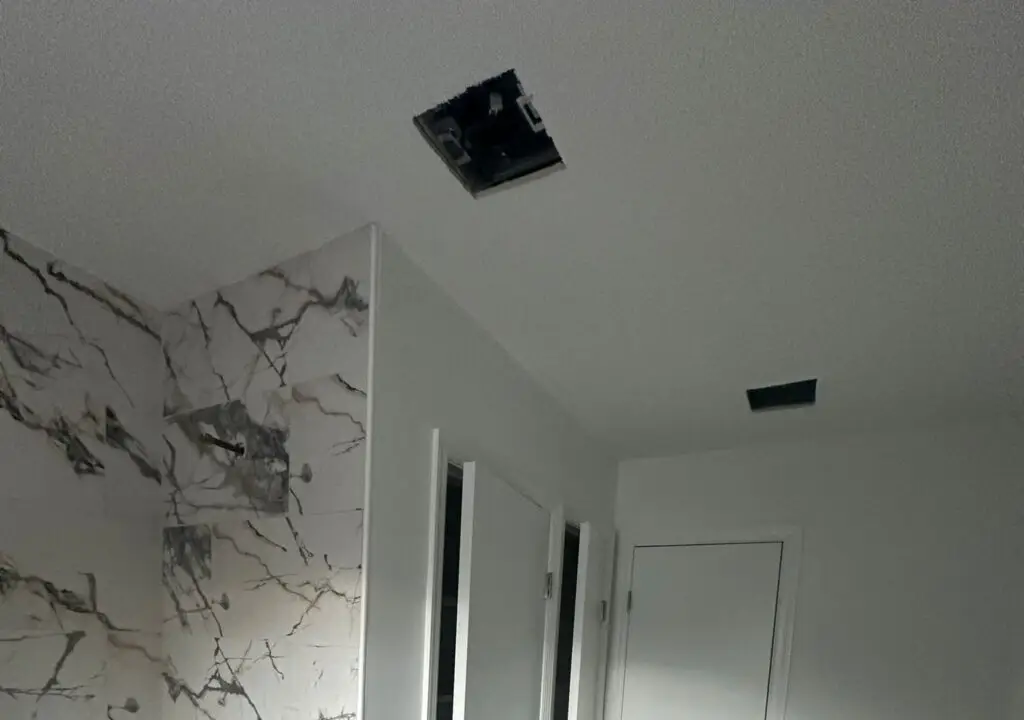
Painting a bathroom ceiling might seem like a straightforward task, but it’s often more complex than painting walls in other rooms. The unique conditions of a bathroom – high humidity, extreme temperature fluctuations, and constant moisture – create a challenging environment where standard paints often fail, leading to unsightly mold growth, peeling, and blistering. Choosing the right type of paint is crucial for a durable, long-lasting, and healthy finish. Anderson’s Painting delves into why bathroom ceilings require special paint, explores the best finishes, recommends top moisture-resistant brands, and provides essential tips for preparation and application to ensure a pristine result.
Why bathroom ceilings require special paint
Unlike ceilings in bedrooms or living areas, bathroom ceilings are directly exposed to the steam and moisture generated from showers and baths. This constant exposure creates an ideal breeding ground for problems that standard paints simply aren’t equipped to handle.
- Humidity & Moisture Absorption: Regular paints are porous and can absorb moisture. In a bathroom, this leads to the paint softening, bubbling, peeling, and eventually flaking off.
- Mold & Mildew Growth: Moisture combined with warmth (from showers) creates the perfect environment for mold and mildew spores to germinate and grow on the ceiling surface. These fungi are not only unsightly but can also contribute to poor indoor air quality and potential health issues. Standard paints offer no resistance to this.
- Poor Adhesion: The constant condensation can weaken the bond between standard paint and the ceiling substrate, causing it to lose adhesion more quickly than in drier environments.
- Staining: Water stains (from leaks or excessive condensation) are common on bathroom ceilings and can easily bleed through standard paints.
Specialized bathroom ceiling paints are formulated to specifically counteract these issues, providing a more durable and resistant barrier.
Best paint finishes for humid environments
While walls in bathrooms often benefit from higher sheens, ceilings have different requirements. The ideal finish for a bathroom ceiling balances moisture resistance with the ability to hide imperfections.
Semi-Gloss vs. Satin vs. Flat
- Flat/Matte Finish:
- Description: This finish has virtually no shine and absorbs light.
- Pros for Ceilings:
- Hides Imperfections Best: The primary reason for using flat paint on ceilings is its ability to conceal surface flaws like uneven drywall, patching, or minor cracks. A flat finish diffuses light, making these imperfections less noticeable.
- Reduces Glare: Eliminates glare from light fixtures and natural light, creating a uniform, non-distracting overhead surface.
- Cons (for general paint): Standard flat paints are generally less durable and less washable.
- Recommendation for Bathroom Ceilings: Choose a flat paint specifically formulated for bathrooms (i.e., “Bathroom Ceiling Paint” or “Kitchen & Bath Ceiling Paint”). These paints are designed to offer the superior hide of a flat finish while incorporating mildewcides and enhanced moisture resistance. This is often the best overall choice for bathroom ceilings.
- Satin Finish:
- Description: Has a soft, velvety sheen, with a slight luster.
- Pros for Ceilings: More washable and somewhat more moisture-resistant than flat paint.
- Cons for Ceilings: Will show ceiling imperfections more readily than flat. Can create some glare.
- Recommendation for Bathroom Ceilings: Generally not ideal for ceilings, unless it’s a very large, well-ventilated bathroom with perfectly smooth ceilings, or if you’re intentionally aiming for a slight sheen for a specific design. It’s better suited for bathroom walls.
- Semi-Gloss Finish:
- Description: Has a distinct, noticeable shine. Very smooth and reflective.
- Pros for Ceilings: Extremely durable and the most washable.
- Cons for Ceilings: Its high reflectivity will highlight every single imperfection on your ceiling, making minor flaws very obvious. Can create significant glare.
- Recommendation for Bathroom Ceilings: Generally NOT recommended for ceilings. It’s typically reserved for trim, doors, and sometimes walls in very high-moisture areas where extreme durability and cleanability outweigh aesthetic concerns.
In summary, for most bathroom ceilings, a dedicated flat or ultra-flat bathroom ceiling paint with mildewcide is the optimal choice. It provides the best aesthetic (hiding imperfections) combined with the necessary moisture and mold resistance.
Top moisture-resistant paint brands
Leading paint manufacturers offer specialized lines designed for high-humidity environments. When selecting, look for terms like “Bathroom Paint,” “Kitchen & Bath,” “Mold & Mildew Resistant,” or “Moisture Resistant.”
- Sherwin-Williams:
- Emerald® Interior Latex Paint (Flat or Matte finish for ceilings): While versatile for walls, its low-sheen versions often include excellent mold and mildew resistance, making them suitable for ceilings.
- Duration Home® Interior Latex (Flat or Matte): Another premium option with good washability and durability that can perform well on ceilings, often with mildewcide properties.
- Sherwin-Williams also offers dedicated “Ceiling Paint” with mildewcide.
- Benjamin Moore:
- Aura® Bath & Spa (Matte finish): This is Benjamin Moore’s flagship product specifically designed for bathrooms, including ceilings. It offers exceptional durability, washability, and mildew resistance in a low sheen, making it an excellent choice for a uniform look from walls to ceiling.
- Regal® Select Interior Paint (Matte or Flat finishes): Contains mildew inhibitors and provides a durable, washable finish suitable for bathroom ceilings.
- Behr (available at The Home Depot):
- BEHR Premium Plus® Ceiling Paint: Specifically formulated to be spatter-resistant, hide imperfections, and include mildew resistance for bathrooms.
- BEHR MARQUEE® Interior Paint & Primer: High-quality option; the flat finish with its excellent hide and durability can be considered for ceilings, especially if it specifies mildew resistance.
- Valspar (available at Lowe’s):
- Signature® Interior Paint & Primer (Ceiling Flat): Offers good coverage and spatter resistance, often formulated with antimicrobial properties for bathroom use.
- Duramax® Paint & Primer (Flat): Known for its stain-blocking and mildew resistance, making it suitable for challenging bathroom ceilings.
Key Buying Tips:
- Read the Label: Always check the product description for “bathroom,” “kitchen & bath,” “mold/mildew resistant,” or “high-humidity” suitability.
- Low VOC: Choose low or zero VOC (Volatile Organic Compounds) paints for better indoor air quality, especially in a small, often enclosed space like a bathroom.
How to prep and apply paint to bathroom ceilings
Proper preparation and application techniques are crucial for ensuring the specialized paint performs as intended.
- Preparation is Paramount:
- Clear the Room: Remove all furniture, rugs, and décor. Cover floors and remaining fixtures meticulously with drop cloths and painter’s tape.
- Clean Thoroughly: This is critical! Use a strong degreaser cleaner (like TSP substitute or a dedicated bathroom cleaner) to remove all soap scum, grime, and mildew from the ceiling. Scrub well, especially any areas with visible mildew, using a stiff brush.
- Rinse and Dry: Rinse the ceiling thoroughly with clean water to remove all cleaning solution residue. Allow the ceiling to dry completely before proceeding. Any residual moisture will compromise paint adhesion.
- Repair Imperfections: Patch any cracks, holes, or peeling paint. Sand smooth and wipe away dust.
- Remove Old Mildew: For stubborn mildew that cleaning alone doesn’t remove, you may need a very diluted bleach solution (1 part bleach to 10 parts water) on non-porous surfaces, or a commercial mildew remover. Ensure excellent ventilation and wear protective gear. Rinse thoroughly and dry completely.
- Tape Off: Use high-quality painter’s tape along the top edge of the walls where they meet the ceiling for a crisp line.
- Priming (If Necessary):
- When to Prime: Always prime if you have extensive water stains, previously peeling paint, new drywall patches, or if you’re switching from a dark to a very light color.
- Type of Primer: Use a high-quality, mold-resistant, stain-blocking primer. Shellac-based primers (like Zinsser B-I-N) are excellent for blocking tough stains. Water-based stain-blocking primers (like Kilz Original or Zinsser Bulls Eye 1-2-3 Plus) are also effective and easier to clean up.
- Application: Apply a thin, even coat. Allow to dry completely as per manufacturer instructions.
- Application Techniques:
- Ventilation: Ensure the bathroom is well-ventilated during painting and drying. Open windows and use an exhaust fan.
- Tools: Use a high-quality roller (a longer nap might be helpful for textured ceilings, but a medium nap works for most) and an angled sash brush for cutting in edges.
- Cut In First: Use your brush to carefully paint around the perimeter of the ceiling, covering the taped edges and around light fixtures or vents.
- Roll Evenly: Use the roller to apply paint in even, overlapping strokes (W or M pattern) across the main ceiling area. Maintain a “wet edge” to avoid lap marks.
- Apply Thin Coats: Two thin coats are always better than one thick coat. Thin coats dry faster, reduce drips, and create a smoother, more durable finish.
- Drying Time Between Coats: Allow each coat to dry completely according to the paint manufacturer’s instructions before applying the next.
- Drying and Curing:
- Patience is Key: Even if the paint feels dry to the touch, it needs time to fully harden (cure). This can take several days or even weeks for specialized paints.
- Avoid Moisture: During the curing period, try to minimize humidity in the bathroom. Use the exhaust fan continuously, and avoid long, hot showers. This allows the paint to form its protective barrier properly.
See more: What type of paint is best for bathrooms?
FAQs: Mold prevention and maintenance
- Q: Can I just add a mildewcide additive to any paint?
- A: While additives exist, it’s generally better to use a paint that has mildewides integrated into its factory formulation. These paints are specifically balanced for optimal performance, ensuring the additive doesn’t compromise paint quality or longevity.
- Q: How can I prevent mold from coming back after painting?
- A:
- Ventilation is Key: Always use your bathroom exhaust fan during and for at least 15-20 minutes after every shower/bath.
- Wipe Down Surfaces: Periodically wipe down walls and ceilings if you see condensation.
- Control Humidity: Consider running a dehumidifier in the bathroom or adjacent areas if humidity is consistently high.
- Address Leaks: Fix any roof or plumbing leaks immediately.
- Clean Regularly: Incorporate ceiling spot-cleaning into your regular bathroom cleaning routine.
- A:
- Q: How often should I clean my bathroom ceiling?
- A: A light dusting/cobweb removal can be done monthly. Spot clean any specific marks as needed. A more thorough gentle wipe down could be done every 6-12 months, depending on humidity and use. Avoid harsh scrubbers.
- Q: What if I have existing water stains?
- A: You must use a high-quality stain-blocking primer over water stains, even if the stain appears dry. Otherwise, the stain will likely bleed through your new paint. Ensure the source of the water stain (e.g., a leak) has been fully repaired.
By selecting the correct paint and following these expert preparation and application steps, you can ensure your bathroom ceiling remains beautiful, mold-free, and protected for years to come.
Is your bathroom ceiling showing signs of mildew, peeling, or dullness? Don’t let a neglected ceiling detract from your bathroom’s appeal and hygiene! Anderson’s Painting specializes in expert bathroom ceiling painting, using only the highest quality, moisture-resistant paints and precise techniques to ensure a flawless, long-lasting, and mold-free finish. Transform your bathroom into a fresh, healthy oasis. Contact us today for a free consultation and estimate!