
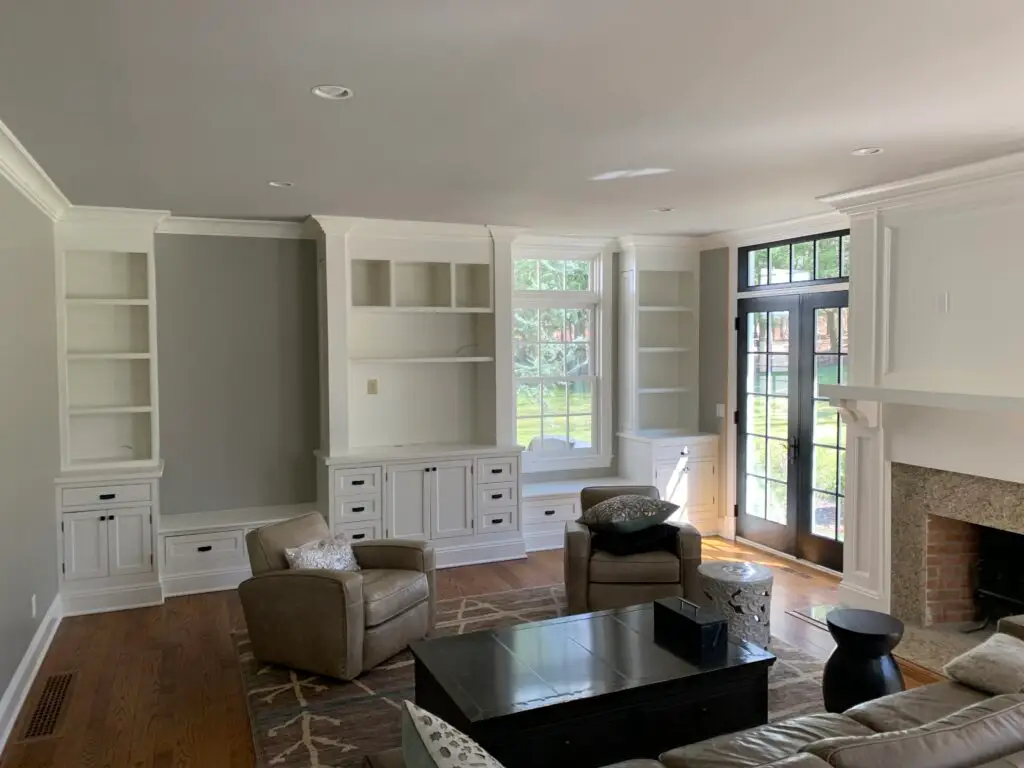
When embarking on a painting project, it’s easy to assume that all interior paints are created equal. However, a trip to the paint store quickly reveals a dizzying array of options, often categorized specifically for walls or ceilings. While they may appear similar at first glance, ceiling paint and wall paint are formulated with distinct purposes that cater to the unique demands of each surface. Understanding these differences is crucial for achieving a professional-looking, durable, and long-lasting finish in your home. Anderson’s Painting explains the key distinctions in composition and finish, why using the wrong paint can be problematic, and tips for a flawless result on both surfaces.
Composition and finish variations
The core differences between ceiling and wall paints lie in their chemical composition and the resulting finish they provide.
- Ceiling Paint:
- Composition: Often formulated with a higher solid content and a thicker consistency. It typically contains more “fillers” (like clays or calcium carbonate) and less expensive resins than wall paint. This gives it a higher viscosity, which helps reduce drips and splatters when applied overhead. It also often contains agents that improve hiding power over imperfect surfaces.
- Finish (Sheen): Almost exclusively comes in a flat or ultra-flat (matte) finish. This is its defining characteristic.
- Why Flat? Flat finishes absorb light rather than reflecting it. This is ideal for ceilings because it effectively hides imperfections like small cracks, uneven plaster, or minor drywall repairs, which are often more visible on overhead surfaces. A flat finish also minimizes glare from light fixtures and windows, creating a uniform, non-distracting look.
- Durability: Generally less durable and less washable than wall paint. It’s not designed to withstand scrubbing or frequent contact, as ceilings are typically low-traffic areas.
- Wall Paint:
- Composition: Formulated for durability, washability, and color vibrancy. It contains higher-quality resins and binders that make the paint film tougher and more resistant to wear and tear.
- Finish (Sheen): Available in a wide range of sheens, from flat/matte to eggshell, satin, semi-gloss, and high-gloss.
- Why Varying Sheens? Higher sheens (like satin or semi-gloss) are more reflective, making colors appear richer and easier to clean. They are chosen based on aesthetic preference, desired durability, and the room’s function (e.g., higher sheen for bathrooms/kitchens for moisture resistance and washability).
- Durability: Designed to withstand regular wiping, cleaning, and occasional bumps. The higher the sheen, generally the more durable and washable the paint.
Why you shouldn’t use wall paint on ceilings
While it might seem convenient to use one can of paint for both surfaces, using wall paint on your ceiling can lead to several undesirable outcomes.
- Poor Hiding of Imperfections: Wall paints, especially those with higher sheens (eggshell, satin, semi-gloss), are more reflective. This means they will highlight every imperfection on your ceiling, including roller marks, uneven textures, or previous repairs. What might look subtle on a wall will be glaring on a ceiling.
- Increased Drips and Splatters: Wall paints are often thinner than ceiling paints, making them more prone to dripping and splattering when applied overhead. This means more mess, more cleanup, and more frustration during the painting process.
- Uneven Finish: Due to differing formulations, wall paint might not apply as uniformly or cover as well on a ceiling, potentially leading to a streaky or patchy appearance.
- Glare and Reflection: A shinier wall paint on the ceiling can create undesirable glare from natural and artificial light sources, making the room feel less soft or welcoming.
- Not Cost-Effective: While some premium wall paints can be more expensive than ceiling paint, standard ceiling paint is often formulated to be cost-effective for large, less visible areas. Using unnecessarily durable or expensive wall paint on a ceiling can be a waste of resources.
When it’s okay to use the same paint
There are a few specific scenarios where using the same paint for both walls and ceilings might be acceptable or even desirable.
- Integrated Color Scheme: If you are intentionally painting both your walls and ceiling the exact same color, especially a very dark or dramatic hue, using a single paint (typically a flat or matte wall paint) can create a seamless, enveloping effect. This is common in modern design to make a room feel larger or more intimate, and the goal isn’t to make the ceiling “disappear.”
- Small Spaces with Low Light: In very small rooms or spaces with minimal natural light, painting the ceiling the same color as the walls (in a flat finish) can help to visually expand the space and reduce harsh lines.
- Specific Aesthetic Choices: Occasionally, a designer might specify a wall paint for a ceiling to achieve a particular artistic or textural effect. However, this is usually a deliberate choice with specific results in mind, rather than a general practice.
- “Ceiling White” Wall Paint: Some paint brands offer a “ceiling white” that is technically a flat wall paint but optimized for ceilings. If the label specifically states it’s suitable for both, then it’s generally fine.
Crucial Caveat: In all these “okay” scenarios, the paint should almost always be a flat or matte sheen to avoid highlighting imperfections and minimize glare. Using a satin or semi-gloss wall paint on a ceiling is almost never recommended for typical residential applications.
Tips for a professional look on both surfaces
Whether you’re using separate paints or a combined approach, these tips from Anderson’s Painting will help you achieve a high-quality finish.
- Prepare Thoroughly:
- Clean: Wash both ceilings and walls to remove dust, cobwebs, and grime.
- Repair: Patch any holes, cracks, or imperfections. Sand smooth.
- Prime: Use a good quality primer, especially over repairs, new drywall, or if transitioning from a dark to a light color. Primer helps with adhesion and uniform finish.
- Protect Your Space: Use painter’s tape on trim, baseboards, and windows. Lay down drop cloths to protect floors and furniture.
- Start with the Ceiling: Always paint the ceiling first. This prevents ceiling paint drips from landing on freshly painted walls.
- Use the Right Tools:
- Roller Covers: Use a roller cover appropriate for the paint type and surface texture (e.g., a thick nap for textured ceilings, a shorter nap for smooth walls).
- Brushes: Use a high-quality angled brush for cutting in edges neatly.
- Cut In Neatly: Use painter’s tape or a steady hand to create crisp lines where the ceiling meets the walls.
- Apply Multiple Thin Coats: Two thin coats are always better than one thick coat. Thin coats dry more evenly, reduce drips, and provide a more durable, professional finish.
- Maintain a Wet Edge: When rolling, work in small sections and overlap your strokes slightly, always keeping a “wet edge” to prevent lap marks.
- Ensure Good Ventilation: Open windows or use fans (not blowing directly on wet paint) to ensure good air circulation, which helps paint dry and cure properly.
- Allow Proper Drying Time: Adhere to the recoat times recommended by the paint manufacturer. Painting over wet paint can cause peeling or uneven finishes.
Check it out: Do You Paint Trim or Walls First? The Professional Consensus
By understanding the subtle yet significant differences between ceiling paint and wall paint, and by following these professional painting tips, you can ensure a beautiful, long-lasting, and truly polished finish throughout your home.
Ready to refresh your home with a professional paint job? Whether it’s revitalizing your walls or giving your ceilings a fresh, uniform look, Anderson’s Painting has the expertise and precision to deliver outstanding results. We understand the nuances of different paint types and surfaces, ensuring the perfect finish for every area of your home. Contact us today for a personalized consultation and a free estimate!