
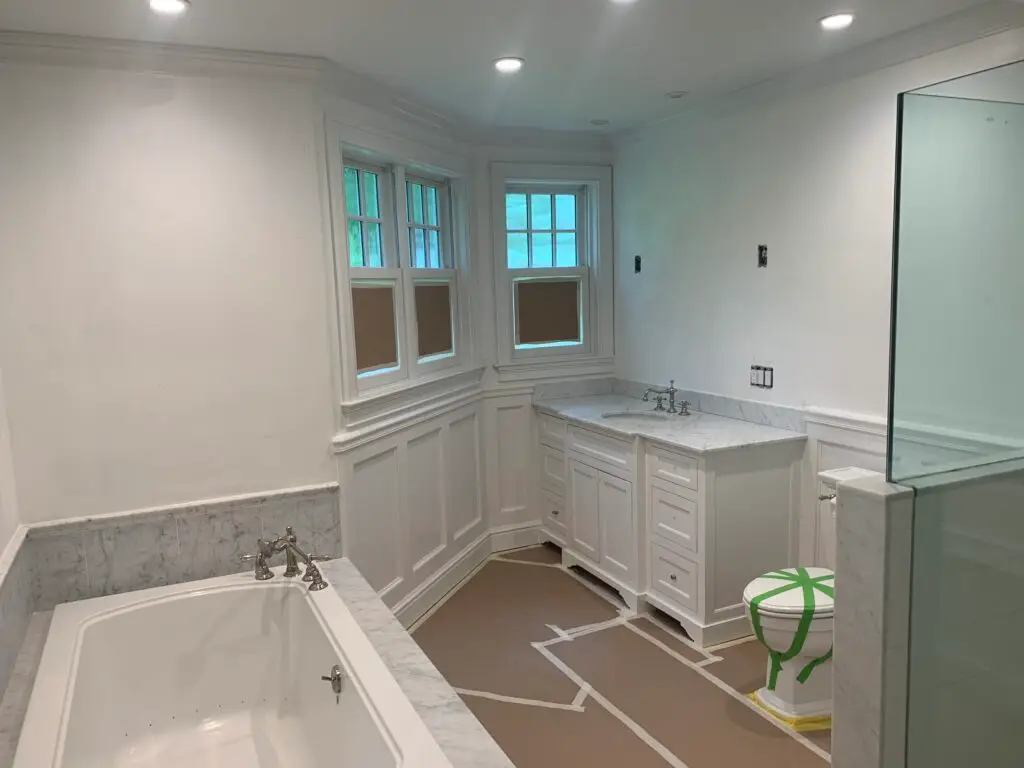
A freshly painted bathroom ceiling can dramatically brighten and refresh the entire space. However, tackling an overhead surface, especially in a high-humidity environment, presents unique challenges. Drips, streaks, and premature peeling are common pitfalls if not approached with the right techniques and materials. Achieving a smooth, durable, and professional-looking finish on a bathroom ceiling requires meticulous preparation and precise application. Anderson’s Painting outlines a step-by-step guide on how to paint your bathroom ceiling like a pro, ensuring a flawless result that stands up to the demands of daily use.
Supplies you’ll need
Having all your tools and materials ready before you begin will make the process smoother and more efficient.
- Safety Gear:
- Safety glasses
- Rubber gloves
- N95 respirator mask (especially when cleaning mildew, sanding, or using strong primers/paints)
- Access Equipment:
- Sturdy step ladder or extension ladder (ensure it’s stable on a non-slip surface)
- Cleaning & Prep:
- Heavy-duty degreaser cleaner (e.g., TSP substitute, dedicated bathroom cleaner)
- Bucket of warm water
- Clean sponges and cloths
- Grout brush or stiff-bristle scrub brush (for mildew/stains)
- Spackle or joint compound (for repairs)
- Putty knife
- Fine-grit sandpaper (220-grit for smoothing repairs, 180-grit if scuff-sanding old paint)
- Tack cloth or damp microfiber cloths (for dust removal)
- Protection:
- Plastic sheeting or drop cloths (to cover floors, fixtures, vanity)
- High-quality painter’s tape (blue painter’s tape, 1-1.5 inches wide)
- Painting Tools:
- Paint tray
- Extension pole for roller
- High-quality paint roller frame
- Roller covers (3/8-inch nap for smooth to lightly textured ceilings; 1/2-inch for more textured; ensure they’re lint-free)
- High-quality angled sash brush (1.5-2.5 inches wide for cutting in)
- Paint stirrer
- Paint:
- High-quality bathroom-specific ceiling paint (flat/matte finish with mildewcide)
- Stain-blocking primer (if needed for water stains or significant color change)
Surface prep: Clean and repair
Proper surface preparation is the most critical step for achieving a durable, professional-looking paint job. Do not skip or rush this!
- Empty and Cover: Remove everything from the bathroom that can be easily moved. Cover the vanity, toilet, tub, shower, and floor with plastic sheeting or drop cloths. Use painter’s tape to secure the edges of the drop cloths to the baseboards.
- Clean Thoroughly: Bathroom ceilings accumulate a layer of soap scum, dust, hairspray residue, and often mildew.
- Mix your chosen degreaser cleaner according to package directions.
- Using a sponge or cloth attached to an extension pole (or with a ladder), wash the entire ceiling. Pay extra attention to corners and areas prone to mildew (above the shower/tub).
- For visible mildew spots, scrub thoroughly with the cleaner. If very stubborn, you may need a dedicated mildew remover. Ensure proper ventilation and wear your respirator and gloves.
- Rinse the ceiling thoroughly with clean water using a clean sponge/cloth to remove all cleaning solution residue. Any residue will prevent paint adhesion.
- Allow the ceiling to dry completely. This is crucial; paint will not adhere to a damp surface. Use the exhaust fan or a fan pointed at the ceiling to aid drying.
- Repair Imperfections:
- Inspect the ceiling for any cracks, holes, or peeling paint.
- Use a putty knife to scrape away any loose or peeling paint.
- Fill cracks and holes with spackle or joint compound. For larger cracks, use mesh drywall tape before spackling.
- Allow repairs to dry completely according to product instructions.
- Once dry, lightly sand the repaired areas smooth with 220-grit sandpaper.
- Wipe away all sanding dust thoroughly with a tack cloth or a damp microfiber cloth. Dust creates bumps and prevents adhesion.
Masking and protecting walls
Precise masking ensures crisp, clean paint lines and protects adjacent surfaces.
- Remove Fixtures (Optional but Recommended): For the cleanest lines, consider carefully removing light fixtures and exhaust fan covers. Turn off power at the breaker first. If you don’t remove them, mask them meticulously with painter’s tape.
- Tape Around the Perimeter: Apply high-quality painter’s tape precisely along the top edge of the walls where they meet the ceiling. Press firmly along the edge to ensure a tight seal and prevent paint bleed-through. Also tape around any fixed light fixtures or vents you couldn’t remove.
Applying primer and paint
This is where your prep work pays off. Patience and proper technique are key.
1. Applying primer (if needed)
- When to Prime: Apply primer if you have:
- Extensive water stains (use a stain-blocking primer).
- Patched areas of new drywall or spackle.
- Are painting over a very dark color with a much lighter one.
- Are concerned about adhesion on a slick old finish.
- Application:
- Stir the primer thoroughly.
- Cut In: Use your angled brush to paint a 2-3 inch wide strip of primer around the perimeter of the ceiling and around any fixtures.
- Roll: Attach your roller cover to the roller frame and an extension pole. Dip the roller into the tray, rolling it back and forth to load it evenly.
- Apply primer to the main ceiling area using a “W” or “M” pattern, overlapping each stroke slightly to ensure even coverage. Work in manageable sections.
- Avoid Overworking: Don’t roll back and forth too many times; lay the primer down evenly and move on.
- Allow the primer to dry completely according to the manufacturer’s instructions (usually 1-2 hours) before applying paint.
2. Applying paint
- Stir Paint: Stir your bathroom ceiling paint thoroughly before and periodically during application.
- First Coat – Cut In:
- Use your angled brush to carefully paint along the edges where the ceiling meets the walls (against the painter’s tape). Also paint around any fixtures or vents.
- Aim for a consistent 2-3 inch wide band.
- First Coat – Roll the Main Area:
- Attach your roller cover to the roller frame and extension pole.
- Pour paint into the tray and load your roller evenly.
- Starting in a corner, apply paint in a “W” or “M” pattern. Fill in the “W” or “M” by rolling horizontally.
- Maintain a Wet Edge: Always work in sections, keeping the edge of the newly painted area wet. This prevents noticeable lap marks where wet paint meets dry paint. Overlap your previous section by about half a roller width.
- Work Methodically: Paint in one direction across the ceiling to ensure uniformity.
- Avoid Overloading: Don’t load too much paint on the roller, as this leads to drips and splatters. A little less paint means fewer drips.
- Allow to Dry: Let the first coat dry completely according to the paint manufacturer’s instructions. This is typically 2-4 hours for latex paints but can vary. Do not rush this step.
- Second Coat (and potentially Third):
- Apply a second coat using the same “cut in” and rolling techniques. Two thin coats provide better coverage, durability, and a smoother finish than one thick coat.
- For very dramatic color changes or if covering stubborn stains, a third coat may be necessary after the second coat has dried.
- Remove Tape: While the final coat is still slightly wet (but not tacky), carefully and slowly pull off the painter’s tape at a 45-degree angle. This helps create a crisp line and prevents paint from drying onto the tape and potentially peeling. If the paint is completely dry, you might need a utility knife to lightly score along the tape line before removal to prevent peeling.
Tips to avoid drips and peeling
- Don’t Overload Your Roller/Brush: This is the #1 cause of drips and splatters. Load just enough paint.
- Use an Extension Pole: It provides better leverage and reach, reducing strain and improving control, which in turn leads to a more even application.
- Maintain a “Wet Edge”: Continuously overlap your roller passes slightly onto the previously painted, still-wet section to avoid harsh lines or marks.
- Don’t Overwork the Paint: Once the paint is applied evenly, resist the urge to keep rolling or brushing over it. This can create texture and marks.
- Good Quality Paint: Invest in a high-quality, bathroom-specific ceiling paint. They are formulated to be less prone to dripping and to adhere better in humid conditions.
- Proper Ventilation: Ensure continuous airflow during painting and drying. This aids in faster drying and reduces fumes.
- Clean and Dry Surface: Any dirt, grease, or moisture on the ceiling will cause the paint to peel prematurely.
Post-painting care and drying
The paint isn’t truly finished until it’s fully cured.
- Initial Drying: The paint will be dry to the touch in a few hours.
- Curing Time: This is where the paint hardens to its maximum durability. For bathroom paints, this can take anywhere from 3-7 days for good hardness, and up to 3-4 weeks for full hardness.
- Minimize Humidity During Curing: During this period, it’s crucial to minimize humidity in the bathroom. Run the exhaust fan continuously for the first few days, keep windows open if weather permits, and avoid long, hot showers. Excessive moisture during curing can prevent the paint from hardening properly and lead to future peeling or mildew.
- Gentle Cleaning: Once fully cured, clean your painted ceiling with mild, non-abrasive cleaners (e.g., warm water and a few drops of dish soap) and a soft cloth. Avoid harsh chemicals or abrasive scrubbers, which can damage the paint finish.
- Regular Maintenance: Use your exhaust fan constantly after every shower/bath. Periodically dust the ceiling to prevent buildup.
By following these professional steps, your bathroom ceiling will not only look impeccably clean and fresh but will also be equipped to withstand the demanding bathroom environment for years to come.
Check it out: Ceiling paint vs. Wall paint: What’s the difference?
Tired of a dingy, stained, or peeling bathroom ceiling? Don’t settle for anything less than a professional finish! Anderson’s Painting specializes in expert bathroom ceiling painting, using the right techniques and high-performance, moisture-resistant paints to ensure a flawless, long-lasting, and mold-free result. Let us transform your bathroom into a bright, clean, and beautiful oasis. Contact us today for a free consultation and estimate!