
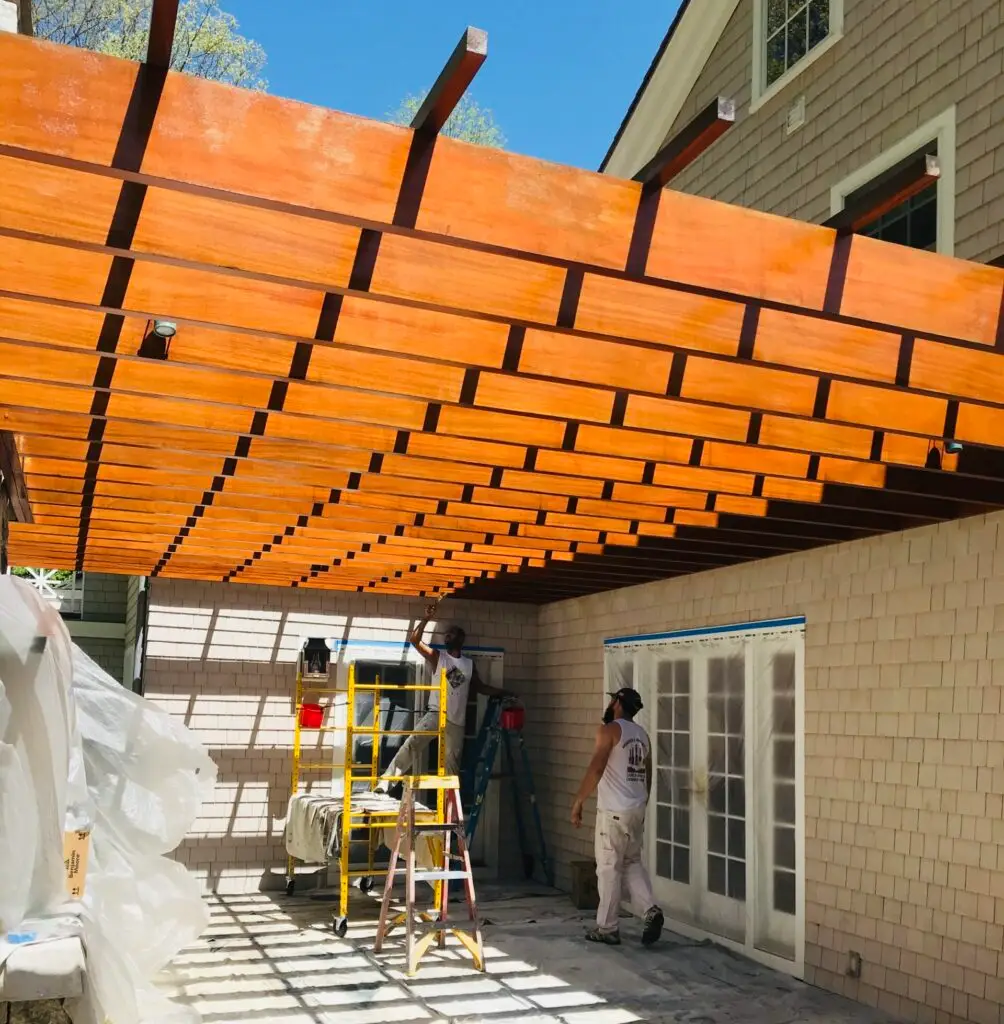
Quick Answer
Yes. Most wood pergolas, including pressure-treated pine, cedar and redwood, can be painted once the wood is clean, dry and sound. Prime bare or weathered wood, then apply two thin coats of exterior acrylic latex. Vinyl and aluminum pergolas are factory-finished, so check the manufacturer before painting them, and pick light colors on vinyl to limit heat buildup.
Which pergola materials can be painted?
Pressure-treated wood. The most common pergola lumber. It takes paint well once it has dried out after installation; fresh lumber that still feels damp or sheds water droplets needs more time. A simple check: sprinkle water on the surface. If it soaks in, the wood is ready for primer; if it beads, wait.
Cedar, redwood and cypress. Naturally rot-resistant and attractive unfinished, but they contain water-soluble extractives (tannins) that can bleed through light paint. A stain-blocking exterior primer solves that.
Pine and fir. Lower-cost species that benefit the most from a protective coating.
Vinyl/PVC. Usually pre-finished and sold as low-maintenance. Painting is possible with vinyl-safe products, but colors darker than the original can absorb enough heat to warp the material, so stay with vinyl-safe light colors and follow the manufacturer’s guidance.
Aluminum. Typically powder-coated. Repainting needs metal-specific cleaning, a bonding primer and exterior topcoat, and it is usually worth doing only when the factory finish has failed.
The rest of this guide focuses on wood, since that is what most homeowners paint.
Paint or stain: which suits your pergola?
| Paint | Stain | |
|---|---|---|
| Look | Opaque color; hides knots and uneven tones | Shows grain (solid stain hides more) |
| Protection | Forms a film that shields against UV and moisture | Penetrates the wood; breathes |
| Failure mode | Can peel or blister if moisture is trapped | Wears and fades rather than peeling |
| Maintenance | Scrape and spot-prime failures before repainting | Clean and recoat |
| Best for | Matching house trim, bold colors, hiding imperfections | Natural wood look, simpler upkeep |
Choose paint if you want a uniform color and accept careful prep now and some scraping later. Choose stain if you prefer the wood grain and easier recoats; our guide to the best stain for a pergola compares the options. If you settle on paint, browse these pergola paint color ideas before you buy samples. Benjamin Moore’s guide to choosing a wood stain color explains how opacity changes the look.
Prep work before painting
- Clean. Remove leaves, cobwebs and loose debris. Wash with mild detergent or an outdoor wood cleaner and a stiff brush, or use a pressure washer on a low setting from a safe distance so the wood fibers do not raise. Treat mildew or algae with a mildew remover, then rinse thoroughly.
- Let it dry fully. Allow at least 24–48 hours of dry weather, longer when it is humid. Moisture trapped under paint is a leading cause of peeling.
- Inspect and repair. Tighten loose fasteners, reset wobbly joints and fill small cracks with exterior wood filler. Replace soft or rotted members instead of painting over them.
- Scrape and sand. Remove loose paint or failed stain with a scraper, then sand with 80–120 grit to feather edges. Lightly scuff new, smooth wood with 120–150 grit so primer can grip. Dust off before priming.
- Mask and protect. Tape off adjacent siding and lay drop cloths over pavers and plants.
On an older pergola with existing paint, assume coatings from before 1978 may contain lead and follow EPA lead-safe practices for DIYers before any scraping or sanding.
Best paint and primer for outdoor wood structures
- Primer: Use an exterior wood primer on all bare, new or weathered wood. A stain-blocking primer is the safer choice on cedar and redwood. Latex primers suit most jobs; oil-based primers block stains more strongly but dry more slowly and smell stronger.
- Topcoat: 100% acrylic exterior latex is the usual choice. It stays flexible as the wood moves, resists UV fading and cleans up with water. Satin or semi-gloss sheens are easier to wash than flat.
- Skip: Interior paints and rigid coatings that cannot flex with the wood.
Tips for a long-lasting finish
- Watch the weather. Sherwin-Williams’ exterior painting how-to advises avoiding exterior painting below 50°F or above 90°F, and you should also skip direct midday sun or rain in the forecast. Always check the label for your product’s range.
- Two thin coats beat one thick coat. Thick coats sag, dry slowly and are more likely to peel.
- Work the hard spots first. Brush rafter tails, joints and the tops of beams, where water sits longest, then roll or brush the long runs, keeping a wet edge to avoid lap marks.
- Respect cure time. Latex is dry to the touch within hours but takes weeks to reach full hardness. Hold off on hanging planters, string lights or scrubbing until it cures.
- Maintain yearly. Rinse off pollen and mildew, check joints and end grain for chips, and spot-prime and touch up before water gets behind the film.
When to call a professional
For budgeting, our breakdown of how much it costs to paint a pergola explains what drives the price. Tall or attached pergolas, heavy peeling, possible lead paint or rot repairs are good reasons to get a pro. If you want help, our residential painting services cover surface prep and exterior painting, and pricing always follows an on-site visit and written quote. For prep, sheen and timing basics, see our exterior painting guide. We work across Fairfield County, including house painting in Danbury, CT.
FAQ
How do I know new pressure-treated lumber is dry enough to paint?
Sprinkle a little water on the surface. If it soaks in, the wood can take primer. If it beads or the boards still feel damp, give it more drying time before painting.
Do I need primer on a cedar pergola?
Yes. Cedar contains tannins that can bleed through light topcoats. A stain-blocking exterior primer seals them and gives the paint a uniform base.
Can a vinyl pergola be painted a dark color?
Only with caution. Darker colors can absorb enough heat to warp vinyl, so use a vinyl-safe paint, stay close to or lighter than the original color and follow the pergola manufacturer’s guidance.
What makes pergola paint peel early?
Moisture trapped in the wood, skipped primer on bare spots, painting over loose old coatings and single heavy coats are the usual causes.