
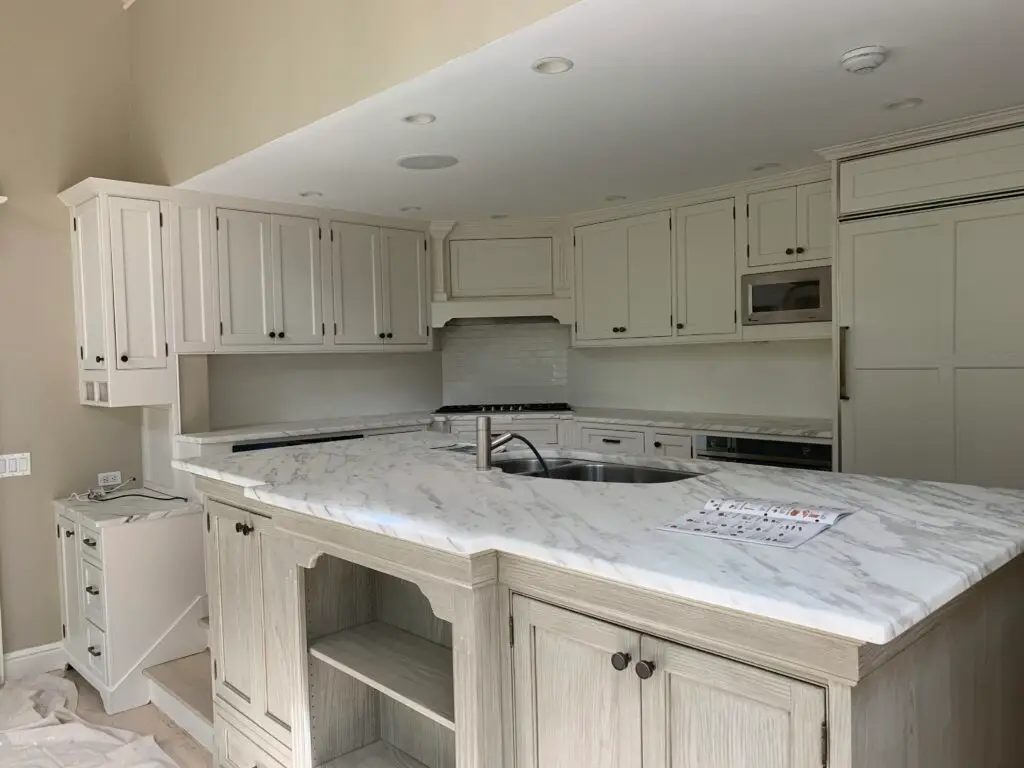
Kitchen countertops are the workhorses of the home, enduring daily spills, heat, sharp objects, and constant use. When they become outdated, stained, or simply don’t match your aesthetic, the idea of replacing them can be daunting and expensive. This leads many homeowners to wonder: can you paint kitchen countertops as a more budget-friendly alternative? The answer is yes, but with significant caveats. While painting offers a dramatic visual transformation at a fraction of the cost of replacement, it’s crucial to understand the limitations, the necessary products, and the meticulous process required for a result that looks good and lasts. Anderson’s Painting explores the pros and cons of painting countertops, the types of surfaces that are good candidates, the best materials, and a step-by-step guide for a successful (and realistic) outcome.
Pros and cons of painting countertops
Weighing the advantages against the disadvantages is crucial before committing to this DIY project.
Pros of painting countertops:
- Cost-Effective: This is the biggest advantage. Painting is significantly cheaper than replacing countertops, which can save thousands of reais.
- Aesthetic Transformation: A fresh coat of paint can drastically update the look of your kitchen, transforming outdated colors or patterns into a modern, cohesive design.
- Quick Makeover: The process is relatively quick compared to a full countertop replacement, minimizing kitchen downtime.
- DIY Accessibility: While requiring meticulous preparation, it’s a project many homeowners can tackle themselves.
- Versatility: Allows for a wide range of color and faux-finish possibilities (e.g., mimicking granite, marble, or concrete).
- Temporary Solution: Great for rental properties or homes where a full renovation isn’t planned for several years, offering a budget-friendly refresh.
Cons of painting countertops:
- Durability Concerns: This is the primary drawback. Painted countertops, even with the best products and application, will never be as durable as solid-surface, quartz, or natural stone countertops. They are more prone to chipping, scratching, peeling, and heat damage.
- Requires Meticulous Preparation: The success of the project hinges entirely on thorough cleaning, sanding, and priming. Any shortcuts will lead to paint failure.
- Fumes: Many of the recommended paints and sealers are epoxy-based or have strong fumes, requiring excellent ventilation and respiratory protection.
- Curing Time: The painted surface needs significant time to fully cure (often 7-30 days) before heavy use, during which the kitchen will be partially unusable.
- Maintenance: Requires gentle cleaning and ongoing care to maintain its appearance. Harsh cleaners or abrasive scrubbing will damage the finish.
- Realistic Expectations: It’s important to understand that a painted countertop will look like a painted countertop, not a seamless slab of granite or quartz. While the aesthetic can be dramatically improved, the feel and long-term resilience are different.
- Resale Value (Limited Impact): While it improves appearance, it may not significantly increase resale value as much as genuine countertop materials would, and some buyers might view it as a temporary fix.
What types of countertops can be painted
The best candidates for painting are those that are structurally sound but cosmetically lacking.
- Laminate (Formica): This is by far the most common and best type of countertop to paint. It’s usually smooth, non-porous, and takes primer well with proper preparation.
- Cultured Marble/Solid Surface (e.g., Corian, Avonite): These engineered surfaces can also be painted successfully with the right primers and paints, similar to laminate.
- Tile (with grout lines): You can paint tiled countertops. The grout lines will also be painted, creating a uniform look. However, this is more challenging as grout can be porous and the paint will be subject to wear on raised tile edges. Consider the feel of painted grout.
- Butcher Block/Wood: Can be painted, but often better suited for sanding and re-sealing/staining to bring out their natural beauty. If painting, significant priming is needed.
- Natural Stone (Granite, Marble, Quartz): Generally NOT recommended for painting. These materials are incredibly durable, and painting them would hide their natural beauty, diminish their value, and the paint is highly likely to chip or peel given their non-porous nature and common exposure to high heat. If you have natural stone, consider professional cleaning, polishing, or sealing instead.
Crucial Point: Regardless of the material, the countertop must be structurally sound, clean, dry, and free of significant damage or loose particles. Extensive cracks or water damage should be addressed before considering painting.
Best paint and sealers for countertops
Using specialized products is non-negotiable for countertop painting, as standard wall or cabinet paints will not hold up.
- Primer (High-Adhesion Bonding Primer):
- Purpose: This is the most critical component. It creates the necessary bond between the slick countertop surface and the paint.
- Types: Look for epoxy-based primers, shellac-based primers (e.g., Zinsser B-I-N), or specialized high-adhesion water-based primers (e.g., Kilz Adhesion). These are designed for glossy, non-porous surfaces.
- Paint (Extremely Durable, Hard-Wearing):
- Countertop Refinishing Kits: These are the most recommended option for DIYers. They are typically 2-part epoxy or acrylic urethane systems specifically formulated for countertops (and sometimes tubs/tiles). They provide excellent adhesion, durability, and a hard, washable finish. (e.g., Rust-Oleum Countertop Transformations, Daich Coatings SpreadStone).
- 2-Part Epoxy Paint: If not using a kit, a standalone 2-part epoxy paint offers incredible durability, chemical resistance, and a hard, non-porous surface. These require precise mixing and have a limited pot life.
- High-Quality Acrylic-Urethane Enamel: For a slightly less durable but still robust option, a top-tier acrylic-urethane enamel (often used for cabinets) can be used, but must be paired with an exceptionally strong bonding primer and a very durable topcoat.
- Sealer/Topcoat (High-Durability, Clear Coat):
- Purpose: To provide an additional layer of protection against scratches, heat, moisture, and chemical exposure, and to achieve the desired sheen.
- Types:
- Water-Based Polyurethane (for acrylic paints): Look for an extra-durable, non-yellowing, water-based polyurethane designed for floors or high-traffic areas.
- Epoxy Clear Coat: If using an epoxy paint system, use the corresponding epoxy clear coat for maximum durability and chemical resistance.
- Food-Safe Options: If you plan for direct food contact on the painted surface, ensure both paint and sealer are certified food-safe once fully cured. This is rare and often not recommended for daily food prep.
- Finish (Sheen): Typically semi-gloss or high-gloss for maximum durability and ease of cleaning. Matte or satin finishes are harder to clean and less durable on countertops.
Step-by-step countertop painting guide
Meticulous preparation and careful application are essential for a successful outcome.
- Clear and Prepare the Area:
- Remove everything from the countertops.
- Turn off water to the sink. Disconnect and remove the sink if possible for a seamless finish, or meticulously mask around it.
- Remove or mask off the faucet.
- Cover all surrounding cabinets, flooring, and appliances with painter’s tape and plastic sheeting/drop cloths. This is critical – overspray and drips are hard to remove.
- Deep Clean:
- Thoroughly clean the entire countertop surface using a heavy-duty degreaser cleaner. Scrub vigorously to remove all grease, grime, soap scum, and residue.
- Rinse meticulously with clean water multiple times to ensure no cleaner residue remains.
- Allow the countertop to dry completely. Use fans to aid drying.
- Repair and Smooth:
- Inspect for any cracks, chips, or deep scratches. Fill with an appropriate epoxy repair kit or waterproof wood filler.
- Allow repairs to dry fully, then sand smooth with fine-grit sandpaper (220-grit or higher).
- Sanding (Scuff Sanding):
- Purpose: To create a “tooth” for the primer to adhere to the slick surface.
- Method: Lightly scuff-sand the entire countertop surface (including edges and backsplash if applicable) with 180-220 grit sandpaper. You’re not removing the surface, just dulling the shine.
- Clean Dust: After sanding, thoroughly wipe down the entire surface with a tack cloth or a damp microfiber cloth to remove ALL sanding dust. Repeat until no dust remains.
- Apply Primer:
- Stir your chosen bonding primer thoroughly.
- Using a high-quality brush for edges and a small foam roller for flat surfaces, apply a thin, even coat of primer.
- Avoid drips and pooling. Two thin coats are better than one thick coat.
- Allow the primer to dry completely according to manufacturer instructions. Lightly sand between coats if needed (220-grit) and remove dust.
- Apply Paint:
- Mix and stir your countertop paint (especially if it’s a 2-part epoxy, follow mixing instructions precisely and mind the pot life).
- Using the recommended brush and roller (often foam rollers for smooth finish), apply thin, even coats.
- Work systematically, maintaining a “wet edge” to avoid lap marks.
- Apply the number of coats recommended by the manufacturer (usually 2-3 coats).
- Allow each coat to dry completely before applying the next. Lightly sand between coats (220-grit) if desired for extra smoothness, and remove dust.
- Apply Sealer/Topcoat:
- Once the final paint coat is fully dry (check manufacturer instructions for recoat time to sealer, usually 24-48 hours), apply your chosen clear sealer/topcoat.
- Apply thin, even coats as per manufacturer instructions. Most sealers require 2-3 coats for optimal protection.
- Allow each coat to dry thoroughly between applications.
- Remove Tape: While the final sealer coat is still slightly wet (but not tacky), carefully and slowly remove all painter’s tape at a 45-degree angle.
Check it out: DIY painting kitchen cupboards: Step-by-step guide
Maintenance and durability tips
Even with specialized products, painted countertops require diligent care to extend their lifespan.
- Patience with Curing Time: This is critical! The paint needs to fully cure and harden. This can take anywhere from 7 to 30 days depending on the product and conditions. Avoid heavy use, water, or placing objects on the surface during this time. Use the kitchen sparingly.
- Gentle Cleaning: Clean painted countertops with mild dish soap and warm water, using a soft cloth or sponge.
- AVOID: Abrasive cleaners, scouring pads, harsh chemicals (bleach, ammonia, oven cleaners, acidic cleaners), abrasive scrubbing, or anything that could scratch the surface.
- Use Cutting Boards: Always use a cutting board for chopping and slicing. Never cut directly on the painted surface.
- Use Trivets for Hot Items: Never place hot pots, pans, or appliances (like slow cookers or toaster ovens) directly on the painted countertop. Heat can cause bubbling, melting, or discoloration.
- Wipe Spills Immediately: Promptly wipe up all spills, especially acidic foods (lemon juice, vinegar, tomato sauce) or harsh chemicals, to prevent staining or damage.
- Avoid Standing Water: Do not let water pool around the sink or faucet areas. Wipe dry after use.
- Protect from Impacts: Be careful not to drop heavy or sharp objects, as this can chip or scratch the paint.
- Re-sealing (Periodic): Depending on use and the type of sealer, you might need to re-apply a clear topcoat every few years to maintain durability and shine.
Painting kitchen countertops is a high-effort, high-reward DIY project that can dramatically transform your kitchen’s look. By understanding its limitations, committing to rigorous preparation, using the right specialized products, and practicing diligent maintenance, you can achieve a beautiful and functional surface that extends the life of your existing countertops.
Considering a fresh new look for your kitchen without the high cost of new countertops? While DIY painting can offer a significant transformation, achieving a durable and professional-looking finish requires expertise. Anderson’s Painting can provide guidance on your countertop painting project or assist with other kitchen painting needs, ensuring the right preparation and application for a lasting result. Contact us today for a consultation on your kitchen painting goals!