
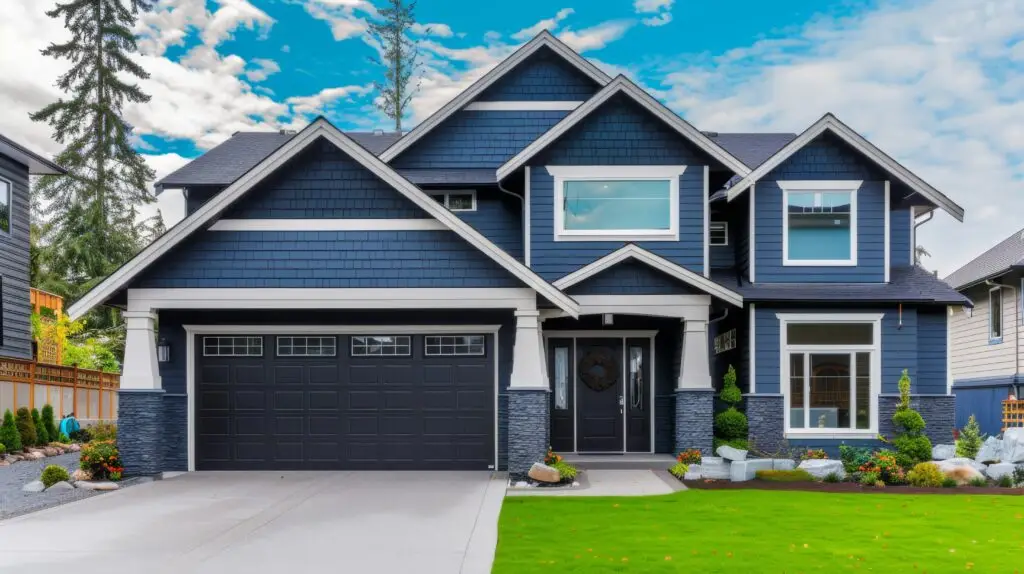
Your garage door is more than just a functional entry point; it’s a significant visual element of your home’s exterior, often accounting for a large portion of its front facade. A well-chosen and freshly painted garage door can dramatically enhance your home’s curb appeal, tying together its architectural style and color palette. For U.S. homeowners looking to boost their property’s aesthetic and value, painting the garage door is a cost-effective upgrade. Here are color and style tips to guide your next garage door painting project.
Choosing between contrast and match
One of the first decisions you’ll face is whether to make your garage door blend in or stand out.
- Matching the home’s siding/trim (blend in):
- Effect: Creates a cohesive, understated look that allows the front door or other architectural features to be the focal point. It makes the garage door “disappear” and can make the house appear larger and more uniform.
- Best For: Homes where the garage is very prominent, or for those who prefer a minimalist, harmonious aesthetic. It’s a safe and classic choice.
- Contrasting with the home’s siding (stand out):
- Effect: Makes the garage door a deliberate design element. It can add depth, visual interest, and architectural character.
- Best For: Homes with a less prominent garage, or where the garage door itself has interesting architectural details you want to highlight. Use this approach with caution if your garage dominates the front of your house, as it can overwhelm the facade.
Pro Tip: Often, painting the garage door the same color as your home’s trim is a great middle ground. It provides a subtle contrast to the main siding color while still looking cohesive.
Popular color palettes: Cream, gray, blue, wood tones
The right color can elevate your garage door from merely functional to a true design asset.
- Cream/Off-White:
- Effect: A softer alternative to stark white. Cream adds warmth and classic elegance, pairing beautifully with brick, stone, and many siding colors.
- Best For: Traditional, farmhouse, or Mediterranean-style homes.
- Gray:
- Effect: Highly versatile, ranging from light silvery grays to deep charcoals. Gray offers a sophisticated, modern, and neutral backdrop.
- Best For: Contemporary, modern, traditional, and even some rustic homes. A charcoal gray can make a strong statement without being as stark as black.
- Blue:
- Effect: Can range from deep navy (for a classic, coastal, or traditional look) to muted dusty blues (for a more serene, modern farmhouse feel). Blue adds personality without being overly bold.
- Best For: Coastal, traditional, and transitional homes, especially those with white, gray, or brick exteriors.
- Faux Wood Tones (Browns/Tans):
- Effect: Achieves the luxurious look of wood without the high cost or maintenance. Warm brown and tan shades add natural warmth and richness.
- Best For: Craftsman, traditional, rustic, and even some modern homes looking for an organic touch. There are many kits and techniques to create a convincing faux wood grain.
- Black:
- Effect: A bold, dramatic choice that adds sophistication and modernity. Works well with white or light-colored homes for striking contrast.
- Best For: Modern, contemporary, or highly traditional homes seeking a dramatic, elegant statement.
Considerations: Home architecture, siding color, neighborhood
Beyond personal preference, consider these external factors:
- Home Architecture:
- Traditional/Colonial/Farmhouse: Creams, soft grays, subtle blues, or classic white.
- Modern/Contemporary: Charcoal, black, or bold contrasting colors.
- Craftsman/Rustic: Earthy greens, warm grays, or faux wood tones.
- Siding Color: The garage door color should complement or intentionally contrast with your home’s main siding color (brick, stucco, vinyl, wood). Take a step back and look at the entire facade.
- Roof Color: Ensure the garage door color doesn’t clash with your roof. Cool grays or blues generally pair well with black or gray roofs, while warmer tones work with brown or reddish roofs.
- Neighborhood Aesthetics: While you want your home to stand out, it’s also wise to ensure the color choice doesn’t drastically deviate from neighborhood norms, especially if resale is a future consideration. A color that’s too “out there” might deter some buyers.
- Front Door: The garage door shouldn’t compete with your front door, which should typically remain the primary focal point.
Check it out: What color to paint your garage: Interior & exterior ideas
Finish & paint type for durability
Given the exposure to elements and frequent use, the right paint type and finish are crucial for longevity.
- Exterior Acrylic Latex Paint: This is generally the best choice for garage doors. It’s durable, flexible (resists cracking), and holds up well against weather, UV rays, and temperature fluctuations. It’s also easy to clean and water-soluble for cleanup.
- Oil-Based Paint: Can be used for extra durability and a harder finish, but takes longer to dry, clean-up is more difficult, and it can become brittle over time.
- Finish:
- Satin or Semi-Gloss: These are the most common and recommended finishes. They offer a slight sheen that’s easier to clean than flat, helps repel dirt, and provides good weather resistance. Semi-gloss provides a bit more shine and is often used on trim.
- Avoid Flat: Flat paints absorb dirt and are much harder to clean, making them unsuitable for a high-traffic, exposed surface like a garage door.
Prep & application tips: Cleaning, sanding, primer
Proper preparation is the secret to a long-lasting, beautiful paint job.
- Clean Thoroughly: Power wash or hand-wash the garage door with a mild detergent (like dish soap) and water. Remove all dirt, grime, grease, and cobwebs. Rinse thoroughly and allow to dry completely.
- Scrape/Sand (if needed): If there’s peeling, flaking, or chalky old paint, scrape it off. Lightly sand the entire surface (with 180-220 grit sandpaper) to create a dull surface that the new paint can adhere to. Wipe away all sanding dust.
- Repair: Fill any dents, cracks, or imperfections with exterior-grade wood filler or auto body filler (for metal doors). Sand smooth.
- Prime (Essential!): Apply a high-quality exterior primer designed for your garage door material (metal, wood, fiberglass). Primer ensures proper adhesion, blocks stains, and provides a uniform base for the topcoat, especially when changing colors dramatically. Allow primer to dry completely.
- Tape Off: Mask off any surrounding areas you don’t want painted, such as trim, windows, or weather stripping.
- Application:
- Temperature: Paint on a mild, dry day, avoiding direct harsh sunlight or extreme temperatures.
- Technique: Use a high-quality exterior paint brush for edges and panels, and a roller with a nap appropriate for your door’s texture for larger flat areas.
- Multiple Coats: Apply two thin, even coats of paint, allowing adequate drying time between coats (check paint can instructions). Two thin coats are always better than one thick coat for durability and finish.
Maintenance & repainting timelines
- Regular Cleaning: Periodically clean your painted garage door with a mild soap and water solution to remove dirt buildup, which can dull the finish and contribute to premature wear.
- Inspection: Regularly inspect for chips, cracks, or peeling paint, especially around the bottom edge and areas exposed to harsh weather.
- Repainting Timelines:
- Acrylic Latex: A high-quality acrylic latex paint job can last 5-10 years or more, depending on climate exposure, initial prep, and color (darker colors fade faster).
- Oil-Based: Might last slightly longer in some cases, but can become brittle.
- Signs it’s time to repaint: Fading, chalking (white powdery residue when touched), cracking, blistering, or widespread peeling.
By investing a little time and effort into choosing the right color and following proper painting techniques, your garage door can become a valuable asset in your home’s overall curb appeal.
Check it out: How to paint a garage door? Step-by-step for a smooth finish
Ready to give your home a fresh new look, starting with the garage door? Anderson’s Painting specializes in enhancing curb appeal with expert exterior painting services! Contact us today for a consultation and transform your home!