
Quick Answer: What Do You Need for a Smooth Front Door Finish?
The secret to painting a front door without leaving unsightly brush marks is combining a self-leveling exterior enamel paint, a high-density foam roller for flat panels, a quality synthetic brush for details, and the proper painting sequence. Taking the time to properly sand previous rough spots and working quickly while the paint is wet ensures a gorgeous, factory-smooth curb appeal finish.
Choose the Right Paint and Finish
Exterior enamel
Never use standard interior or cheap latex paint on an exterior front door. You need a premium exterior acrylic-alkyd enamel or polyurethane-modified paint that expands and contracts with New England temperature swings while resisting UV fading.
Satin vs semi-gloss
- Semi-gloss: Provides a striking shine, reflects sunlight brilliantly, and makes cleaning fingerprints or dirt effortless.
- Satin: Offers a softer, more subtle sheen that helps hide minor wood grain texture and surface imperfections.
Weather-resistant coatings
Ensure your chosen paint features built-in mildew resistance and moisture-blocking technology to withstand rain, snow, and blazing summer sun.
Prep the Door Before Painting
Remove hardware or tape carefully
For the absolute cleanest results, unscrew and remove the doorknob, deadbolt, kick plate, and hinges. If removal isn’t possible, mask them off meticulously with premium painter’s tape.
Clean oils and fingerprints
Front doors accumulate oils from hands, pollution film, and dust. Wash the entire door with a mixture of warm water and TSP substitute (or dish soap), rinse thoroughly, and let it dry completely.
Sand old brush marks
Scuff-sand any previous brush strokes, runs, or glossy spots using a 150- to 220-grit sanding sponge. Wipe away all dust with a tack cloth.
Prime bare or patched areas
If your sanding exposed bare wood, fiberglass, or metal, apply a compatible exterior bonding primer to ensure your paint adheres securely.
Brush, Roller, or Sprayer?
The best DIY technique to avoid brush marks is the “brush and roll” hybrid method:
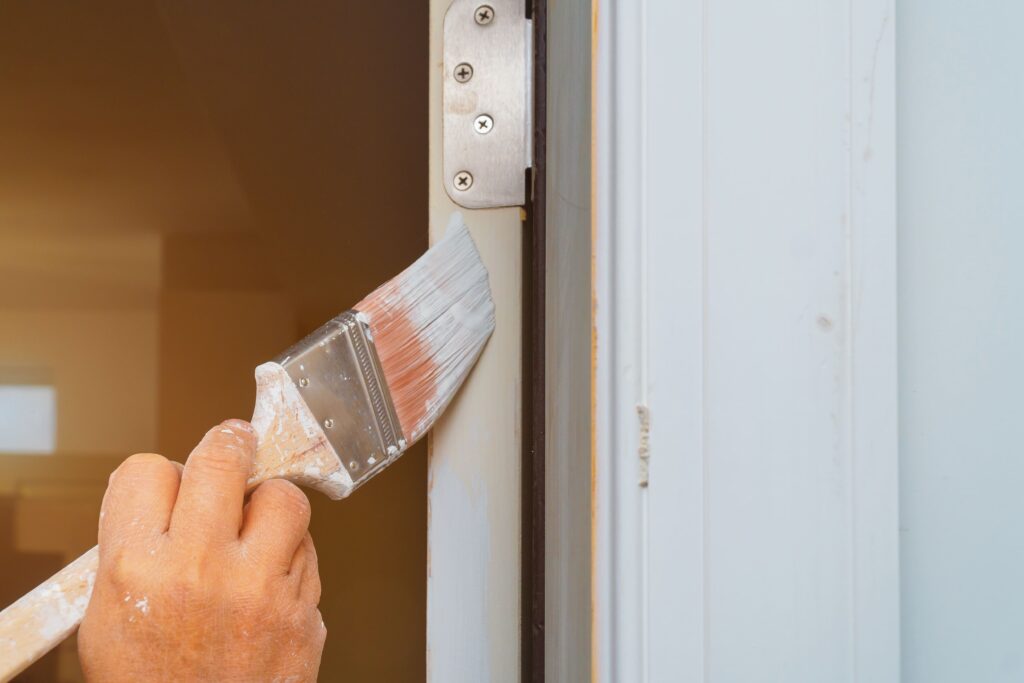
- Use a high-grade angled synthetic brush to cut into recessed panel grooves, moldings, and corners.
- Immediately roll flat panel surfaces and rails using a high-density foam mini-roller. The foam roller lays down a smooth, stipple-free film that blends seamlessly with the brushed areas before the paint begins to tack up.
How to Avoid Drips and Lap Marks
- Paint in the shade: Never paint a front door under direct, baking sunlight. Hot sun causes paint to dry instantly, leaving stubborn lap marks and roller tracks.
- Follow the correct order: Paint in order—recessed panels first, horizontal rails second, vertical stiles third, and outer framing last.
- Apply thin coats: Two thin coats are always better than one thick, dripping coat.
When to Hire Professional Door Painter
A front door is the focal point of your home’s exterior. If your door has severe sun damage, peeling layers, or intricate panels that require a flawless spray finish, calling in experts guarantees a stunning result without runs or weather interference.
To explore related projects, check out our guides on Best Paint for Interior Doors, learn how to detail surroundings with How to Paint Exterior Window Frames, and explore our complete Painting Services page.
Pro tip: Paint panels, rails, and stiles in the exact right order. Always start with the recessed panels, move to the horizontal rails, then the vertical stiles, and finish with the outer perimeter. This structured sequence prevents you from accidentally brushing into partially dry paint.
FAQ
What paint is best for a front door?
A high-quality exterior acrylic-alkyd enamel or urethane-modified exterior paint in a satin or semi-gloss finish is ideal for front doors.
Should I remove the door before painting?
Removing the door from its hinges and laying it flat on sawhorses is ideal because it eliminates drips, runs, and sagging paint. However, you can also paint it while hanging if you work carefully in thin sections.
How do you paint a door without roller marks?
Use a high-density foam mini-roller rather than a textured woven roller cover, and roll over wet brushed edges quickly before the paint begins to set.
How long should a front door dry before closing?
Most exterior enamels require at least 4 to 6 hours to dry to the touch, but you should keep the door propped open for 24 hours if possible to prevent the weatherstripping from sticking and tearing the fresh finish.
Can painters spray paint exterior doors?
Yes! Professional painters frequently remove exterior doors and spray them in a controlled setup to achieve an absolute factory-smooth, flawless finish.
Request Professional Door and Trim Painting
Want a gorgeous, mirror-smooth front door without the hassle of drips or brush marks? Request a professional painting estimate from Anderson’s Painting today and let our experts give your entryway a stunning, professional upgrade.