
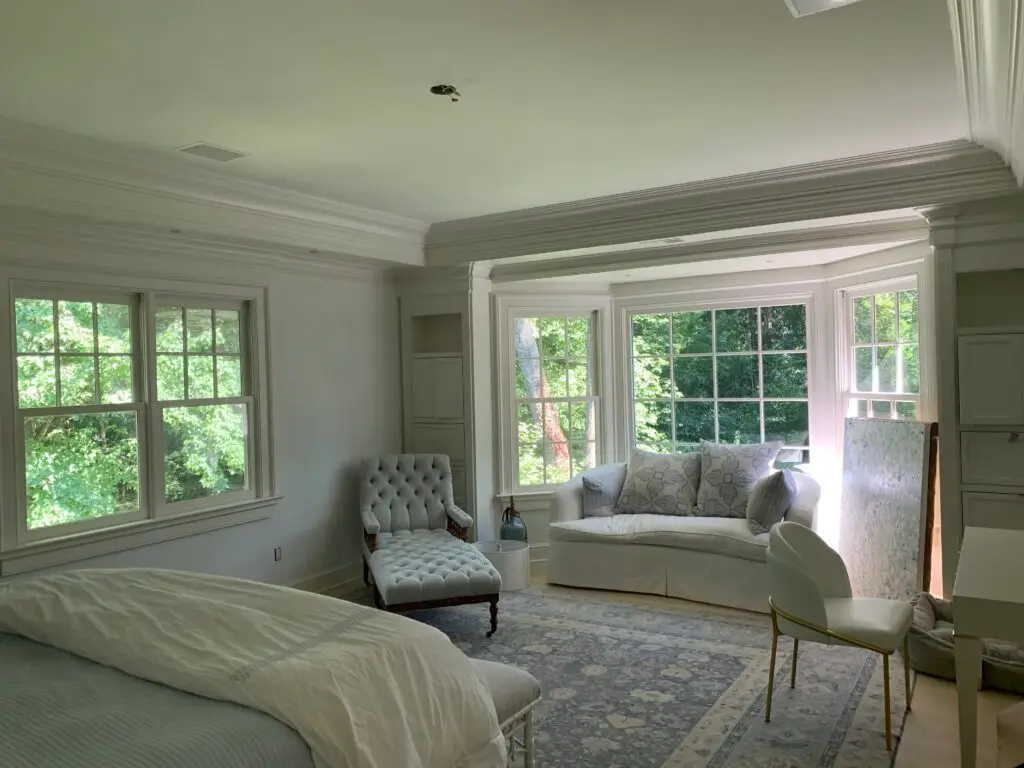
Installing drywall, also known as plasterboard or gypsum board, is a fundamental step in finishing interior spaces before painting or wallpapering. While it might seem daunting, breaking the process down into manageable steps can make it achievable for beginners. Proper drywall installation is crucial for a smooth, seamless surface, setting the stage for a high-quality paint finish that Anderson’s Painting can flawlessly apply. This guide will walk you through the essential tools, precise measurement and cutting techniques, hanging methods for walls and ceilings, the art of taping and mudding, and the final sanding steps to achieve a professional-grade surface.
Tools and materials checklist
Having all the right equipment readily available will streamline your drywall project.
- Drywall Sheets: Choose the appropriate thickness (usually 1/2-inch for walls, 5/8-inch for ceilings or fire-rated areas). Consider moisture-resistant (green board) or mold-resistant (purple board) for bathrooms and humid areas.
- Drywall Screws: Coarse-thread for wood studs, fine-thread for metal studs. Use 1-1/4 inch for 1/2-inch drywall.
- Drywall Screw Gun (or cordless drill with a drywall bit): Essential for setting screws to the correct depth without tearing the paper.
- Utility Knife: With plenty of sharp replacement blades for scoring and cutting.
- T-Square (4-foot): For making straight, accurate cuts.
- Tape Measure: For all measurements.
- Drywall Saw / Jab Saw: For cutting holes (outlets, switches) and irregular shapes.
- Pencil: For marking measurements.
- Stud Finder: To locate wall studs and ceiling joists.
- Chalk Line: For marking long, straight lines on framing.
- Drywall Lift (Optional but Recommended for Ceilings): Makes installing ceiling sheets much easier and safer, especially if working alone.
- Drywall Mud Pan: To hold joint compound.
- Taping Knives / Drywall Knives: A set of different sizes (6-inch, 10-inch, 12-inch) for applying joint compound.
- Corner Tool / Corner Knife: For finishing inside corners.
- Drywall Tape: Paper tape (stronger for flat seams and inside corners) or self-adhesive fiberglass mesh tape (easier for beginners on flat seams, but requires setting-type compound).
- Joint Compound (Drywall Mud):
- All-purpose: Good for all coats, but harder to sand.
- Lightweight all-purpose: Versatile, easier to sand.
- Topping compound: Lightest, easiest to sand, best for final coats.
- Setting-type (powdered): Dries quickly, good for initial coats or when speed is needed.
- Mixing Paddle and Drill: If using powdered joint compound.
- Sanding Pole / Hand Sander: For sanding large areas.
- Sanding Sponges: For detailed work and corners.
- Sandpaper/Sanding Screens: Various grits (e.g., 100-120 grit for initial sanding, 150-220 grit for final smoothing).
- Dust Mask / Respirator: Essential for protecting your lungs from drywall dust.
- Safety Glasses: To protect your eyes.
- Work Gloves: To protect your hands.
- Drop Cloths / Plastic Sheeting: To protect floors and furniture from dust.
Check it out: Types of Drywall: A Complete Guide
Measuring and cutting drywall sheets
Accuracy here saves time and frustration later.
- Measure the Area: Use your tape measure to determine the height and width of the walls and ceilings.
- Plan Your Layout:
- Aim to use full sheets wherever possible to minimize seams.
- Install sheets horizontally on walls (perpendicular to studs) to reduce the number of vertical seams and provide stronger support.
- Install sheets perpendicular to joists on ceilings.
- Stagger seams between rows (like brickwork) for stronger walls/ceilings and to prevent cracks. Avoid having all seams align at one point.
- Leave a 1/4-inch gap between drywall sheets and adjacent walls, ceilings, or floors to allow for expansion/contraction and easier fitting. This gap will be covered by trim or caulk later.
- Mark the Cut Line: Transfer your measurements to the drywall sheet. Use a pencil and a 4-foot T-square to draw clear, straight lines.
- Score and Snap:
- Lay the drywall sheet flat on a stable surface (or lean it against a wall).
- Place the T-square along your marked line.
- With a sharp utility knife, score firmly along the line through the paper and into the gypsum core (don’t try to cut all the way through).
- Move the sheet to the edge of your work surface or apply pressure from behind the score line to snap the drywall cleanly.
- Flip the sheet over and cut through the paper backing with your utility knife to separate the pieces.
- Cut for Openings (Outlets, Windows, Doors):
- Measure precisely: Mark the exact location and dimensions of outlets, switches, windows, and doors on the drywall sheet.
- Method: For outlets/switches, use a drywall saw or rotary tool to cut out the opening. For windows and doors, score and snap the straight lines, then use a drywall saw for any internal cuts.
- Safety: Always turn off power at the breaker before cutting around electrical boxes.
- Smooth Edges: Use a drywall rasp or a sanding block to smooth any rough edges or high spots on your cuts.
Hanging drywall on walls and ceilings
Start with ceilings, then move to walls.
Ceiling First (If applicable):
- Always begin with the ceiling sheets. This allows the wall sheets to support the ceiling sheets’ edges later, providing better structural integrity.
- Use a drywall lift or have a helper to hoist the full sheets against the ceiling joists.
- Position the sheet so its edges align with the center of the ceiling joists.
- Screw Placement: Drive screws every 12 inches along the joists, about 3/8 to 1/2 inch from the edge of the sheet. Ensure the screw heads are just below the surface of the paper (creating a slight dimple) without breaking the paper. An electric drywall screw gun with depth-setting is ideal for this.
Walls Second:
- Start at the top of the wall, pressing the first row of sheets tightly against the ceiling drywall.
- Hang sheets horizontally (perpendicular to studs) for maximum strength and fewer long seams.
- Use a drywall jack or shims at the bottom to leave a 1/2-inch gap between the bottom edge of the drywall and the floor. This prevents moisture wicking and allows for floor movement.
- Screw Placement: Drive screws every 16 inches along the studs, also about 3/8 to 1/2 inch from the edges. Ensure screw heads are dimpled.
- For outside corners, consider installing metal or plastic corner beads now, securing them with screws or nails. This protects exposed edges.
Taping and mudding seams
This is where the magic happens, turning individual sheets into a smooth surface.
- First Coat – Embedding Tape:
- Mix your joint compound to a smooth, workable consistency (like thick peanut butter).
- Using a 6-inch taping knife, apply a thin, even layer of mud over all seams (where two sheets meet) and over all screw dimples.
- Apply Tape: For flat seams, immediately embed your chosen drywall tape (paper or mesh) into the wet mud, pressing firmly with your knife to ensure full contact and to squeeze out excess mud and air bubbles. For inside corners, fold paper tape in half, press it into the corner mud, then use a corner tool or taping knives to embed and smooth each side.
- Wipe off excess mud, leaving a thin layer over the tape.
- Allow to dry completely (typically 24 hours, or less for fast-setting mud).
- Second Coat – Filling:
- Once the first coat is dry, use a wider taping knife (10-inch) to apply a second, slightly wider layer of mud over all taped seams and screw dimples.
- Feather the edges of the mud out, blending it smoothly into the drywall surface. The goal is to make the seam disappear.
- Allow to dry completely.
- Third Coat – Finishing (Skim Coat):
- For a truly professional finish, apply a very thin, wide final coat of lightweight all-purpose or topping compound using a 12-inch taping knife.
- Feather the edges out even further, making the transition virtually invisible. This coat smooths out any minor imperfections from previous coats.
- Allow to dry completely.
Sanding and finishing for painting
The final step before primer and paint.
- Inspect for Imperfections:
- Use a bright work light positioned parallel to the wall/ceiling. This will cast shadows that highlight any high spots, ridges, or unevenness. Circle any areas that need attention.
- Sanding:
- Wear your dust mask/respirator and safety glasses! Drywall dust is fine and pervasive.
- Use a pole sander for large, flat areas and a hand sander or sanding sponge for corners and detailed spots.
- Start with a medium-fine grit sandpaper (e.g., 100-120 grit) to smooth down ridges and bumps.
- Follow with a finer grit (e.g., 150-220 grit) for a super smooth finish.
- Sand gently and evenly, using circular motions or long, sweeping strokes. Avoid over-sanding in one spot, which can create dips or expose the paper.
- For inside corners, use a sanding sponge folded to fit the angle.
- Dust Removal (Critical!):
- Vacuum the walls and ceilings thoroughly to remove as much dust as possible.
- Follow with a wipe-down using a damp (not wet) microfiber cloth to pick up any remaining fine dust. Allow to dry completely. Any dust left behind will show through your paint.
- Prime the Drywall:
- Apply a dedicated drywall primer/sealer. This seals the porous surface of the drywall and joint compound, ensuring uniform paint absorption and a consistent finish, preventing “flashing” (uneven sheen).
- Allow the primer to dry completely according to manufacturer instructions before painting.
Common mistakes to avoid
- Insufficient Cleaning and Preparation: Any dust, grease, or debris will compromise adhesion.
- Not Using a Screw Gun or Setting Screws Incorrectly: Screws too deep tear the paper; screws too shallow protrude. Both create issues.
- Forgetting to Stagger Seams: Leads to weaker walls and visible cracks.
- Applying Too Much Mud/Paint: Thin, even coats are always better. Thick coats lead to cracking, longer drying times, and more sanding.
- Insufficient Drying Time Between Coats: Rushing the process will lead to cracking, peeling, and a poor finish.
- Inadequate Sanding or Dust Removal: Leaves bumps, ridges, and specks under the paint.
- Skipping Primer: Results in uneven paint absorption, blotchy appearance, and lower durability.
- Poor Ventilation: Especially important during mudding and sanding to reduce dust and fumes and aid drying.
Check it out: Common drywall problems and how to prevent them
By diligently following these steps and avoiding common pitfalls, you can achieve a professional-quality drywall installation, creating the perfect canvas for Anderson’s Painting to transform your space with color.
Ready to start your drywall project or need professional painting services once it’s done? Anderson’s Painting provides expert painting solutions for newly installed drywall, ensuring a flawless finish.