
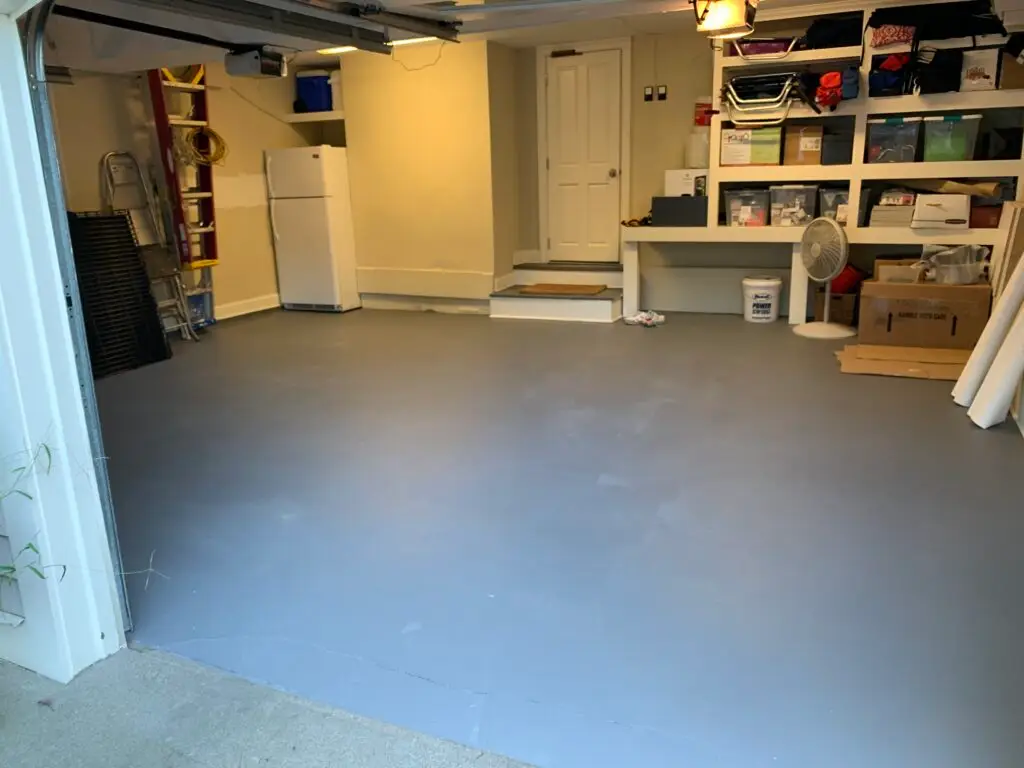
A painted garage floor can boost aesthetics and functionality, but over time, even the most durable coatings can chip, peel, or simply fall out of style. When your garage floor paint starts to show significant wear or you’re ready for a complete aesthetic overhaul, removing the old coating becomes a necessary step before applying a new finish. Learning how to remove paint from a garage floor effectively ensures a clean slate, promoting better adhesion and a longer-lasting result for your next floor project.
When should you remove garage floor paint?
Knowing when to remove existing paint, rather than simply recoating, can save you time and money in the long run.
- Extensive Peeling or Flaking: This is the most common reason. If large sections of paint are bubbling, peeling, or flaking, it indicates a failure of the original adhesion. Painting over this will only lead to the new coat failing in the same areas.
- Poor Adhesion: Test the existing paint by scoring a small, inconspicuous area with a utility knife in a crosshatch pattern. Press strong painter’s tape over the area, rub firmly, then quickly pull it off. If paint comes up with the tape, adhesion is compromised, and removal is recommended.
- Contamination: If the existing paint has been heavily contaminated with oil, grease, or chemicals that have soaked into the coating, it can compromise the adhesion of a new layer.
- Significant Discoloration or Staining: While light stains can sometimes be painted over, extensive discoloration or ingrained stains might be best removed for a fresh start.
- Change of Finish Type: If you’re switching from an existing paint to a stain, or if the current finish is too smooth for a new coating that requires more texture, removal might be necessary.
- Desire for a Completely New Look: Sometimes, you just want a fresh, clean, unblemished concrete surface before applying a completely different aesthetic.
Types of paint removers (chemical, mechanical, natural)
Choosing the right removal method is crucial for effectiveness and safety. Often, a combination yields the best results.
- Chemical Paint Removers:
- Description: These are formulations (often solvent- or caustic-based) that break down the paint’s bond to the concrete, causing it to soften, bubble, or lift, allowing for easier scraping.
- Pros: Can work on multiple layers and in intricate areas. Less physically demanding than purely mechanical methods for large areas.
- Cons: Can be expensive. Requires strict safety precautions (gloves, eye protection, respirator, ventilation). Messy cleanup and proper disposal of chemical-laden waste are essential. Can sometimes leave residue that needs further cleaning.
- Best For: Most types of paint (latex, oil-based, epoxy), especially stubborn, well-adhered coatings.
- Mechanical Paint Removers:
- Description: Involve physically grinding, scraping, or blasting the paint off the surface.
- Pros: Environmentally cleaner (no chemical waste). Very effective for well-adhered, thin coatings or after chemical pre-treatment. Can also smooth and profile the concrete surface for better adhesion of new coatings.
- Cons: Can be very labor-intensive for large areas. Power tools (grinders) can be noisy and produce a lot of dust. Risk of damaging the concrete if not handled by an experienced operator.
- Tools:
- Concrete Grinders: Highly effective for large areas, but often rented and require skill. Use with a dust collection system.
- Floor Scrapers: Manual tools for smaller areas or after chemical treatment.
- Power Washers: Excellent for removing softened paint or loose flakes, especially after chemical application.
- Shot Blasters: Industrial-grade machines that propel abrasive material at the surface, primarily used by professionals for large projects.
- Natural/Eco-Friendly Removers:
- Description: Less aggressive chemicals, often citrus-based or soy-based, designed to be safer for the user and the environment.
- Pros: Minimal fumes, biodegradable, safer to handle.
- Cons: Slower acting, may require longer dwell times or multiple applications, and might not be effective on very tough paints like epoxies.
- Best For: Smaller projects, light paint layers, or when health and environmental impact are primary concerns.
Step-by-step removal process
This general guide covers a common approach, often involving a chemical stripper. Always refer to your specific product’s instructions.
- Preparation and Safety First:
- Clear the Garage: Remove everything from the garage, including vehicles, tools, and storage.
- Protect Surroundings: Mask off garage door tracks, walls, and any nearby items with plastic sheeting and painter’s tape. Lay down plenty of drop cloths or absorbent materials around the perimeter and under any doors to prevent runoff.
- Ventilation: Open garage doors and windows. Use fans to ensure maximum airflow.
- PPE: Crucial! Wear chemical-resistant gloves, safety glasses or goggles, a respirator (N95 for dust, or a chemical-rated respirator for fumes), long sleeves, long pants, and closed-toe shoes.
- Clean the Floor: Sweep or vacuum the entire floor to remove loose dirt and debris. For any oil or grease spots, use a concrete degreaser and scrub thoroughly, rinsing well. Allow the floor to dry completely.
- Apply Paint Remover:
- Work in manageable sections (e.g., 10 ft×10 ft) to prevent the remover from drying out before you can work on it.
- Apply the chemical paint stripper generously and evenly over the section using a roller or sprayer, as recommended by the product. Ensure complete coverage.
- Cover the applied stripper with plastic sheeting (if recommended by the product) to prevent it from evaporating too quickly, allowing it more time to work.
- Allow the stripper to dwell for the recommended time (e.g., 30 minutes to several hours). The paint should start to wrinkle, bubble, or soften.
- Scrape and Remove Paint:
- Once the paint has softened, use a long-handled floor scraper or a sturdy hand scraper to gently push and lift the softened paint and stripper residue. Work systematically across the section.
- Collect the scraped material into a designated waste container (a sturdy bucket or box lined with plastic). Check local regulations for proper disposal of chemical-laden waste.
- Rinse Thoroughly:
- After scraping, use a garden hose or power washer (on a low setting with a wide tip) to thoroughly rinse the area. Ensure all loosened paint and stripper residue are flushed away.
- For strong chemical strippers, some may require neutralization with a specific solution (e.g., baking soda and water) before a final rinse. Follow product instructions precisely.
- Repeat as Necessary: For areas with multiple layers of paint or stubborn spots, you may need to repeat the application, scraping, and rinsing process.
- Final Cleaning and Drying:
- Once all paint is removed, give the entire garage floor a final, thorough cleaning with a stiff brush and mild detergent, followed by a complete rinse.
- Allow the concrete to dry completely before any refinishing. This can take several days, depending on humidity. A good test: tape a 1 ft×1 ft piece of plastic sheeting tightly to the concrete. After 24 hours, if there’s condensation under the plastic, the concrete is still too wet.
Power washing vs. Manual methods
These are your primary tools for physically removing the paint once it’s softened or loose.
- Power Washing:
- Pros: Extremely efficient for large areas. Can quickly blast away softened paint and chemical residue. Helps deep-clean the concrete.
- Cons: Requires renting or owning a powerful unit (1500-3000 PSI). Can damage concrete if too much pressure is used or if the nozzle is held too close. Creates a lot of splash-back and water.
- Best For: Removing the bulk of loosened paint, rinsing after chemical stripping, or removing large areas of already peeling paint.
- Manual Methods (Scraping/Brushing):
- Pros: Provides more control, reducing the risk of concrete damage. Ideal for detailed areas, corners, and thicker, sticky paint. No specialized equipment needed beyond scrapers and brushes.
- Cons: Very labor-intensive and slow for large areas. Can be hard on the body.
- Best For: Working in conjunction with chemical removers, getting into tight spots, and for smaller projects or touch-ups.
Combining Both: For most garage floor paint removal projects, using a chemical stripper to loosen the paint, followed by power washing to remove the softened material, and then manual scraping for any remaining stubborn spots, is the most effective approach.
Prepping the surface for repainting
Once the old paint is gone, the concrete needs proper preparation for a new coating to adhere correctly.
- Ensure Complete Dryness: As emphasized, the concrete must be bone dry before any new coating is applied. Any trapped moisture will lead to adhesion failure.
- Clean Thoroughly (Again): Even after removal, there might be residual dust, chemicals, or small bits of paint. Perform a final, thorough cleaning with a neutral pH concrete cleaner and rinse completely.
- Etch the Concrete: This is a critical step for new paint or epoxy adhesion.
- Use a concrete etcher (usually a diluted acid, follow product instructions and safety precautions). This opens the pores of the concrete, creating a rough profile for the new coating to grip onto.
- Apply evenly, scrub lightly, and rinse thoroughly until no fizzing occurs.
- Ensure all residue is removed and the floor is completely dry.
- Repair Cracks and Damage: Fill any cracks, spalls, or holes in the concrete using an appropriate concrete patch or caulk. Allow repairs to cure fully and sand smooth if necessary.
- Remove Dust: After all preparation, vacuum the entire floor multiple times to ensure no dust particles remain, as these can hinder adhesion.
- Apply Primer (if required): For many garage floor paints and epoxies, a compatible primer is recommended to ensure optimal adhesion and longevity.
Removing paint from a garage floor is a significant undertaking, but by following these detailed steps, you can achieve a clean, well-prepared concrete surface ready for a fresh, durable finish that will enhance your garage for years to come.
Is your garage floor paint looking tired and worn, and the idea of removing it feels overwhelming? Anderson’s Painting specializes in comprehensive garage floor solutions, from expert paint removal and meticulous surface preparation to the flawless application of new, durable, and stylish coatings. Let our experienced team handle the hard work for a complete garage transformation! Contact us today for a free consultation.